
Brace, not a second wall
A gusset as thick as the wall is a sink and cycle risk. Size it from the nominal wall, then confirm on CAD.
Gusset design
A gusset is a triangular brace, not a second wall. Size it from the nominal wall, add draft and a root fillet, and leave space so steel can cool. DFM review comments on your CAD before quoting.
Design guideline
A gusset is a triangular brace that ties a tall wall or boss back to a base. It is not a full-height rib and not a fastening post.
Size each gusset from the nominal wall , add draft on the faces that pull, and fillet the root. An oversized gusset acts like a thick section and can sink or trap air. NetProto does not publish a gusset-to-wall ratio. DFM review comments on your CAD, resin, and cosmetic faces.
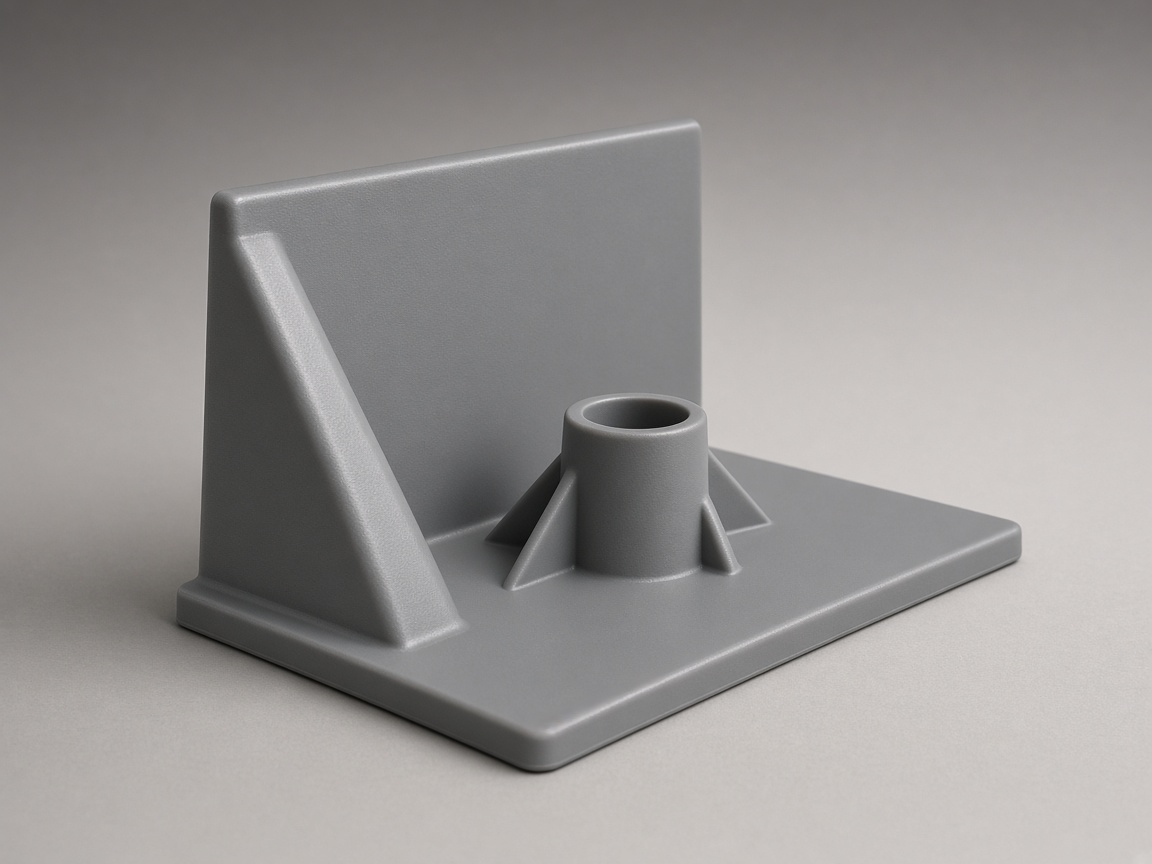
Use a gusset when a boss or perpendicular wall would bend at the base. Use a rib when you need a long stiffener along a skin. Fillets own the root radius. The rib-to-wall ratio page owns the rib number question. The design guide lists every topic.
Roles
Stay here for the triangular brace. Open a related guide for the rib, the post, or the CAD check.
| Page | Use it for |
|---|---|
| Gusset design (this page) | Triangular braces at tall walls and bosses |
| Rib design | Long stiffeners along a wall |
| Boss design | Screw posts the gusset may brace |
| Fillets and radii | Root radius at the junction |
| Wall thickness | Nominal wall the gusset should reference |
| Venting | Packed gusset roots can trap air if steel cannot vent |
| Support surfaces | Rest and mate pads. Not the triangular brace. |
| DFM review | CAD check of gussets before quoting |
Checks
Qualitative checks. No gusset-to-wall ratio on this page is a NetProto specification.
Brace, not a second wall
A gusset as thick as the wall is a sink and cycle risk. Size it from the nominal wall, then confirm on CAD.
Root fillet and stress
A sharp root concentrates stress. Too large a root rebuilds a thick junction on the opposite face.
Draft on both faces
Gusset sides that pull with the steel need draft. Texture and deeper braces usually need more draft per side.
Spacing, venting, and steel
Gussets packed around a boss can starve cooling and trap air at the root. Leave room for steel to vent and stay stiff.
Decision
Wrong: pour a triangle as thick as the wall. Right: thin brace, root fillet, draft, and space.
RFQ
The quote can start from CAD alone. These notes make the DFM pass specific.
Nominal wall the gussets should reference
Which walls or bosses each gusset braces
Draft per side on gusset faces, if you already have a target
Root fillet notes at the wall or boss junction
Class-A or show-face location opposite any gusset
Clearance for ejection and vent paths around packed braces
Related
This page covers the triangular brace. Open a related guide for the rib, the post, or the CAD check.
How NetProto checks gussets on your CAD before quoting.
DFM reviewFAQ
A gusset is a triangular brace that ties a tall wall or boss back to a base. It is a local support, not a full-height rib and not a fastening post. Use it when a wall or boss would bend at the root if left standing alone.
A rib runs along a wall to add section stiffness. A gusset is a short triangle between two faces, often at a boss or a perpendicular wall. The rib page owns the stiffening feature. This page covers the brace.
Typical industry guidance sizes a gusset thinner than the nominal wall, in the same conversation as ribs, so the root does not become a thick island. NetProto does not publish a gusset-to-wall ratio. The rib-to-wall ratio page owns the rib number question. Upload CAD for DFM review.
Yes. Vertical gusset faces that pull with the core or cavity need draft so they eject without drag. Texture and deeper gussets usually need more draft per side. Open the draft angle page for that rule.
Yes. An oversized gusset acts like a thick section and can sink the opposite face or trap air at the root. Keep the brace thin, fillet the root, and leave space so steel can cool and vent.
Bosses own the screw post. Ribs own the long stiffener. Fillets own the root radius. This page covers the triangular brace that ties those features back. DFM review checks your CAD before quoting.
Next step
Share geometry, resin, cosmetic faces, and which bosses or walls the gussets brace so review can check thickness, root, draft, and spacing before quoting.