
Internal fillet
Lowers stress and helps flow around a wall, rib, or boss. A sharp inside corner is a crack and hesitation risk.
Fillets and radii
A fillet blends an internal corner. A radius breaks an external edge. Size them from the nominal wall, and leave shutoffs and snap catches sharp unless function allows a blend. DFM review comments on your CAD before quoting.
Design guideline
A fillet is a curved transition at an internal corner. A radius is the arc on an external edge.
Internal fillets lower stress and help melt turn walls , ribs , and bosses . External radii affect appearance, impact, and release. Typical industry starting points often put the internal radius near half the wall, then adjust the outside so the corner does not become a hidden thick spot. NetProto does not publish one radius-to-wall rule. DFM review checks resin, load, texture, and cosmetic class.
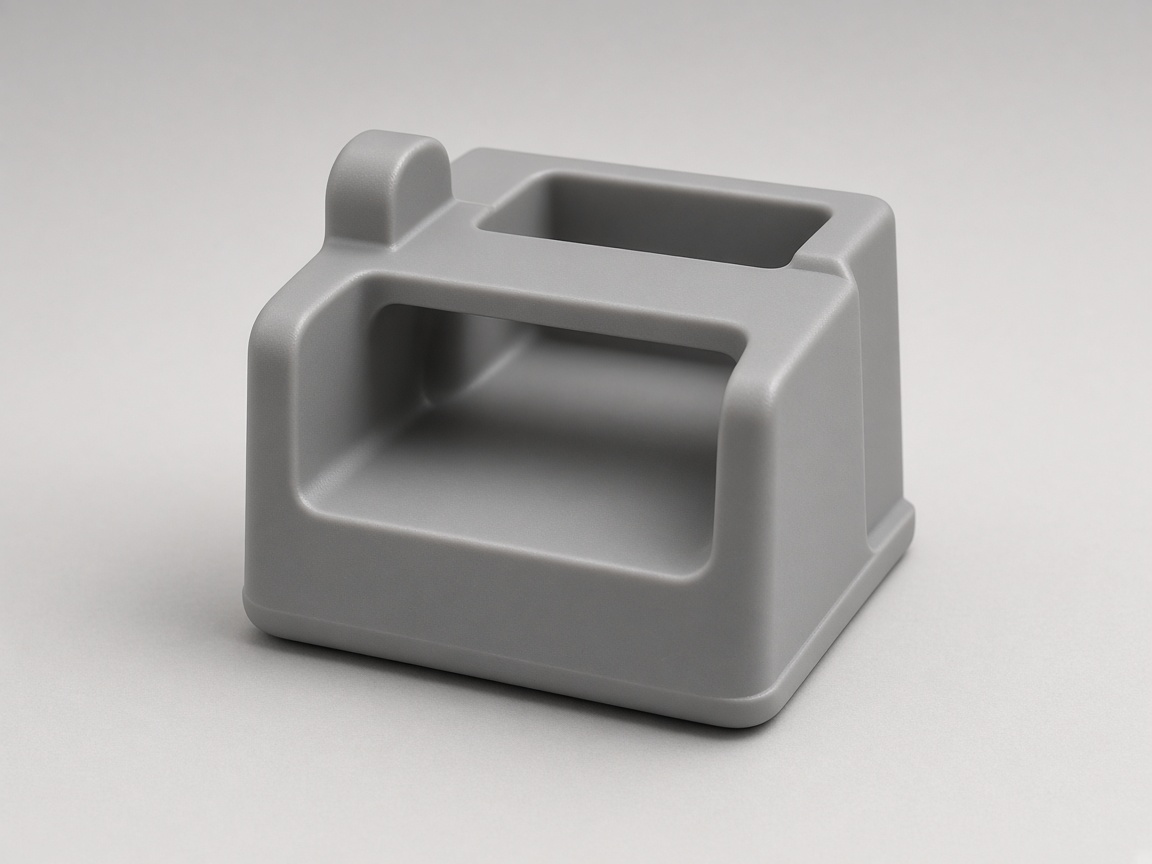
This spoke is the radius rule set. Corner design owns corner types. Sharp corner stress owns why a zero-radius inside corner cracks. Rib and boss pages only cover their root blend. The design guide hub lists every topic.
Roles
Stay here for radius rules. Open a sibling for corner type, stress, or the CAD check.
| Page | Use it for |
|---|---|
| Fillets and radii (this page) | Corner radius rules across the part |
| Corner design | Corner types and design decisions |
| Sharp corner stress | Why zero-radius corners crack |
| Ribs | Rib base fillet and flow |
| Bosses | Boss root radius and insert loads |
| DFM review | CAD-level radius check before steel |
Checks
Qualitative checks. NetProto does not publish a fixed radius-to-wall specification.
Internal fillet
Lowers stress and helps flow around a wall, rib, or boss. A sharp inside corner is a crack and hesitation risk.
External radius
Affects appearance, impact, and demolding. Pair it with the internal fillet so the corner wall stays even.
Rib or boss root
A root fillet spreads load and helps fill. Too much root rebuilds a thick junction on the opposite face.
Parting line and shutoff
Those edges often stay sharp on purpose. Do not radius a shutoff, seal, or snap catch unless the function allows it.
Decision
A fillet is a curve. A chamfer is a straight break. Pick the one that matches stress, assembly, or steel shutoff.
Geometry
This is corner geometry, not a NetProto radius specification.
| If you do this | What happens |
|---|---|
| Keep the wall uniform through the corner | Typical guides describe the external radius as the internal radius plus the wall thickness. That keeps the skin from gaining a hidden mass. |
| Internal fillet, sharp outside | The junction locally thickens. Sink, void, or warp risk rises on the show face. |
| Oversized rib or boss root | The blend helps flow, but too much root is a new thick island. |
| Uniform wall thickness | Open that spoke when the issue is the transition, not the radius callout. |
| Draft angle | A radius can change effective pull on a textured face |
RFQ
The quote can start from CAD alone. These notes make the DFM pass specific.
Internal radius callout at loaded or cosmetic corners
External radius or corner-break notes
Rib and boss root fillet notes, if those features exist
Cosmetic versus non-cosmetic faces that cannot show sink
Parting-line, shutoff, or snap edges that must stay sharp
Texture and draft interaction where a radius changes pull
Related
This page owns corner radius rules. Open a sibling for corner type, stress, or the CAD check.
How NetProto checks radii and keep-sharp edges on your CAD.
DFM reviewFAQ
A fillet is the curved transition at an internal corner. A radius is the arc on an external edge. People use the words loosely. This page treats fillet as the inside blend and radius as the outside edge. A chamfer is a straight break, not a curve.
A zero-radius inside corner concentrates stress and can stall melt as it turns the wall. That is a common crack start under load or impact. The sharp-corner stress page owns that mechanism. This page owns how to radius the corner, and when to leave an edge sharp.
Typical industry starting points often put the internal radius near half the nominal wall. Cosmetic class, resin, load, and texture change the answer. NetProto does not publish one radius-to-wall rule. Call out the internal radius on the RFQ and upload CAD for DFM review.
If you want the wall to stay uniform through the corner, the external radius is the internal radius plus the wall thickness. An internal fillet with a sharp outside corner locally thickens that junction and can sink or warp. That is geometry, not a NetProto specification.
Yes, a root fillet helps flow and spreads load. Too large a root rebuilds a thick junction. The rib and boss pages own those features. This page owns the shared radius rule: blend the root, then check the opposite face for sink.
Leave an edge sharp at a parting-line shutoff, a sealing face, a snap catch, or lettering that must stay crisp. A fillet in the wrong place can hide a thick spot or change draft on a textured wall. Flag those keep-sharp edges on the RFQ.
Next step
Share geometry, resin, cosmetic faces, and keep-sharp edges so review can check internal fillets, external radii, and rib or boss roots before quoting.