
Uniform walls
Even cooling and shrink across the skin. The goal is similar rates, not identical numbers on every face.
Uniform wall thickness
Uniform enough means thickness changes are intentional and gradual. Prefer coring or ribs over solid plastic. DFM review comments on your section views before quoting.
Design guideline
Uniform wall thickness means the part cools and shrinks at a similar rate across its surface. Truly identical walls are rare.
Uniform enough means any thickness change is intentional, gradual, and reviewed for resin and cosmetics. When a section must be thicker, use a taper or radius instead of a step, and prefer coring or ribs over solid plastic. NetProto does not publish one allowable variation percentage as a specification. DFM review comments on your section views.
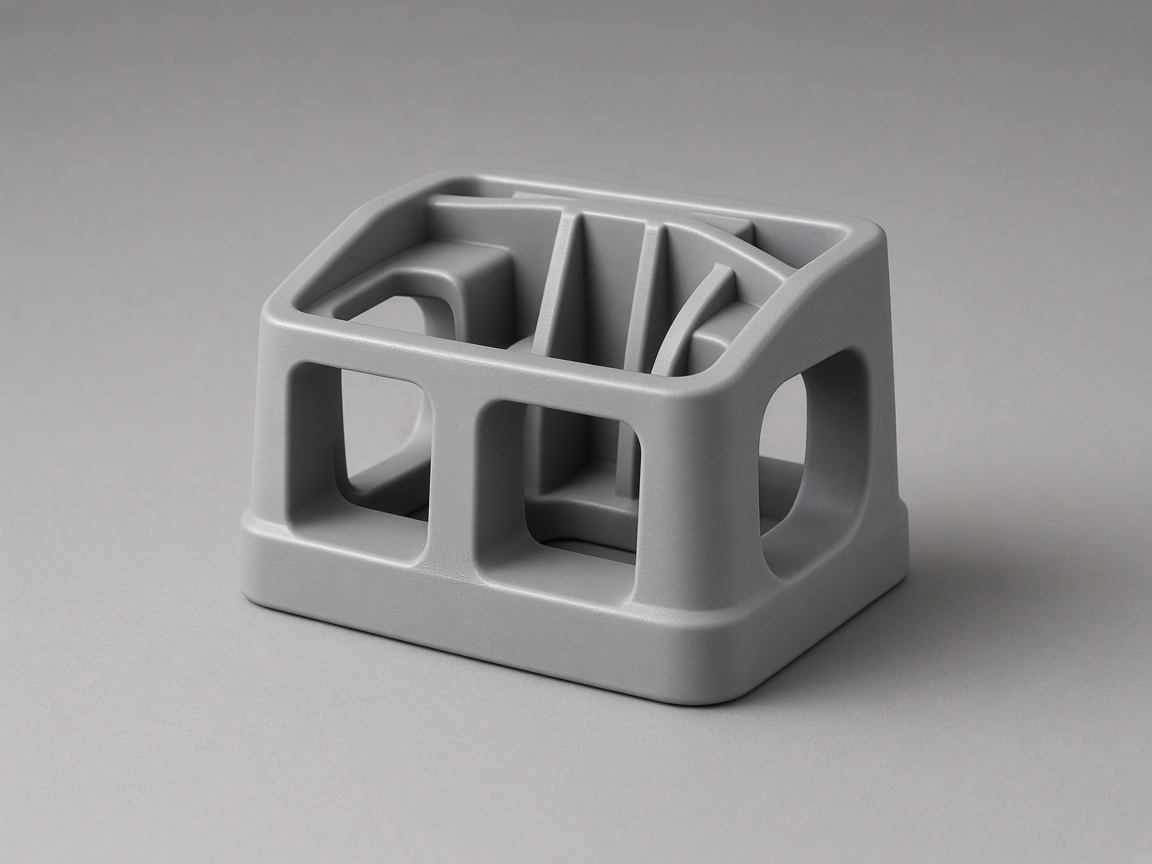
The wall thickness page picks the nominal value. This page assumes you already have a nominal wall and asks how uniform is uniform enough, and what you do when function forces a change. Thin wall and thick section spokes cover those edges. The design guide hub lists every topic.
Roles
Stay here for uniformity and transitions. Open a sibling for the nominal wall, coring, or the CAD check.
| Page | Use it for |
|---|---|
| Uniform wall thickness (this page) | Why consistency matters and how to handle changes |
| Wall thickness | Pick a nominal wall, then the thin versus thick edges |
| Coring out thick sections | Hollow thick masses to restore uniformity |
| Ribs | Stiffness without adding wall thickness |
| Fillets and radii | Round thickness transitions and corners |
| DFM review | CAD-level uniformity check before steel |
Checks
Qualitative checks. NetProto does not publish a fixed plus-or-minus percent uniform-wall rule.
Uniform walls
Even cooling and shrink across the skin. The goal is similar rates, not identical numbers on every face.
Thick spot
A local mass stays hot and can sink, void, or stretch cycle time. Map it in section views.
Abrupt step
A vertical jump can hesitate fill, leave a knit, or concentrate stress. Ramp, chamfer, or radius the change.
Coring and ribs
Stiffness without a thick solid mass. Core the island or add ribs that reference the nominal wall.
Decision
Wrong: force every wall identical, or jump thickness in one step. Right: hold a nominal wall and control the change.
Transitions
Industry talking points are a starting conversation. This page gives no universal number.
| Approach | Use it for |
|---|---|
| Chamfer, taper, or radius | Any required thickness change. Prefer this over a vertical step. |
| Industry 3 to 1 talking point | Typical guides often cite a ramp about three times the thickness difference. Not a NetProto specification. |
| Coring or ribs | When the extra mass is not needed for function |
| Gussets | Local supports that should still reference the nominal wall |
| Fillets and radii | Round thickness transitions and corners so they are not a step |
| Draft angle | Draft still applies on cored pockets and ramped walls |
| DFM review of section views | Resin, part size, and cosmetic class change the call |
RFQ
The quote can start from CAD alone. These notes make the DFM pass specific.
Nominal wall callout the rest of the part should reference
Thick-section map: where and why the wall must change
Transition method: ramp, chamfer, or radius
Cored regions marked on the CAD or drawing
Rib or gusset plan for stiffness
Show-face versus non-show-face sink tolerance
Related
This page owns uniformity and transitions. Open a sibling for the nominal wall, coring, or the CAD check.
How NetProto checks section views and thick zones before quoting.
DFM reviewFAQ
Uniform wall thickness means the part cools and shrinks at a similar rate across its surface. Truly identical walls are rare. Uniform enough means any thickness change is intentional, gradual, and reviewed for resin and cosmetics.
A thick spot stays hot after the nearby skin has frozen. That extra mass can pull a sink or void, and the cooling mismatch can warp the part. An abrupt step can also hesitate the flow and leave a weak knit. Gradual transitions and coring reduce that mismatch.
Use a taper, chamfer, or radius instead of a vertical step. The goal is a controlled change the melt can fill and pack. Resin, part size, and cosmetic class change how long that ramp should be. Open the fillets page for corner radii. Upload section views for DFM review.
Typical industry talking points often describe a gradual ramp, sometimes cited as about three times the thickness difference, or a 3 to 1 transition. That is a starting conversation, not a NetProto specification. Cosmetic class, resin, and part size change the answer. NetProto reviews your section views.
When function forces a thicker zone, and you handle it on purpose: a ramp or radius, coring, or ribs instead of solid plastic. A thick corner behind a show face is usually not acceptable without a plan. Flag those zones in section views before quoting.
The wall thickness page picks the nominal value. This page assumes you already have a nominal wall and asks how uniform is uniform enough, and what you do when function forces a change. Thin-wall and thick-section spokes cover those edges. DFM review is how NetProto checks your CAD.
Next step
Share geometry, resin, cosmetic faces, and section views so review can check nominal-wall consistency, ramps, and cored zones before quoting.