
Not a weaker default
A cored shell with ribs can be stiffer than a solid block that sinks.
Coring out
Show cored pockets on CAD. DFM review checks draft inside the core, vents, and whether ribs replace the solid mass.
Design guideline
Coring hollows a thick section so the wall stays even. Ribs or geometry keep stiffness. Internal cores still need draft and a vent path. This page owns the hollow, not the thick-section problem.
Coring out a thick section cuts sink, heat, and weight on housings and covers. Thick section design owns why the solid island is a problem. Ribs own the stiffeners that replace mass. Sink marks is the article for the cosmetic mark. DFM review needs section views.
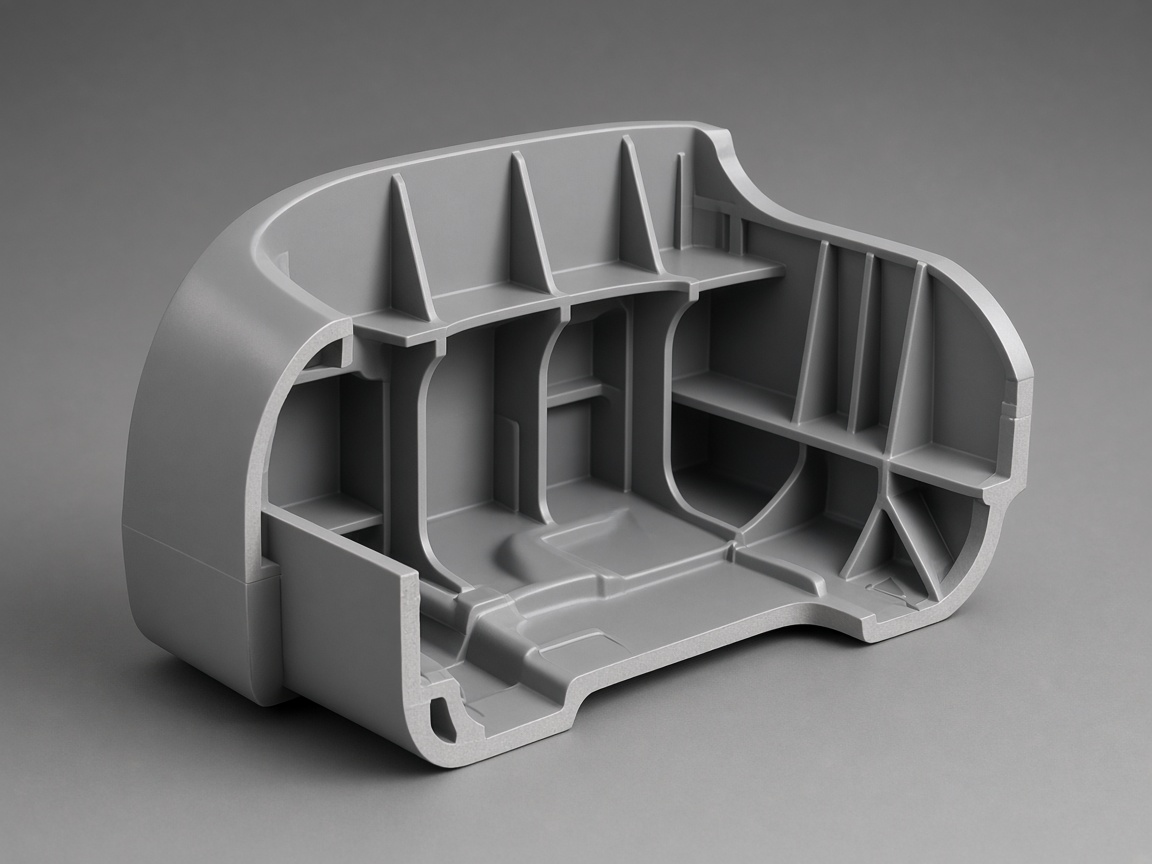
This spoke owns how you hollow the island. Internal cores must draft toward the same pull, or they become undercuts. The design guide hub lists every topic.
Roles
Stay here for hollowing a thick island. Open a sibling for the problem, the rib, the boss, or the CAD check.
| Page | Use it for |
|---|---|
| Coring out (this page) | Hollow a thick island, keep stiffness |
| Thick section design | Why the solid island is a problem |
| Rib design | Stiffeners that replace the mass |
| Boss design | Core a cylindrical standoff the same way |
| Uniform wall thickness | Keep the remaining wall even |
| Venting | Gas inside a closed core |
| Draft angle | Draft on internal core walls |
| DFM review | CAD check before steel |
Checks
Qualitative checks. No figure on this page is a NetProto specification.
Not a weaker default
A cored shell with ribs can be stiffer than a solid block that sinks.
Internal draft
Core walls need draft toward the same pull. Otherwise they undercut.
Vent the pocket
A closed core traps air. Open venting if the pocket is blind.
Late coring is steel
Adding a core after T1 is a steel change. Show it on CAD first.
Decision
Wrong: leave a solid island and hope packing hides sink. Right: hollow it, draft the core, and let ribs carry load.
RFQ
The quote can start from CAD alone. These notes make the DFM pass specific.
Section views through thick islands
Intended core pull direction
Ribs that replace the solid mass
Cosmetic faces opposite the island
Whether the pocket is blind or open
Resin family
Related
Stay on this spoke for its question. Open a sibling for the neighbor topic or the CAD check.
The cosmetic mark a solid island leaves.
Sink marksHow NetProto reads cored sections on CAD.
DFM reviewFAQ
Not when ribs or geometry replace the mass. A solid block that sinks is often the weaker choice in service and in cosmetics.
Keep the remaining wall as uniform as possible. Nominal wall depends on resin and application. Open the wall thickness page for the guideline, then upload CAD for a part-specific DFM review. This page does not publish a leftover-wall figure.
It is steel work. Show cores on CAD before the tool is cut.
Closed pockets do. Blind cores trap air. Open the venting page.
Thick-section owns the problem. This spoke owns hollowing it. Ribs own the stiffeners.
Yes, toward the same pull. Otherwise they are undercuts.
Ribs and bosses are the remaining geometry. This spoke owns removing the solid island. DFM review checks CAD.
Next step
Share section views and core pull so review can check draft, vents, and stiffness before quoting.