
Material behavior
Metal is stable after the cut. Plastic shrinks, can absorb moisture, and can warp as it cools.
Standard tolerances
Commercial molded bands are not CNC defaults. Keep the envelope on the published commercial table. Tighten only mating, seal, and snap features. DFM review comments on your CAD before steel is cut.
Design guideline
Standard tolerances in injection molding are the default dimensional bands a mold can hold without extra tooling steps, special process controls, or selective inspection.
They apply to non-critical surfaces, general contours, and cosmetic boundaries. Plastic shrinks, warps, and responds to mold temperature, packing, and wall thickness in ways machined metal does not. Tight callouts belong on mating features, seals, snaps, and bearing seats, not every edge on the print. NetProto follows the commercial bands on manufacturing standards unless the RFQ specifies otherwise. GD&T on functional features is clearer than a drawing full of tight decimals.
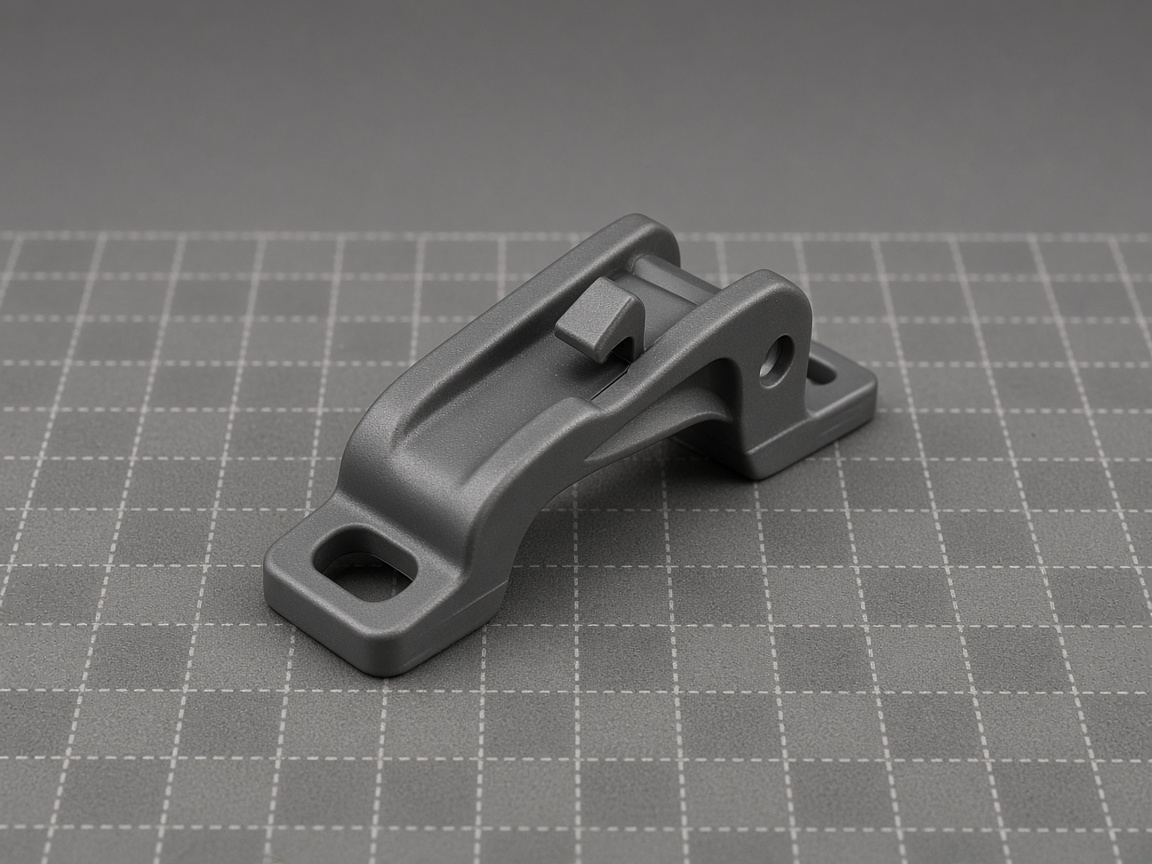
This spoke decides when to stay on the commercial band. Tight tolerance strategy owns the exceptions. Shrinkage compensation owns cavity scale. DFM review checks which features must be held. The design guide hub lists every topic.
Roles
Stay here for default commercial bands. Open a sibling for the exception, the method, or the published table.
| Page | Use it for |
|---|---|
| Standard tolerances (this page) | Default commercial bands for non-critical dimensions |
| Tight tolerance strategy | When a dimension needs tighter than standard control |
| Tolerance stack-up | Multi-part assembly accumulation |
| GD&T for molded parts | Geometric dimensioning and tolerancing methods |
| Shrinkage compensation | Why parts shrink and how molds compensate |
| Manufacturing standards | Published commercial bands and process specs |
Checks
Qualitative contrast. Published commercial bands live on the manufacturing standards page.
Material behavior
Metal is stable after the cut. Plastic shrinks, can absorb moisture, and can warp as it cools.
Process capability
A mill holds the cutter path. A mold holds shrink, pack, and cooling. Those are different process windows.
Inspection method
Molded parts are often checked after conditioning, on a fixture, and sometimes statistically. Do not copy a machine-side CMM habit blindly.
Where to stay commercial
Keep the envelope and cosmetics on the published band. Tighten only fits that the assembly actually uses.
Scope
Tighten features on the RFQ. Do not put a tight decimal on every edge.
| Use the commercial band on | Tighten separately for |
|---|---|
| Outer contour and envelope | Mating fits and clearances |
| Non-functional surfaces | Sealing surfaces |
| Cosmetic edges and boundaries | Snap fits and living hinges |
| General rib and boss positions | Bearing seats and insert locations |
| Nominal hole centers | Alignment pins and dowels |
| Decorative features | Optical or lens seats |
Drivers
Qualitative references. Actual capability depends on geometry, material, and process.
| Factor | Why it matters |
|---|---|
| Material type | Semi-crystalline grades shrink more than amorphous. Filled grades add anisotropy. |
| Wall thickness variation | Thick-to-thin transitions drive differential shrink and warp. |
| Gate location and packing | Distance from the gate shifts local density and shrink. |
| Cooling uniformity | Uneven cooling means uneven shrink and a wider effective band. |
Published bands
This page does not repeat the size-class table. That table is the source of truth.
| Open this page | What you will find |
|---|---|
| Manufacturing standards | Typical commercial injection molding tolerances by nominal size, tied to SPI-style commercial bands. NetProto follows those bands unless tighter features are approved in writing. |
| Tight tolerance strategy | How material, process, and steel hold a feature tighter than the band. |
| Tolerance stack-up | How commercial bands accumulate across an assembly |
| Draft angle | Draft changes a measured size versus the CAD edge |
| Rib design | Ribs create local shrink differences behind a face |
| DFM review | Which print callouts must be held before steel is cut. |
RFQ
The quote can start from CAD alone. These notes make the DFM pass specific.
Non-critical dimensions identified for the commercial band
Mating features, seals, and snaps called out for tighter control
Tolerance block or GD&T frame on the drawing
Material grade and nominal wall noted
Whether mold-flow is requested if tight features exist
Which published band or drawing standard the print follows
Related
This page owns when to stay on the commercial band. Open a sibling for the exception, the method, or the published table.
Published commercial bands by size class, tied to SPI.
Manufacturing standardsFAQ
Standard tolerances are the default commercial bands a mold can hold on non-critical surfaces without extra steel work, special process controls, or selective inspection. They cover general contours and cosmetic boundaries. The published size-class bands live on the manufacturing standards page.
Plastic shrinks, warps, and responds to mold temperature, packing, and wall thickness in ways machined metal does not. A CNC default on every edge is usually tighter than a commercial molded band and is not the starting point for this process. Tighten only the features the assembly needs.
Mating fits, sealing surfaces, snap fits, bearing seats, and alignment pins. Outer envelopes, cosmetic edges, general rib or boss positions, and decorative features can stay on the commercial band. The tight-tolerance strategy page owns how those exceptions are held.
A standard tolerance is a plus-or-minus band on a size. GD&T controls form, orientation, and location from datums. Functional features are clearer with GD&T than with a drawing full of tight decimals. The GD&T spoke owns that method.
Semi-crystalline resins shrink more than amorphous grades. Filled grades add anisotropy. Thick-to-thin transitions and uneven cooling widen the effective band even when the drawing looks tight. Wall thickness and shrink pages cover those drivers.
Yes. Quotes follow the commercial injection molding bands on the manufacturing standards page unless the RFQ calls out tighter features and those are approved in writing. Name the drawing standard if the print cites one.
Next step
Share geometry, material grade, and which features must be held so review can keep the envelope on the commercial band and tighten only the function.