
Chain, not one callout
A tight hole can still miss if the housing datum is loose.
Tolerance stack-up
Send a stack sketch with CAD when mates must fit. DFM review comments on clearance traps before steel is cut.
Design guideline
Stack-up follows the chain from datum to datum across parts and clearances. A tight single-part call can still fail the assembly if another link is loose. This page owns the chain, not the commercial band.
Shrink moves every link. Shrinkage compensation owns that driver. GD&T for molded parts owns datums the chain should start from. DFM review reads the sketch with CAD.
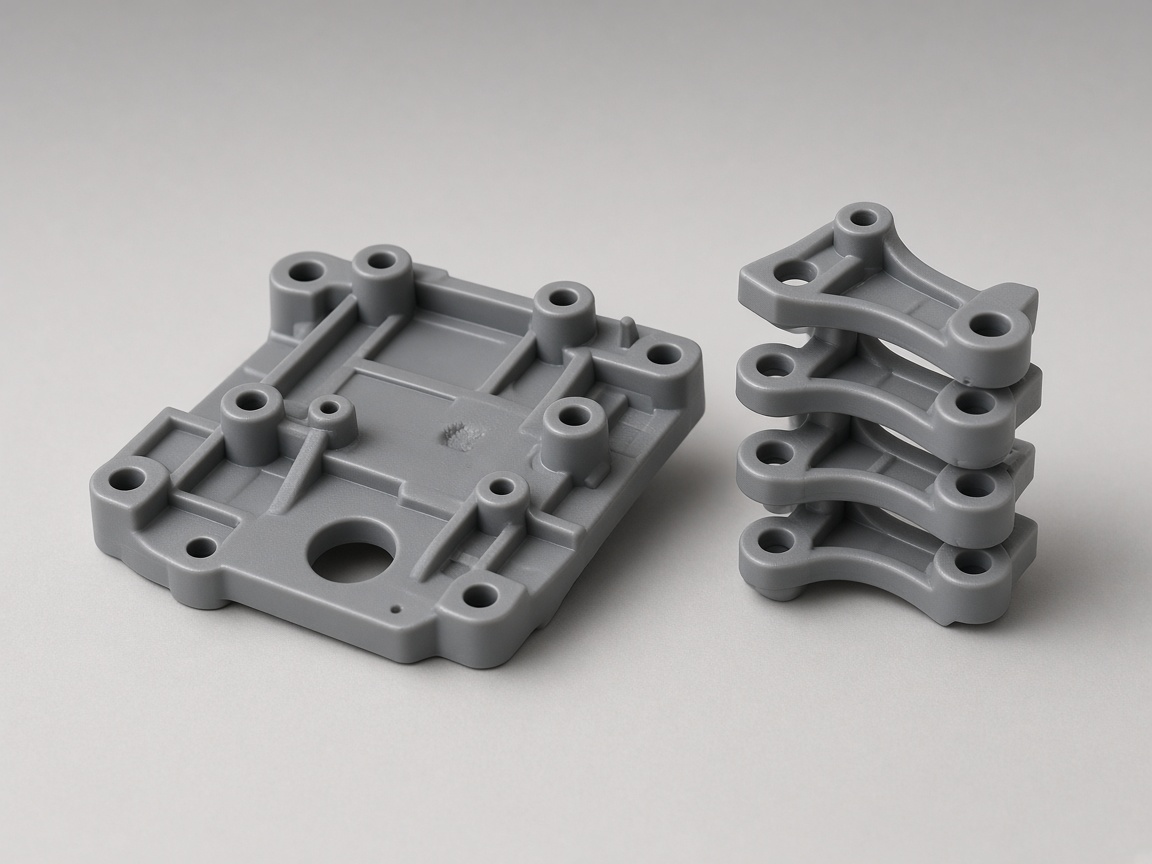
This spoke owns the assembly chain. Standard tolerances own the default band. Tight tolerances own which links get extra control. The design guide hub lists every topic.
Roles
Stay here for the assembly chain. Open a sibling for the band, the exception, or datums.
| Page | Use it for |
|---|---|
| Tolerance stack-up (this page) | Will the assembly still fit |
| Standard tolerances | The commercial band on one part |
| Tight tolerances | Which links get extra control |
| GD&T for molded parts | Datums the chain should use |
| Shrinkage compensation | Why each link moves |
| Wall thickness | Uneven walls widen a link |
| Uniform wall thickness | Transitions that add warp to the chain |
| DFM review | CAD and stack sketches |
Checks
Qualitative checks. No figure on this page is a NetProto specification.
Chain, not one callout
A tight hole can still miss if the housing datum is loose.
Datums first
Start the chain on faces inspectors can hold. Open GD&T for the method.
Shrink is in the chain
Every plastic link moves. The shrink page owns that driver.
Slots can help
A slot or clearance can save a chain that will not hold on size alone.
Decision
Wrong: tighten every decimal and hope the assembly fits. Right: map the chain, then tighten only the links that matter.
RFQ
The quote can start from CAD alone. These notes make the DFM pass specific.
Stack sketch or mate list
Datums each link starts from
Clearance that must remain after shrink
Which links you already tightened
Resin family on each plastic part
Whether a slot is an acceptable fix
Related
Stay on this spoke for its question. Open a sibling for the neighbor topic or the CAD check.
Published size-class bands.
Manufacturing standardsHow NetProto reads stack sketches with CAD.
DFM reviewFAQ
The chain of sizes, locations, and clearances that decides whether an assembly still fits after each part varies.
Bring the sketch. DFM review comments on clearance traps. The designer owns the assembly math.
Yes. Every plastic link moves. Open shrinkage compensation for that driver.
Often. A slot or extra clearance can save a chain that will not hold on size alone.
No. A tight hole on a loose housing still misses. This page owns that chain.
This spoke owns the assembly chain. Tight owns exceptions. Standard owns the default band. DFM review checks CAD.
Next step
Share the mate chain and datums so review can catch clearance traps before quoting.