
Mates only
Fits, seals, snaps, bearing seats, alignment pins.
Tight tolerances
Mark critical mates on CAD. DFM review asks which interfaces are critical before quoting inspection-heavy programs. Published bands live on standards.
Design guideline
Tight calls belong on mates, seals, snaps, and alignment features. A blanket of tight decimals on every edge is not a quality plan. This page owns the exception list, not the published band.
Plastic does not hold metal-like bands on every edge. Standard tolerances own the commercial default. GD&T for molded parts owns how to frame the exception. Manufacturing standards hold the published size-class bands. DFM review reads the mate list.
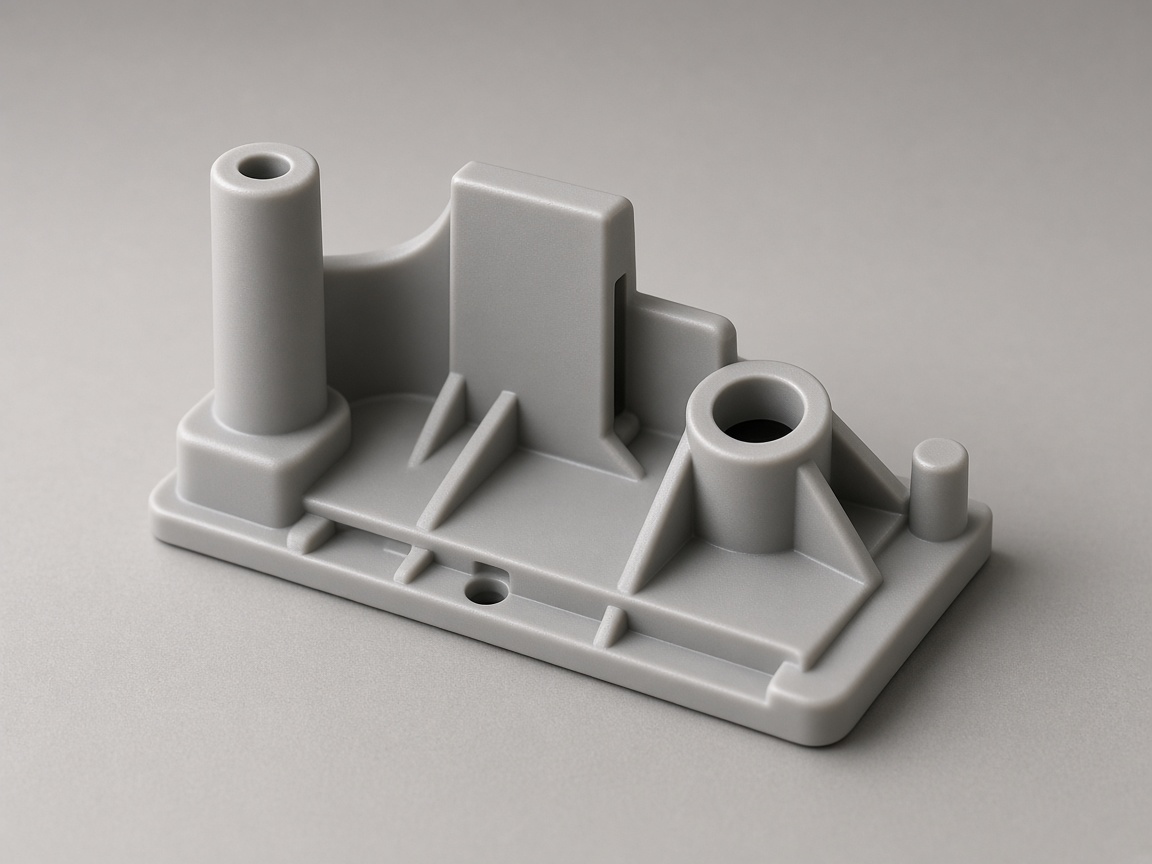
This spoke owns what to tighten. Tolerance stack-up owns whether the assembly still fits. The design guide hub lists every topic.
Roles
Stay here for the exception list. Open a sibling for the band, the method, or the chain.
| Page | Use it for |
|---|---|
| Tight tolerances (this page) | Which mates get extra control |
| Standard tolerances | The commercial default band |
| GD&T for molded parts | How to frame those mates |
| Tolerance stack-up | Whether the assembly still fits |
| Manufacturing standards | Published size-class bands |
| Shrinkage compensation | Why plastic will not hold a metal band |
| Wall thickness | Uneven walls fight a tight call |
| Gate location | Fill that can move a mate |
| DFM review | CAD check before steel |
Checks
Qualitative checks. No figure on this page is a NetProto specification.
Mates only
Fits, seals, snaps, bearing seats, alignment pins.
Leave the envelope
Outer contours and cosmetic edges can stay commercial.
Plastic is not metal
A CNC default on every edge is the wrong start.
No new band here
Published figures live on manufacturing standards. Do not invent a number.
Decision
Wrong: tighten everything to force quality. Right: mark the mates, frame them, then check the stack.
RFQ
The quote can start from CAD alone. These notes make the DFM pass specific.
Mating features that must be tight
Features that can stay commercial
Resin family
Inspection method if you have one
Whether GD&T frames already exist
Assembly stack sketch if more than one part fits
Related
Stay on this spoke for its question. Open a sibling for the neighbor topic or the CAD check.
Published size-class bands.
Manufacturing standardsHow NetProto reads the mate list before steel.
DFM reviewFAQ
Not on every edge. Tighten mates. Leave general contours on the commercial band. Standards hold the published figures.
Process and steel temperature affect shrink and warp. That is why a blanket tight drawing still fails. Name the resin.
No. That adds inspection without fixing warp or shrink. Mark the mates that matter.
Mating fits, seals, snaps, bearing seats, and alignment features. The standard-tolerances page lists what can stay commercial.
On the manufacturing standards page. This spoke does not republish them.
This spoke owns the exception list. Standard owns the default band. GD&T owns the method. DFM review checks CAD.
Next step
Share the mate list so review can keep extra control on the interfaces that matter before quoting.