
Vent or go through
A closed pocket burns or shorts if gas cannot leave.
Blind holes
Flag blind pockets on CAD. DFM review checks vent, draft, and whether the pocket should become a through hole.
Design guideline
A blind hole traps air unless steel vents it. Deep pockets need draft on the side walls. Through holes vent naturally when both ends reach the split. This page covers the closed pocket.
A blind hole is a pocket closed on one end. It must vent to atmosphere or the parting line through steel. Venting owns the gas path. Through holes own the open alternative. Bosses own the post. DFM review needs pocket depth and nearby wall.
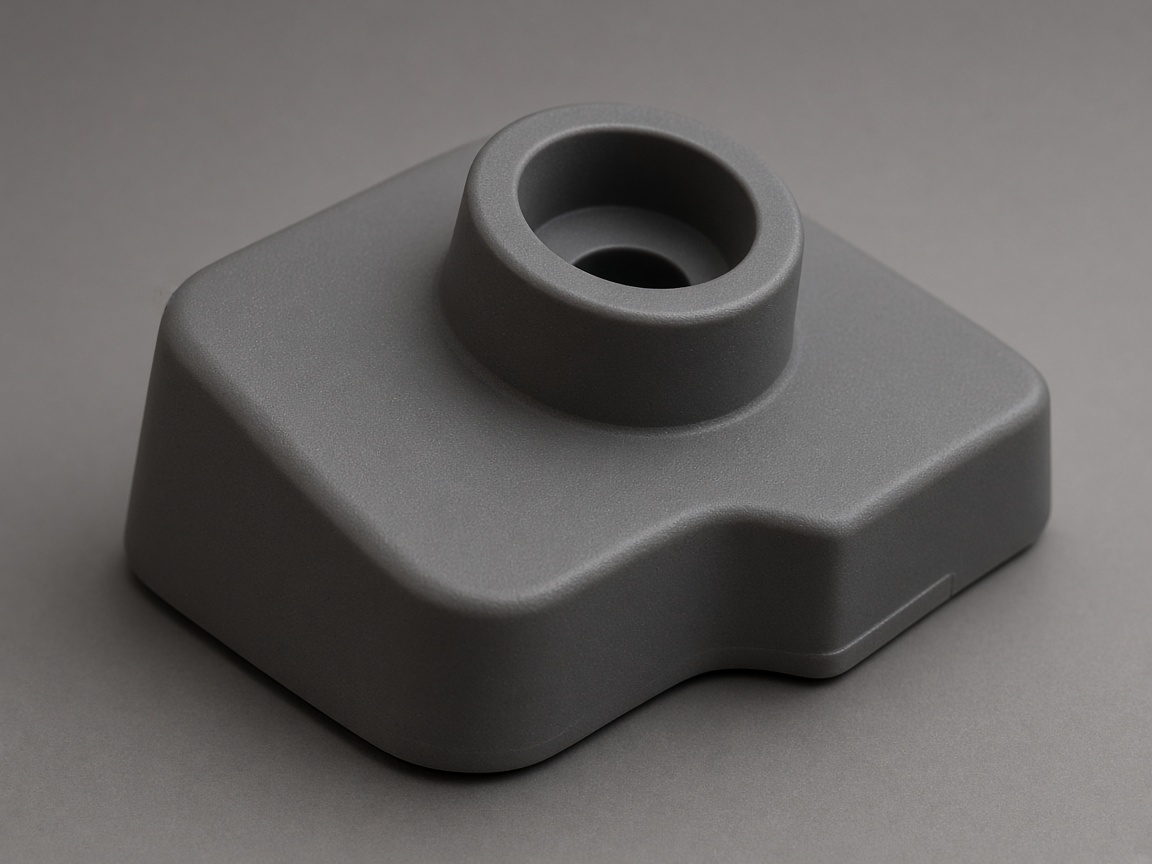
This page covers the closed pocket. Coring out is how you hollow a thick island, which may leave more blinds. The design guide lists every topic.
Roles
Stay here for closed pockets. Open a related guide for through holes, vents, draft, or the boss.
| Page | Use it for |
|---|---|
| Blind holes (this page) | Closed pocket, vent, draft |
| Through holes | Open both ends to the split |
| Side holes | Axis off the pull |
| Venting | The gas path |
| Boss design | The post that often holds the pocket |
| Draft angle | Draft on pocket walls for release |
| Wall thickness | A blind in a thin skin is a risk |
| Hole shapes | The outline of the pocket. Not the closed end. |
| DFM review | CAD check before steel |
Checks
Qualitative checks. No figure on this page is a NetProto specification.
Vent or go through
A closed pocket burns or shorts if gas cannot leave.
Draft the walls
Deep blinds scuff on eject without draft.
Thin-wall blinds
A pocket in a thin skin can sink or punch through. Mark those.
Threads are separate
A molded or tapped thread is not a plain blind hole. Open molded-in threads or boss design for those features.
Decision
Wrong: a deep blind in a thin wall with no vent. Right: draft the pocket, vent it, or open it through.
RFQ
The quote can start from CAD alone. These notes make the DFM pass specific.
Blind pockets called out
Which pockets can become through holes
Nearby wall thickness
Cosmetic faces opposite the pocket
Thread or insert intent, if any
Resin family
Related
Related guides for the next question, plus a CAD check when you are ready.
How NetProto reads closed pockets on CAD.
DFM reviewFAQ
A pocket closed on one end. It traps air unless steel vents it. Through holes vent when both ends reach the split.
A thread is a different feature. Open the thread or insert pages. This page covers the pocket.
They need a vent path. That may be a pin, a parting vent, or porous steel. Tooling picks the method. Flag the pocket.
They can sink or punch through. Mark them. Wall thickness owns the skin.
If function allows, yes. Through holes own that path.
This page covers the closed pocket. Through holes own the open alternative. Venting owns the gas path. DFM review checks CAD.
There is no universal spec. Deep blinds need a vent path and draft. Flag the pocket on CAD so DFM review can check tooling scope before quoting.
Next step
Share closed pockets and nearby walls so review can check vent and draft before quoting.