
Not always a slide
A through window, a split line, or a reoriented hole can remove the action.
Side holes
Mark hole axes on CAD. DFM review flags side holes early so tooling scope is honest. NetProto does not offer post-mold CNC drilling as a default path.
Design guideline
A side hole is an opening whose axis is off the primary pull. It often needs a side action, an angled pin, or a split housing. This page owns the hole. Side actions own the slider.
A side hole is an opening whose axis is off the primary mold-open direction. Designers sometimes replace it with a split housing and assembly. Side actions own the slider if the hole must stay. Undercuts own that decision. Through holes and blind holes own holes that can sit on the pull. DFM review needs axis notes.
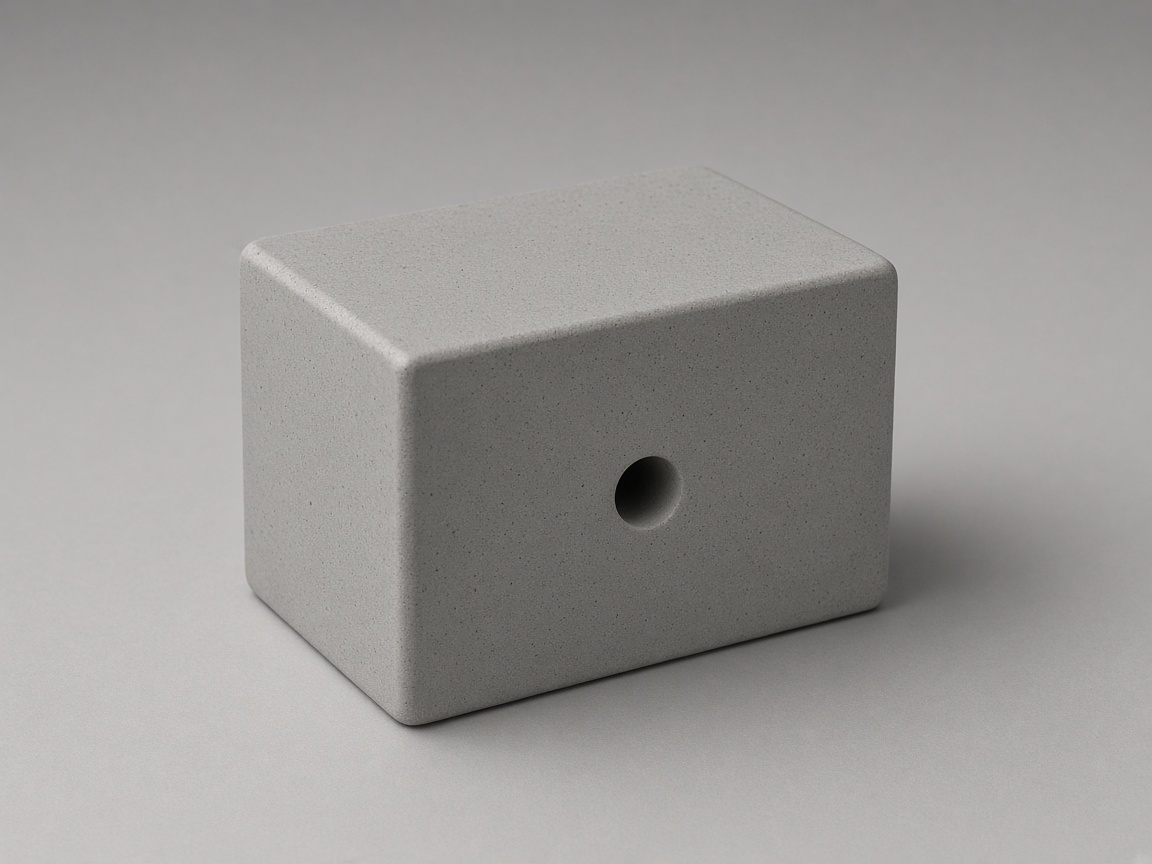
This spoke owns the off-draw hole. The design guide hub lists every topic.
Roles
Stay here for holes off the pull. Open a sibling for through, blind, the split, or the slider.
| Page | Use it for |
|---|---|
| Side holes (this page) | Openings off the primary pull |
| Through holes | Both ends open to the split |
| Blind holes | Closed on one end |
| Side actions | The slider that can form the hole |
| Undercuts | Whether any action is needed |
| Parting line | A split can turn a side hole into a through hole |
| Draft angle | Draft still applies on the hole wall |
| Bosses | A boss hole is not automatically a side hole |
| Hole shapes | The outline. This page still owns the off-draw axis. |
| DFM review | CAD check before steel |
Checks
Qualitative checks. No figure on this page is a NetProto specification.
Not always a slide
A through window, a split line, or a reoriented hole can remove the action.
Axis on CAD
Show the hole axis versus pull direction. That is the map.
Not a CNC default
Post-mold drilling is not a NetProto offering. Plan for a slide or redesign instead.
Who owns fit
Say who validates axis and size if the hole is a mate.
Decision
Wrong: every side hole gets a slider. Right: lock draw, then keep only the holes that still must sit off-axis.
RFQ
The quote can start from CAD alone. These notes make the DFM pass specific.
Hole axes versus intended pull
Which holes are mates
Whether a split housing is acceptable
Whether a slide is acceptable
Cosmetic witness on nearby faces
Who validates axis if the hole is critical
Related
Stay on this spoke for its question. Open a sibling for the neighbor topic or the CAD check.
How NetProto flags off-draw holes before steel.
DFM reviewFAQ
An opening whose axis is off the primary mold-open direction. It often needs a slide, a reoriented hole, or a split housing.
Often. Move the axis onto the pull, add a through window, or split the housing. Undercuts own that decision.
No. Some shut off on a split. Some get redesigned. Side actions own the slider when one is still needed.
Say on the RFQ if the hole is a mate. This page does not publish a hole tolerance.
Post-mold CNC drilling is not a NetProto offering. Design the hole in the mold or change the geometry.
This spoke owns the off-draw hole. Through holes own on-draw openings. Side actions own the slider. DFM review checks CAD.
Show the hole axis relative to the intended pull direction. Note which holes are mating surfaces. Upload CAD so DFM review can flag tooling scope before quoting.
Next step
Share hole axes and pull direction so review can decide redesign versus a slide before quoting.