
External undercut
A clip, barb, or hole on the outside of the part is a side-action candidate unless you can reorient it or shut it off.
Undercuts
An undercut blocks straight-pull ejection. Decide whether to eliminate it, shut it off, bump it off, or add a lifter or side action. DFM review comments on your CAD before quoting.
Design guideline
An undercut is any molded feature that blocks the part from releasing in the mold-open direction. Side holes, snap hooks, internal threads, barbs, and recessed clips are common examples.
External undercuts often need side actions . Internal undercuts often need lifters . Shallow features on a flexible resin may bump off. NetProto does not set one undercut-depth rule. DFM review checks draw direction, resin, feature location, and volume before the tool is quoted.
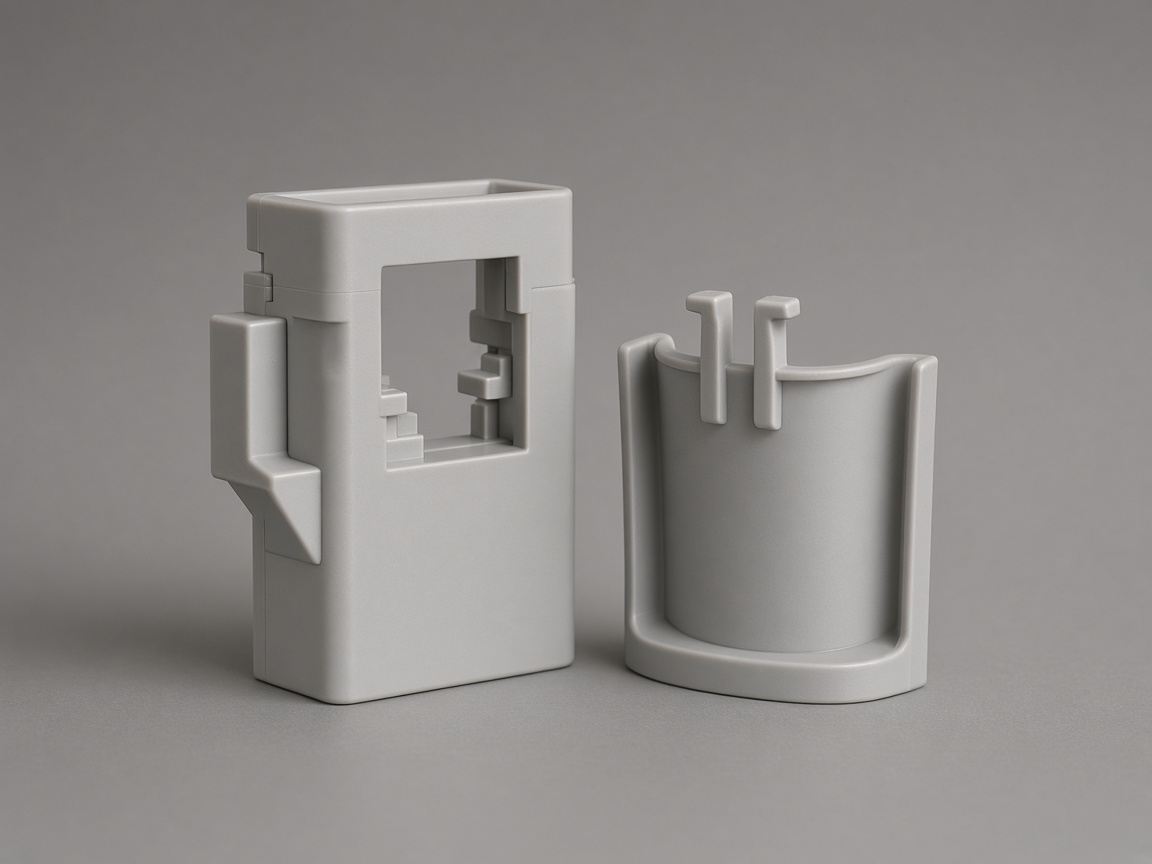
Eliminate first when the function still works: reorient the feature, move the parting line, or add a through hole so steel can shut off. Cantilever snap fits and side holes are common sources. Deep threads may belong on the unscrewing molds page. The design guide lists every topic.
Roles
Stay here for the decision. Open a related guide for the mechanism, the snap, or the CAD check.
| Page | Use it for |
|---|---|
| Undercuts (this page) | Decide if a feature needs action, and what type |
| Side actions | External undercuts: sliders, cams, hydraulic |
| Lifters | Internal lips, snaps, inward features |
| Cantilever snap fit | Snap geometry that may or may not need action |
| Side holes | Hole orientation versus draw direction |
| Draft angle | Lock pull direction and draft before you map undercuts |
| DFM review | CAD check of undercuts before quoting |
Checks
Qualitative checks. NetProto does not publish a universal undercut-depth limit.
External undercut
A clip, barb, or hole on the outside of the part is a side-action candidate unless you can reorient it or shut it off.
Internal undercut
A lip, inward rib, or snap inside a pocket is a lifter candidate. Changing draw direction can turn it external.
Shallow and flexible
A shallow hook on a flexible resin may bump off the core. Rigid resins and deep hooks usually need steel motion.
Deep, threaded, or multi-direction
Deep threads or features that pull in more than one direction may need unscrewing or another mechanism. DFM review picks that from CAD.
Decision
Wrong: add steel after the quote. Right: decide redesign, bump-off, lifter, or slider first.
RFQ
The quote can start from CAD alone. These notes make the DFM pass specific.
Draw or pull direction you want locked
External versus internal undercut map
Flexible or rigid resin family
Annual volume, so review can weigh action complexity
Snap, clip, thread, and side-hole list
Cosmetic witness-line tolerance on action parting surfaces
Related
This page covers the undercut decision. Open a related guide for the mechanism, the snap, or the CAD check.
How NetProto checks undercuts on your CAD before quoting.
DFM reviewAll injection molding design guidelines by topic.
Design guideFAQ
An undercut is any molded feature that blocks the part from releasing in the mold-open direction. Side holes, snap hooks, internal threads, barbs, and recessed clips are common examples. This page decides whether to eliminate the feature, shut it off, bump it off, or add a lifter or side action.
An external undercut sits on the outside of the part and often needs a side action. An internal undercut sits in a pocket or behind a lip and more often needs a lifter. The same feature can switch type if you change draw direction. Open the side actions and lifters pages for those mechanisms.
Use a side action when the undercut is external and the steel must move sideways. Use a lifter when the undercut is internal and the steel must lift as the mold opens. Resin, volume, and how many directions the feature pulls change the call. DFM review picks the mechanism from your CAD.
Often yes. Reorient the feature to the draw direction, move the parting line, add a through window, or shut off the steel so the feature forms without a slider. Eliminate first when the function still works. DFM review will say if the remaining feature still needs an action.
A shallow feature on a flexible resin can sometimes deflect off the core as the part ejects. Rigid resins and deep hooks usually cannot. There is no NetProto bump-off depth specification on this page. Call out resin family and feature depth on the RFQ.
This page covers the decision: redesign, bump-off, lifter, or side action. Side actions and lifters own those mechanisms. Cantilever and annular snap-fit pages own snap geometry. DFM review is how NetProto checks your CAD before quoting.
Next step
Share geometry, resin, draw direction, and which snaps, holes, or threads must stay so review can decide redesign, bump-off, lifter, or side action before quoting.