
Beam strain
Too much travel cracks the beam. Too little falls off. Mark travel on CAD.
Cantilever snap fit
The beam must flex once in assembly and release from the tool. DFM review checks geometry, resin, and whether a lifter or slide is needed.
Design guideline
A cantilever snap is a hook on a flexible beam. Over-deflection cracks the beam. Under-deflection falls off in service. Internal hooks often need a lifter or slide.
Internal hooks often need lifters or side actions . Draft on beam sides reduces drag before the snap is ever assembled. DFM review needs resin, travel, and whether the hook is internal.
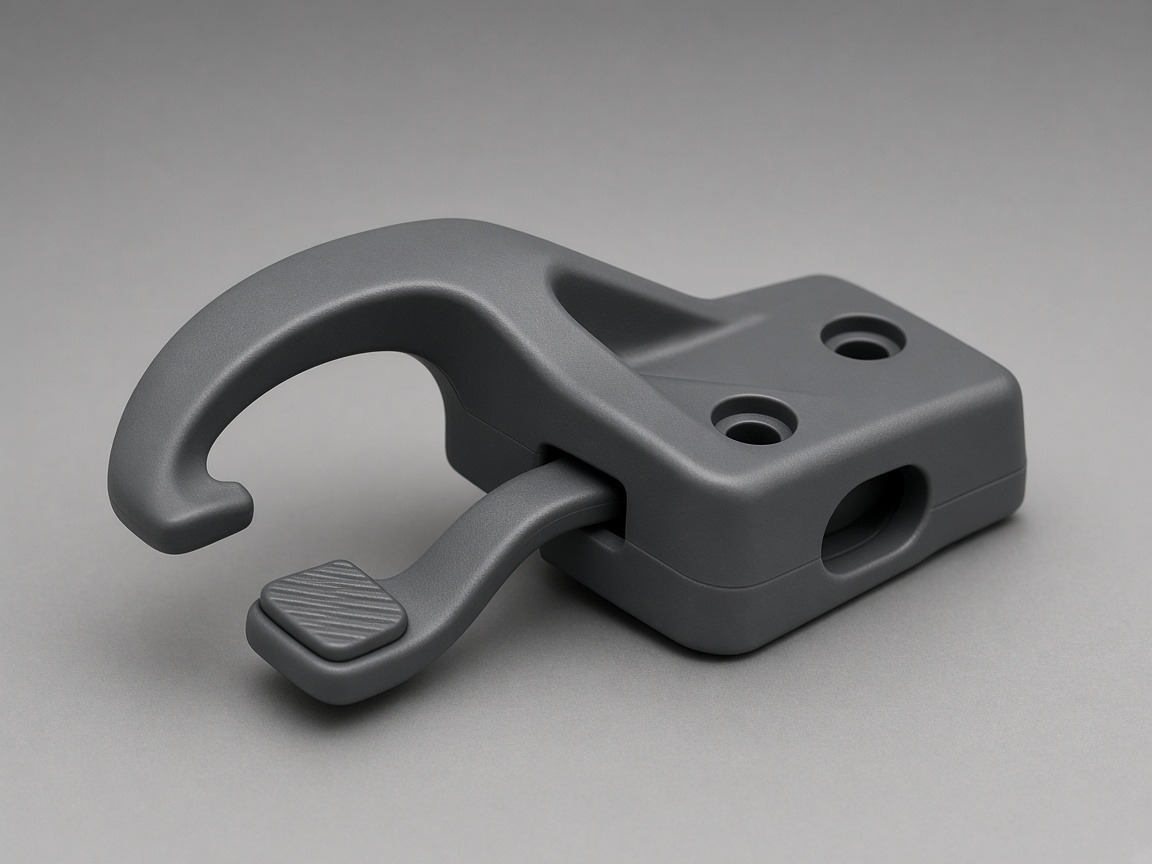
This spoke owns the cantilever beam. Annular snap fits own hoop snaps. Undercuts own the action decision. Do not treat a printed snap as proof of molded strain. The design guide hub lists every topic.
Roles
Stay here for the cantilever beam. Open a sibling for hoop snaps or release steel.
| Page | Use it for |
|---|---|
| Cantilever snap fit (this page) | Beam, hook, and release |
| Annular snap fit | Hoop deflection around a ring |
| Lifters | Internal hook release |
| Side actions | External undercut release |
| Undercuts | Whether an action is needed |
| Living hinge | A flex web, not a snap hook |
| Draft angle | Draft on beam sides |
| Wall thickness | Beam thickness still references a nominal wall |
| DFM review | CAD check before steel |
Checks
Qualitative checks. No figure on this page is a NetProto specification.
Beam strain
Too much travel cracks the beam. Too little falls off. Mark travel on CAD.
Hook undercut
Internal hooks need a lifter or another path. External hooks may shut off.
Draft on the beam
Side draft reduces ejection drag before assembly.
Resin and glass
Glass-filled grades are less forgiving. Name the resin.
Decision
Wrong: prove the snap on a printed part. Right: design strain and release for molded resin.
RFQ
The quote can start from CAD alone. These notes make the DFM pass specific.
Internal or external hook
Intended assembly travel, if known
Resin family, especially if glass-filled
Service cycle count, if known
Draft on beam sides
Whether a lifter or slide is acceptable
Related
Stay on this spoke for its question. Open a sibling for the neighbor topic or the CAD check.
How NetProto checks snaps before steel.
DFM reviewFAQ
A hook on a flexible beam. The beam bends during assembly and the hook retains the mate. Mold release of the hook is a separate problem.
External hooks sometimes shut off. Internal hooks often need a lifter or slide. The undercuts page owns that decision.
It is less forgiving. Beams crack sooner. Name the grade. DFM review comments on your CAD.
A printed snap does not prove molded strain or tool release. Upload CAD for DFM. Do not treat a print as the production joint.
Annular snaps use hoop deflection around a ring. This page owns the beam and hook.
This spoke owns snap geometry. Lifters and side actions own the steel. Undercuts own the decision. DFM review checks CAD.
Next step
Share hook location, resin, and travel so review can check strain and release before quoting.