
Self-tapping in plastic
- Lowest part cost when assemblies are few cycles.
- The post must resist hoop stress from the screw without splitting.
- Strips easily if the driver cam-outs or the post side is thin.
Molded part guide: mounting brackets
A mounting bracket exists to hold fasteners. The plastic around each screw or insert has to survive drive torque, vibration, and the creep that slowly loosens a stressed boss.
Fasteners
Mounting brackets tie a module to a wall, a rail, or a chassis. The bracket plate spreads load, but the critical zones are the bosses: hollow cylinders that take screws, heat-set inserts, or molded-in nuts.
A freestanding post taller than a few screw diameters wobbles when the screw drives. Gussets from post to plate, or posts tied into nearby shell faces, keep the base from cracking.
Self-tapping screws cut threads into plastic. They work on limited cycles. Products that service often specify brass or steel inserts molded or installed after molding.
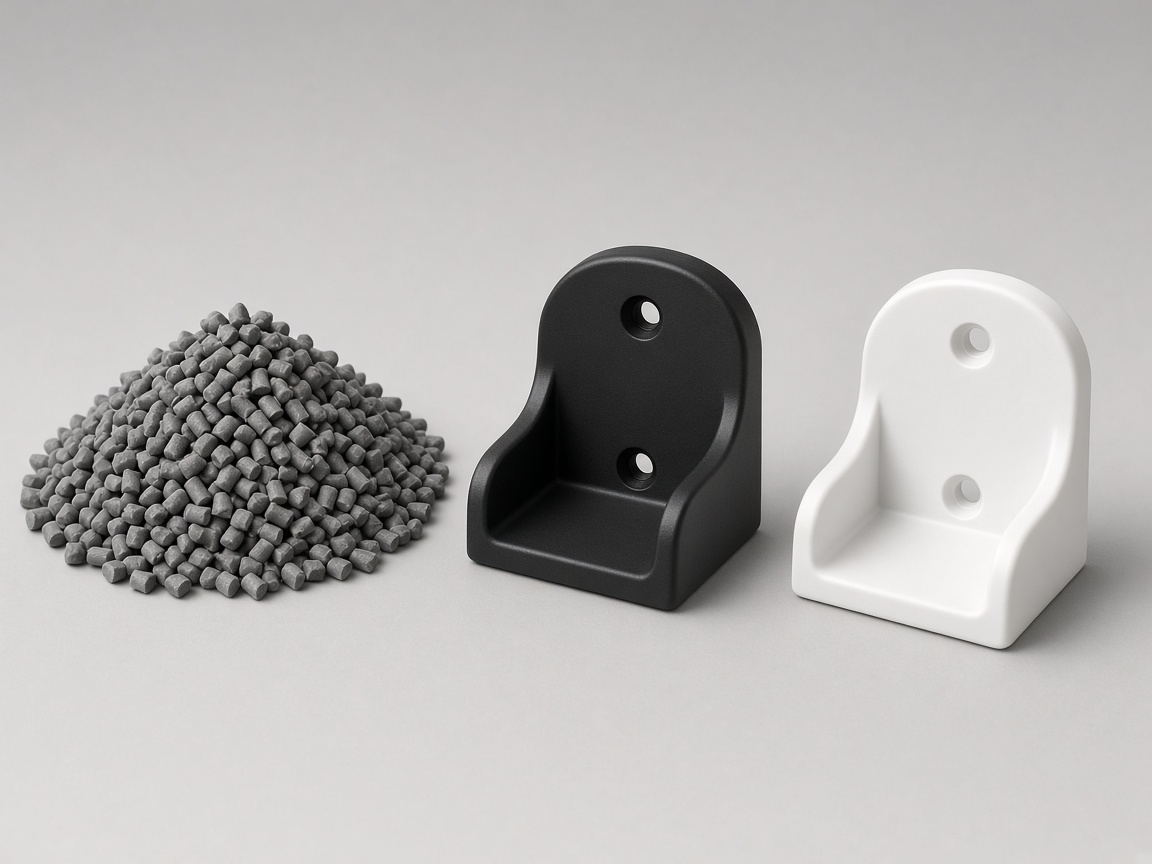
Service tiers
Tiers describe load path and environment for molded brackets. Upload CAD with fastener torque and panel datums in notes when loads are not obvious from geometry.
| Tier | Environment | What matters most | Typical resin route | Quote path |
|---|---|---|---|---|
| 1 Light mount | Small panels, low torque | Boss pull-through and warp on long arms | ABS or PP with ribs | Instant quote; material field ABS or PP |
| 2 Equipment mount | Motors, pumps, repeated service | Creep on screw posts and rib roots | PA-GF or PC/ABS structural | Instant quote; note torque target in comments |
| 3 Outdoor or chemical splash | Exterior machinery, washdown nearby | UV and chemical stress on stressed bosses | UV PA or PC/ABS; grade TBD on TDS | Instant quote; name splash exposure |
| 4 Metal insert or high load | Threaded inserts, high clamp load | Insert pull-out and boss ovalization | Glass-filled PA or PC; insert spec in notes | Upload CAD; expect DFM on bosses |
| 5 Long-span bracket | Wide cantilever arms | Flatness and twist under load | Stiff family with rib plan in drawing | Full RFQ if warp-critical dims flagged |
Materials
Use the material field for one primary family per line item. Put inserts, color, and flame filters in the comments block on the instant quote.
| Family | Typical use on this part type | Notes for instant quote |
|---|---|---|
| ABS | Light indoor brackets | General purpose; tighten grade when heat rises |
| PC/ABS | Structural brackets with impact need | Field PC/ABS; note flame filter if needed |
| PA (nylon) | Loaded bosses and ribs | Field Nylon; note glass fill if the posts carry the load |
| PP | Light-duty mounts away from high heat | Field PP; say if clamp load on the posts is high |
| POM | Low-friction pivot features on same bracket | Field POM; usually local features, not whole bracket |
Thread
Layout

Drawing
Fastener size, type, and torque at each mount
Insert part numbers if inserts are specified
Module or panel CAD that bolts to the bracket
Vibration and shock the mount sees in service
Which post faces are visible after assembly
Expected service cycles per screw
Avoid these
Two choices that show up when the first screws are driven.
Making the post wall the same thickness from the screw entry to the root. The entry has to hold the hoop stress from the screw, and the root needs a radius so the load does not sit on a sharp corner. A thin entry wall or a sharp root is where drive torque splits or cracks the post.
Putting a gusset on only one side of the post. The post can lean as it cools, and it only resists load in one direction. If space allows just one gusset, place it on the side the service load pulls toward, and check the mating face after molding.
Keep reading
Load path and stiffening webs.
BracketsDrive torque in plastic.
Self-tapping screw postsChoosing thread form.
Molded threads vs insertsKnurl and pull-out.
Insert retentionUltrasonic or heat insertion.
Post-mold insertsShorter mount posts for boards.
StandoffsMount post patterns on shells.
Electronic enclosuresHole pattern callouts.
GD&T for molded partsEvery part-type guide.
Molded parts libraryFAQ
The post should capture the insert and leave lead-in for the screw. Insert supplier installation specs define bore depth and post height.
Often undertorqued first build masked thin post walls. Review post outer size, insert presence, and whether the screw is the correct thread-form for plastic.
Torque and pull-out testing is normally done by your team on molded samples against your fasteners and torque spec.
Insert molding can capture a metal plate. Send the plate drawing and how plastic must wrap it.
Both sides keep the post from leaning as it cools and support it in both directions. When only one gusset fits, put it on the side the service load pulls toward, and check the mating face for lean after molding.
Next step
Upload bracket CAD with screw or insert specs and the mate module. DFM feedback covers post walls, gussets, and insert retention.