
Survive fill
Knurl and undercut must not crush or let the insert shift.
Insert retention
Show knurl or undercut on CAD. Opposite cosmetic walls can sink if retention thickens the boss. DFM review comments before steel is cut.
Design guideline
Retention features stop an insert from pulling out or spinning in service. Knurl, barb, hex, and undercut are common. The feature must survive fill without crushing or shifting the insert.
Opposite cosmetic walls can sink when retention features thicken local sections. Pull-out checks on T1 samples validate retention before release. Molded-in inserts own loading metal during fill. Post-mold inserts own after-the-shot install. DFM review needs the insert type.
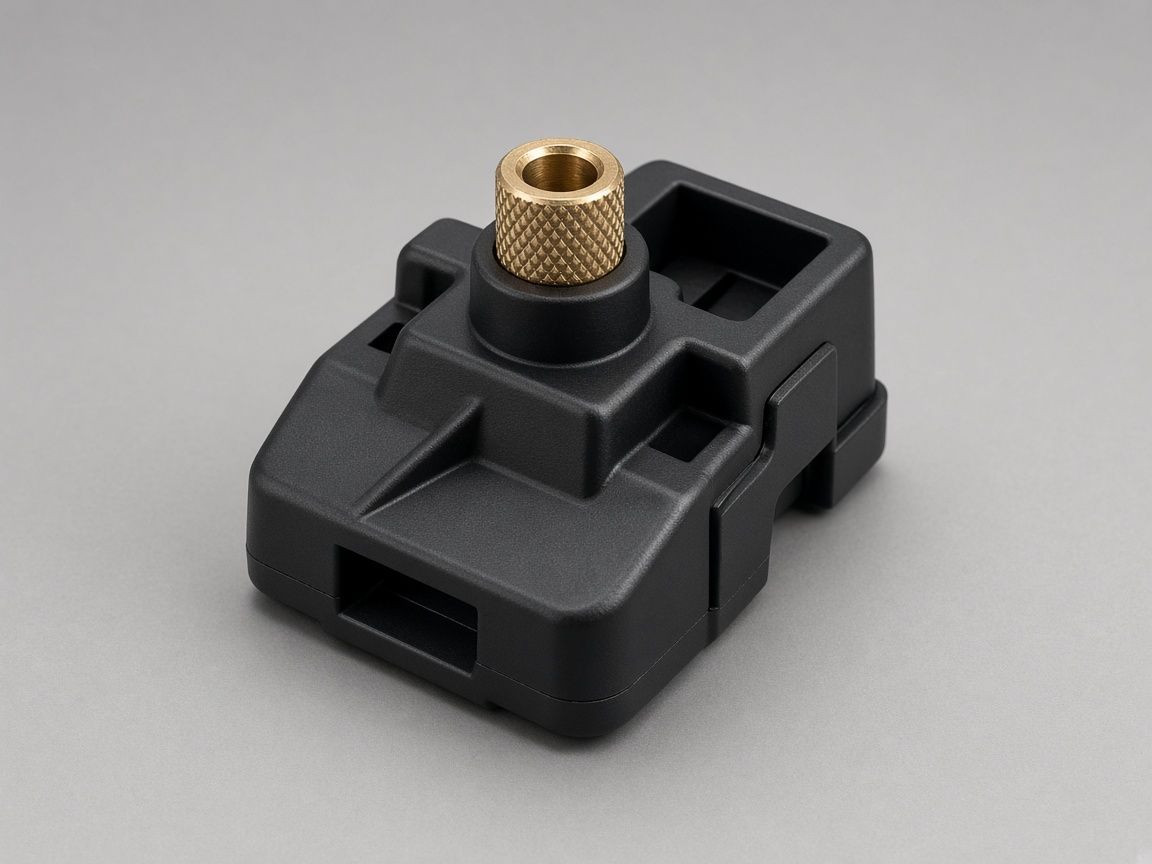
This spoke owns how the insert stays put. Bosses own the plastic post. Insert molding is the capability. The design guide hub lists every topic.
Roles
Stay here for knurl and pull-out. Open a sibling for in-cavity, post-mold, or the post.
| Page | Use it for |
|---|---|
| Insert retention (this page) | Knurl, barb, undercut, pull-out |
| Molded-in inserts | Metal in the cavity during fill |
| Post-mold inserts | Heat-set or press-in after the shot |
| Insert molding | The capability page |
| Boss design | The plastic around the insert |
| Self-tapping screw bosses | Skip metal when a screw can cut plastic |
| Wall thickness | A thick retainer can sink the opposite face |
| Uniform wall thickness | Local mass around the insert |
| DFM review | CAD check before steel |
Checks
Qualitative checks. No figure on this page is a NetProto specification.
Survive fill
Knurl and undercut must not crush or let the insert shift.
Not every insert needs a knurl
Hex, barb, or a vendor profile can be the retainer. Name the type.
Boss still matters
Retention does not replace a cored, drafted post.
T1 pull-out
Samples can check retention. Call out if you need that check.
Decision
Wrong: drop a smooth insert in a thick boss. Right: name the retainer and support the post.
RFQ
The quote can start from CAD alone. These notes make the DFM pass specific.
Insert type and vendor profile, if known
Knurl, barb, hex, or undercut
Pull-out or torque need, qualitatively
Cosmetic face opposite the boss
Molded-in or post-mold path
Whether T1 pull-out checks are required
Related
Stay on this spoke for its question. Open a sibling for the neighbor topic or the CAD check.
The capability when metal is in the shot.
Insert moldingHow NetProto checks knurl and pull-out before steel.
DFM reviewFAQ
The geometry that stops an insert from pulling out or spinning: knurl, barb, hex, or undercut.
Yes. Pull-out or torque checks on T1 samples are common. Call them out if you need them.
No. Some use a barb, hex, or a vendor profile. Name the insert.
A late add is usually steel or insert-type work. Lock the retainer before the tool is cut.
No. The post still needs core, draft, and support. Open the bosses page.
Those spokes own when the metal goes in. This spoke owns how it stays. DFM review checks CAD.
Next step
Share insert type and retainer geometry so review can check knurl, pull-out, and sink before quoting.