
Pilot, not a solid column
The screw needs a bore. A solid boss sinks and cracks.
Self-tapping screw bosses
The screw cuts plastic. Size the pilot, core the boss, and tie it to the wall. DFM review comments on CAD, resin, and screw type before quoting.
Design guideline
A self-tapping screw boss lets the fastener cut threads in plastic. Pilot geometry and wall support matter more than a thick solid cylinder.
Pilot diameter and depth control how much plastic the screw displaces. A boss isolated on a thin wall can sink or crack before the screw strips. Boss design owns the shared post. DFM review needs screw type and resin.
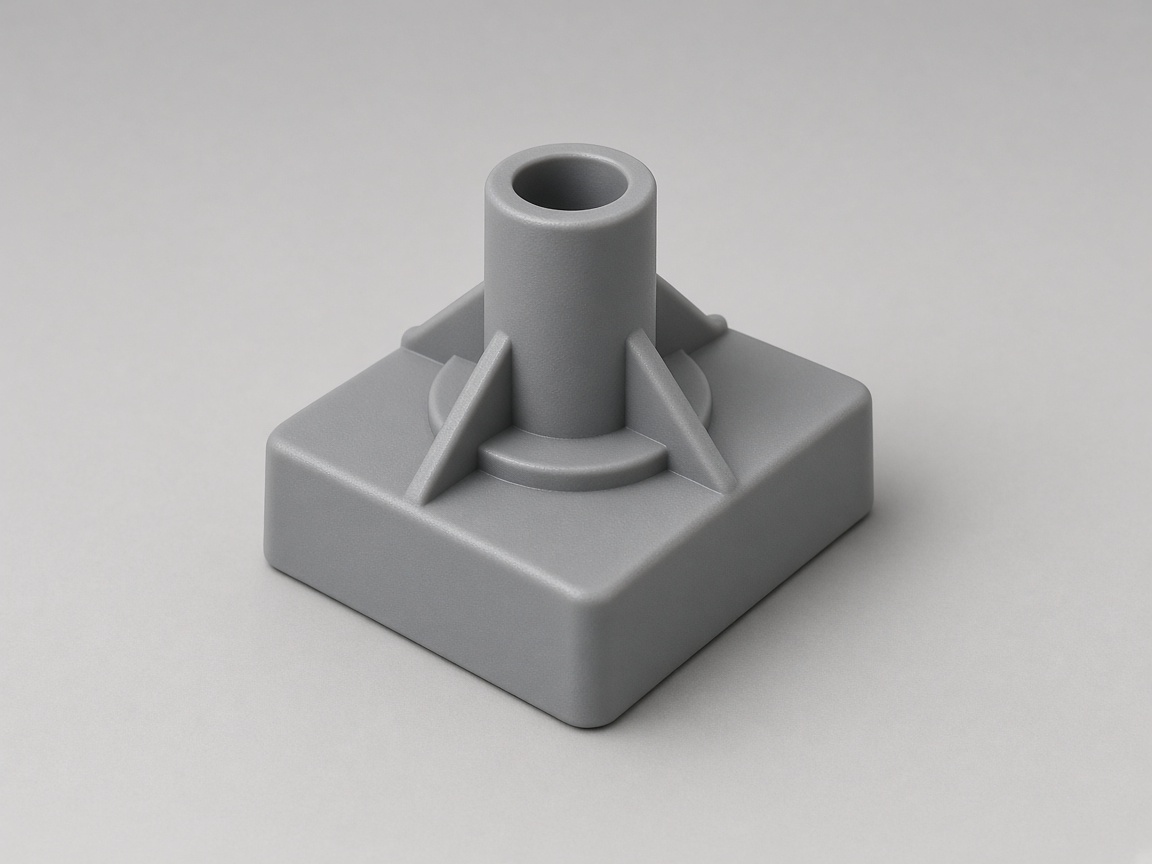
This spoke owns self-tapping pilots. Post-mold inserts and molded-in inserts own metal. Molded-in threads own plastic threads formed in steel. The design guide hub lists every topic.
Roles
Stay here for screws that cut plastic. Open a sibling for inserts or the post.
| Page | Use it for |
|---|---|
| Self-tapping screw bosses (this page) | Pilot, support, and crack risk |
| Boss design | Shared post: core, draft, sink |
| Post-mold inserts | Metal installed after the shot |
| Molded-in inserts | Metal in the cavity |
| Molded-in threads | Threads formed in the mold |
| Gussets | Braces that keep a tall boss from cracking |
| Wall thickness | Nominal wall the boss should reference |
| Draft angle | Draft on OD and bore |
| DFM review | CAD check before quoting |
Checks
Qualitative checks. No figure on this page is a NetProto specification.
Pilot, not a solid column
The screw needs a bore. A solid boss sinks and cracks.
Wall or gusset tie-in
An isolated post on a thin skin fails before the thread strips.
Draft on OD and bore
Both faces need draft. The boss page owns the shared rule.
Resin and glass fill
Glass-filled grades are harder on bosses. Put the grade on the RFQ.
Decision
Wrong: a solid pillar and hope. Right: pilot, core, draft, and a tie back to the wall.
RFQ
The quote can start from CAD alone. These notes make the DFM pass specific.
Screw type and size
Pilot diameter and depth, if you have a target
How the boss ties to the wall or a gusset
Resin family, especially if glass-filled
Cosmetic face opposite the boss
Expected assembly cycles
Related
Stay on this spoke for its question. Open a sibling for the neighbor topic or the CAD check.
How NetProto checks pilots and support.
DFM reviewFAQ
Yes. A self-tapping screw cuts threads in plastic. This page owns that path. Inserts are for joints that need metal.
Yes on the OD and the bore. The boss and draft pages own those faces.
Usually the post is isolated, the pilot is wrong, or the resin is brittle or glass-filled without support. Tie it back and check the screw type.
Size it from the nominal wall. NetProto does not publish a boss-to-wall ratio. The bosses page owns the shared post.
When the joint sees many cycles, high load, or a resin that does not hold a cut thread. Open the insert spokes.
Bosses own the post. This spoke owns the self-tapping pilot. Insert pages own metal. DFM review checks CAD.
Next step
Share screw type, resin, and how bosses tie to the wall so review can check pilot, support, and sink before quoting.