
Shot size
Sprue volume is part of shot weight.
Shot sizeGlossary
Sprue connects nozzle to runner. See cold versus hot sprue scrap, bushing fit, and links to shot size and cycle time.
Glossary
Stringing, pull marks, and drool often start here before the cavity ever fills.
A sprue is the tapered channel that carries molten plastic from the injection machine nozzle into the mold sprue bushing and runner system. In cold runner tools the sprue solidifies every cycle and becomes scrap. In hot runner tools the nozzle interface may bypass a cold sprue slug entirely.
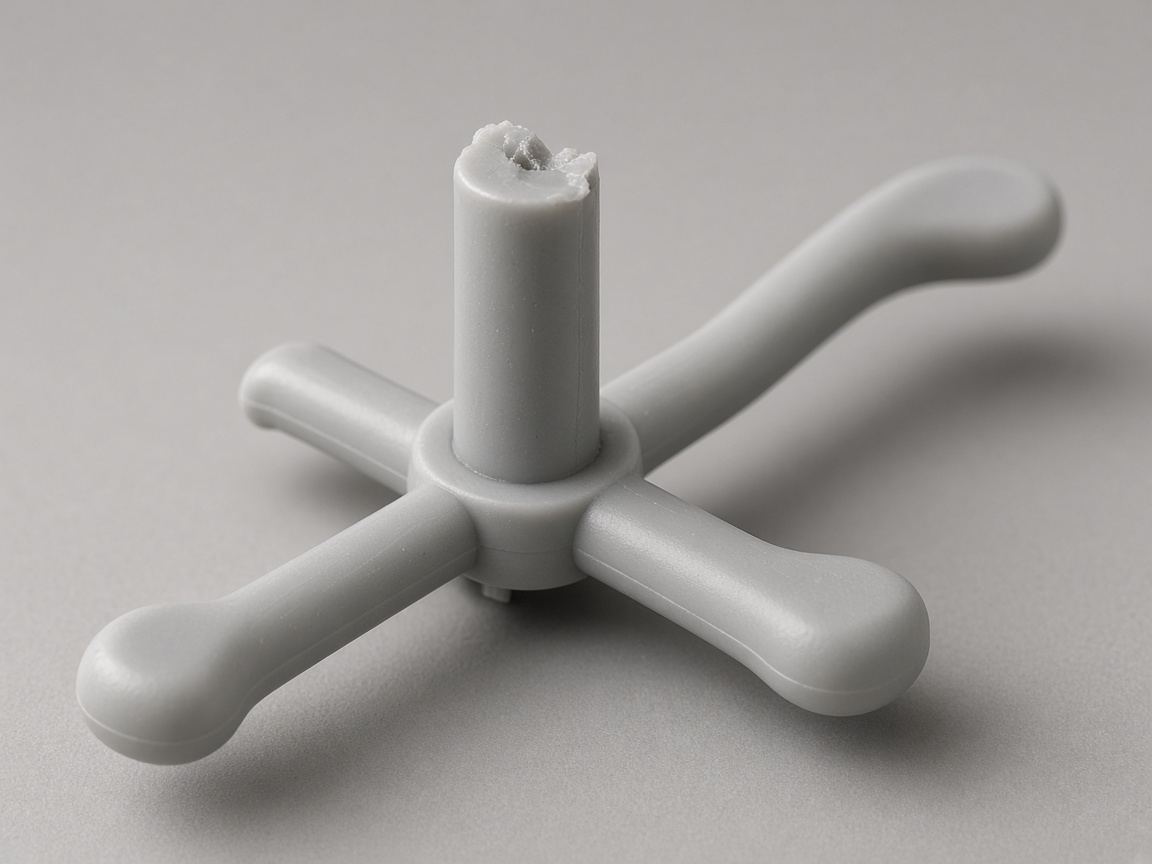
On single cavity thick wall parts, the sprue can serve as a direct gate. Sprue cooling time may then exceed part cooling and become the cycle limiting factor.
Sprue pull quality shows up as roughness or material stuck in the bushing when taper, temperature, or nozzle seat fit mismatch the resin.
Tooling
The first channel sets pressure, temperature, and scrap on cold runner tools.
Feed path
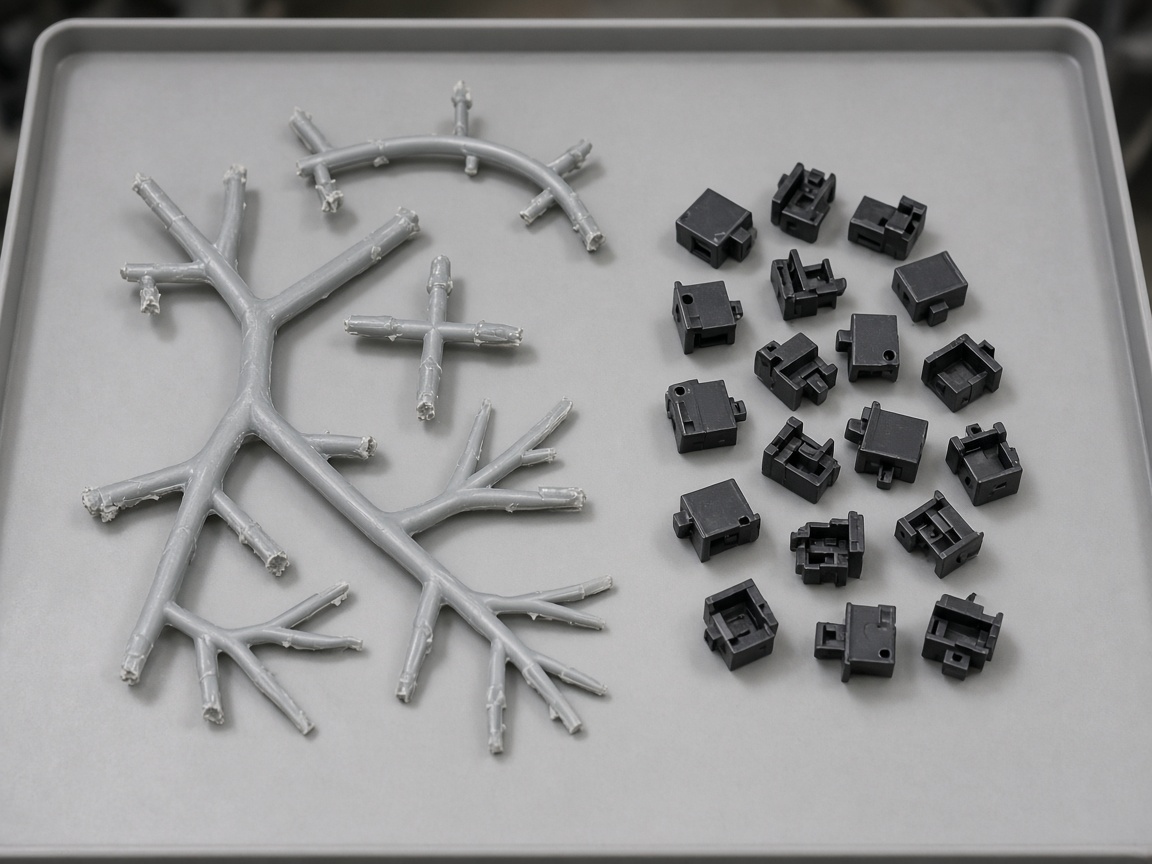
Where each segment sits and what becomes scrap on a cold runner tool.
| Term | Location | Function | Waste on cold runner? |
|---|---|---|---|
| Sprue | Nozzle to runner | First inlet, pressure and temperature entry | Yes |
| Runner | Sprue to gates | Distribute melt to cavities | Yes |
| Gate | Runner to cavity | Control fill, freeze off, and vestige | Small vestige only |
Design
Confirm taper, seat radius, and puller style with your tooling engineer.
Taper angle: often roughly 2 to 5 degrees per side for clean release
Sprue length: shorter reduces pressure drop and melt residence time
Nozzle seat radius: must match sprue bushing radius to limit leakage
Cold slug well: traps the first cool material before it enters cavities
Sprue puller: reverse taper or puller pin keeps the slug on the moving half
Troubleshooting
Photograph stringing, pull marks, and drool when they appear on T1 or production.
Sprue sticks in bushing: taper too shallow or missing puller
Nozzle drool between cycles: shot size high or decompression not set
Stringing or pull marks on sprue ejection
Cold slug entering cavity: slug well too shallow or missing
Discoloration only in sprue: residence time high on long sprue paths
Thick sprue extends cycle when sprue cools slower than the part wall
Cost
Scrap math matters most on small parts and high cavitation cold runner tools.
On small cold runner parts, sprue and runner can be a large share of each shot. High volume programs often justify a hot sprue bushing or hot runner to cut scrap.
NetProto reviews sprue geometry with resin, part wall, cavity count, and machine nozzle before quoting tooling scope.
Go deeper
Shot weight, cycle time, and runner type all connect at the nozzle interface.
Sprue volume is part of shot weight.
Shot sizeSprue cooling can limit cycle on thick sections.
Cycle timeFeed path continues after the sprue.
RunnerFinal restriction before the cavity.
GateEliminates cold sprue scrap on many layouts.
Hot runnerSprue and runner solidify as waste each cycle.
Cold runnerHow sprue and runner scrap re enters the process.
RegrindVisual reference
Images are selected from the NetProto Forge media library for this topic.

Cold runner sprue slug on tray
Cold runner sprue slug on tray

Nozzle seat on mold sprue bushing
Nozzle seat on mold sprue bushing

Direct sprue gate vestige on part
Direct sprue gate vestige on part
FAQ
Yes on cold runner tools. Sprue, runner, parts, and cushion make up the full shot the screw delivers each cycle.
The hardened steel insert that forms the sprue channel and seals against the machine nozzle seat.
Cold sprue solidifies as scrap each cycle. Hot sprue uses a heated bushing to keep melt liquid and eliminate the cold slug at the nozzle interface.
Cold runner scrap belongs in resin planning even if buyers only count net part weight.
Yes when sprue cooling or sticking slows ejection, or when a direct sprue gate limits cooling time on thick wall parts.
No. Hot runner layouts and some gate styles move or eliminate the cold sprue witness.
Next step
Upload CAD when material changes or gate moves are on the table.