
Do not copy the billet
Solid metal webs become sink and long cycles in plastic.
Metal to plastic conversion
Show the metal original and the plastic intent. DFM review comments on draft, mass, and joints. One hardened steel tool is the tooling product.
Design guideline
A machined or cast metal part is not a drop-in plastic part. Plastic needs draft, even walls, and ribs instead of solid webs. This page covers that redesign. It does not publish a cost delta.
Metal to plastic conversion redesigns the part for molding. Plastic needs draft , uniform wall thickness , and ribs instead of solid metal webs. DFM review needs the original and the new intent.
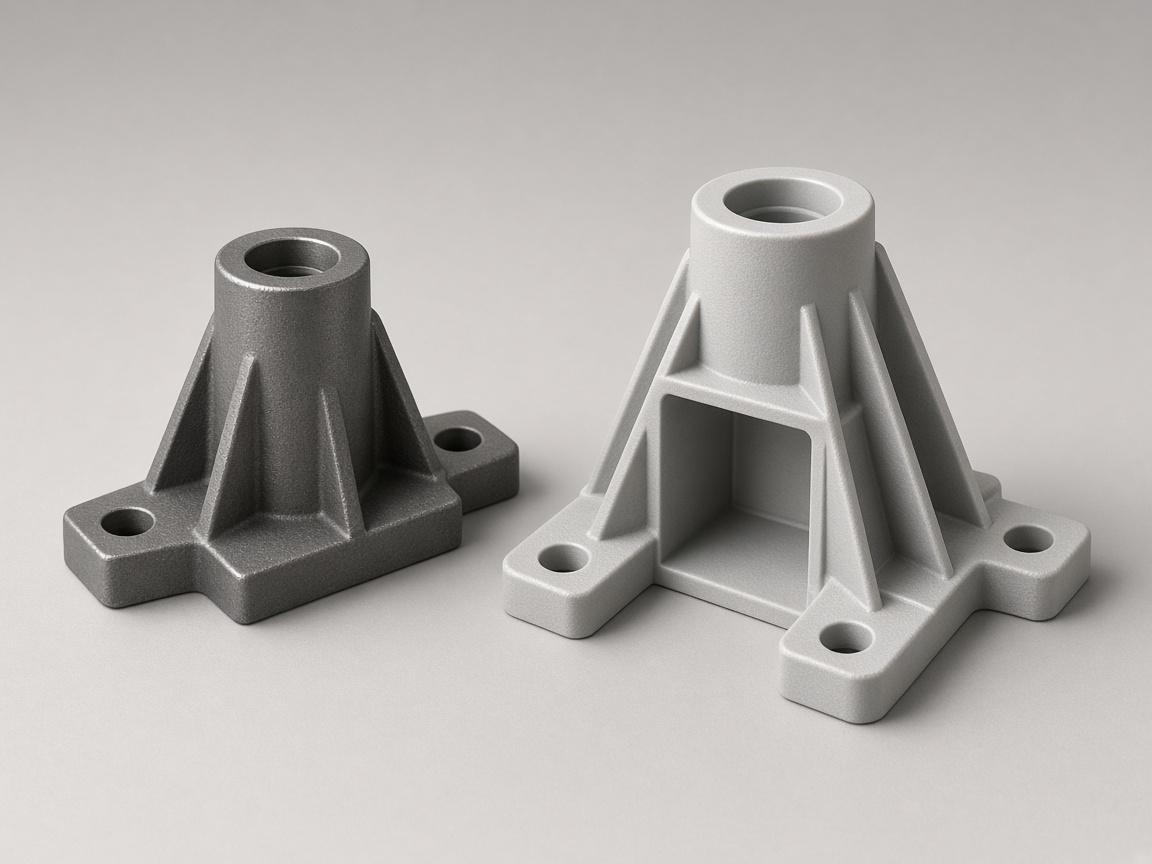
This page covers the conversion redesign. Assembly features can replace loose brackets. Insert molding keeps metal only where you still need it. The design guide lists every topic.
Roles
Stay here for the redesign. Open a related guide for the wall, the rib, the insert, or the CAD check.
| Page | Use it for |
|---|---|
| Metal to plastic conversion (this page) | Redesign the metal part for molding |
| Uniform wall thickness | Even walls instead of a solid billet |
| Rib design | Stiffness without a thick web |
| Draft angle | Release that metal parts never needed |
| Assembly features | Joints that can replace hardware |
| Insert molding | Keep metal only where you still need it |
| Coring out | Remove mass from thick islands |
| Thick section design | Islands that still need coring |
| DFM review | CAD check before steel |
Checks
Qualitative checks. No figure on this page is a NetProto specification.
Do not copy the billet
Solid metal webs become sink and long cycles in plastic.
Draft is new work
Machined parts often have none. Molded parts need it to leave the tool.
No published savings
Weight and part-count can drop. This page does not publish a cost delta.
One steel tool
The tooling product stays one hardened steel mold, not a metal-copy shortcut.
Decision
Wrong: the same solid web in plastic. Right: even walls, ribs, draft, and molded joints.
RFQ
The quote can start from CAD alone. These notes make the conversion pass specific.
Metal original and plastic intent, if both exist
Loads, heat, and chemical exposure you still need
Walls, ribs, and cores that replace solid webs
Draft on faces that were machined square
Joints that can become snaps, bosses, or inserts
Resin family, including glass fill
Related
Related guides for the next question, plus a CAD check when you are ready.
Keep metal only where you still need it.
Insert moldingThe process this conversion is for.
Injection moldingHow NetProto reads a conversion CAD pack.
DFM reviewFAQ
Usually no. Plastic needs draft, even walls, and cores. A copied billet sinks and warps. Upload both CAD files so DFM review can comment.
This page does not publish a cost or a savings figure. Weight and part-count often change. The instant quote is the price path.
That is a different process. Metal injection molding is not this conversion. This page is for a plastic molded equivalent.
Copying the metal geometry directly into plastic. A solid billet becomes a thick island that sinks and warps. Core the mass, add ribs, and upload both CAD files for DFM review.
Insert molding keeps metal only where you still need it. Name the inserts on the RFQ. DFM review comments on CAD.
This page covers the conversion redesign. Wall and rib pages own those features. DFM review checks CAD.
Show the metal original, the plastic intent, loads, heat, and any inserts you still need. Upload CAD so DFM review can comment before quoting.
Next step
Share the metal original and the plastic intent so review can comment before quoting.