
Cabin and appliance
- Unfilled or modestly filled nylon or PP
- Clip flexes for wire insertion by hand
- UV and cleaning agents if exposed
Molded part guide: cable clips
A cable clip has to hold a bundle without pinching insulation, stay on the bracket or panel, and let the assembler snap wires in without a fight. Harness plants notice when the legs are too stiff or the entry mouth is too sharp.
Harness
Automotive and appliance harnesses drive most custom cable clips.
Clips grip one or more wires with a flexible arch, a hinged cover, or a snap-over saddle. The clip also mounts to a sheet metal edge, a stud, a push-pin hole, or a molded screw post. Each mount type needs its own tolerance story. High temperature is a resin and environment choice, not a different clip. Prototype injection molding is a separate path from a production clip mold.
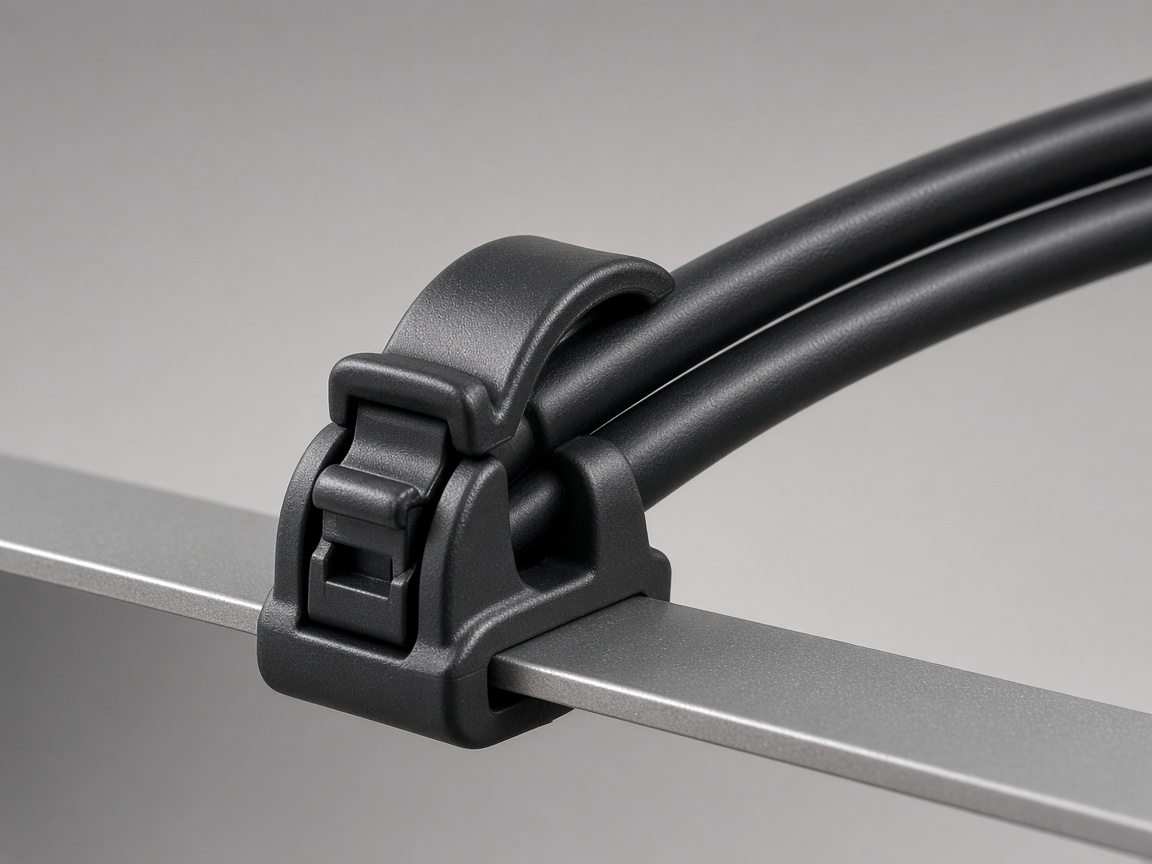
Bundle diameter varies with wire count and supplier. Design the mouth for the maximum bundle without cutting insulation, and decide whether a minimum bundle is allowed to rattle or needs a secondary latch.
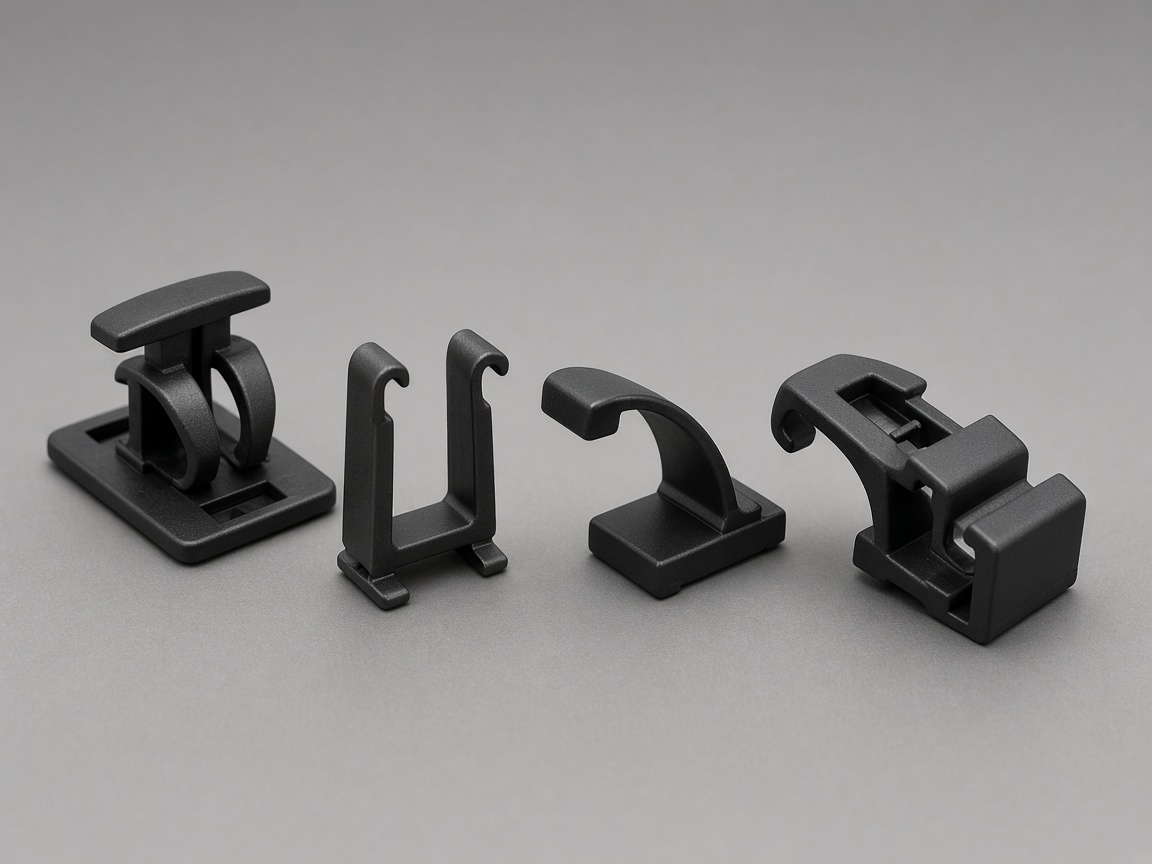
Clips near connectors sometimes include strain relief: the wire exits straight for a short distance before bending. That section is molded geometry, not an add-on tie wrap.
Mount
| Mount | Typical use | Molding note |
|---|---|---|
| Push pin into panel hole | Appliance and interior trim | Arrow legs need release taper and symmetric flex |
| Edge clip on sheet metal | Automotive firewall and brackets | Jaw opening must span the sheet gauge range |
| Screw or bolt through base | Heavy bundles and vibration | Metal insert or threaded mount in the clip base |
| Adhesive pad area | Smooth surfaces where holes are not allowed | Flat landing with no sink on the pad face |
Service tiers
Mount and clip focus: Harness routing, bundle range, and mount type. Upload CAD with panel thickness, bundle OD, or bolt pattern in notes when the model omits them.
| Tier | Environment | What matters most | Typical molded route | Quote path |
|---|---|---|---|---|
| 1 Adhesive pad | Smooth surface, no hole | Flat landing, no sink on the pad face | Nylon or PP | Instant quote; field the resin |
| 2 Screw or stud | A heavy bundle or vibration | Insert or threaded mount in the base | Nylon | Instant quote; note the screw or stud |
| 3 Edge clip | Sheet metal edge | Jaw spans the sheet gauge range | Nylon or PP | Instant quote; note gauge and bundle |
| 4 Strain relief | Straight exit before the bend | Molded into the clip, not a tie wrap | Same resin as the clip | Upload CAD; mark the exit direction |
| 5 Under hood or outdoor | Heat, fluids, or UV | A stiffer grade raises insertion force | Glass-filled nylon or PBT | Instant quote; describe the route |
Materials
One family per clip or bracket line item. Put mate material and tolerance stack in comments.
| Family | Typical use on this part type | Notes for instant quote |
|---|---|---|
| PA (nylon) | Interior clips that flex by hand | Field Nylon; say if it is glass filled |
| PP | Light indoor clips | Field PP |
| PBT | Under-hood clips, with glass-filled nylon | Field the grade; note heat and fluids |
Environment
Avoid these
Two choices that show up when the harness will not go in, or will not stay.
Sizing the mouth for one wire diameter. Bundle size changes with wire count and supplier. The maximum bundle has to enter without cutting the insulation, and you have to decide whether the minimum bundle may rattle or needs a second latch.
Treating a hot or outdoor route as a different clip shape. Temperature, fluids, and UV are a resin choice. Interior clips are often unfilled nylon or PP so they flex by hand. Under-hood clips move to glass-filled nylon or PBT, and insertion force goes up.
Drawing
Minimum and maximum bundle diameter or wire list
Mount feature: hole size, edge depth, or stud size
Insertion direction for wires and for mount
Temperature, fluids, and UV exposure
Vibration and whether the clip must anti-rattle
Color match if the clip is visible to the customer
Keep reading
General retainer types.
ClipsPanel pass-throughs, not routing saddles.
GrommetsCantilever math for flexible legs.
Snap fit clipsThe unfilled nylon used on interior clips.
NylonStiff clips for hot zones.
Glass-filled nylonScrew mount clips.
Self-tapping screw bossesCable exit and overmold context.
Sensor housingsSoft saddle on a rigid clip.
OvermoldingSheet metal mates for edge clips.
BracketsEvery part-type guide.
Molded parts libraryFAQ
No. NetProto molds the clip. Wire insertion and harness routing stay with your harness shop or assembly line.
Often yes, within a designed range. Send min and max bundle size so the mouth and retention force are reviewed at both extremes.
Send the OEM drawing or a sample. Reverse-engineered geometry still needs your approval against their retention tests.
One molded clip is one resin and one color. Two colors mean two separate parts, or an overmolded design with a second material.
Glass-filled nylon or PBT is the usual move when the clip sees heat. The clip is stiffer, so insertion force goes up, and a sharp radius cracks more easily than it would on an unfilled interior clip.
No. Near a connector the wire should leave the clip straight for a short distance before it bends. That section is molded into the clip.
Next step
Upload CAD with wire range and panel or stud details. DFM feedback covers flex legs, mount fit, and gate placement.