
Hide on ribs and flanges
Class-A faces are keep-off unless you accept the mark.
Ejector pin placement
Upload a keep-off map. DFM review comments before pin layout is locked. The ejection-design page owns stripper plates and sleeves.
Design guideline
Pin placement is a cosmetic choice as much as a mold choice. Pins on glossy faces show even when flush. Texture hides minor witness. This page owns where pins land, not the whole ejection system.
Ejector pin placement decides where witness marks appear. Pin clusters around deep ribs need support without punching through thin walls. Ejection design owns the system. Ejector pin marks own the defect. The ejector pin glossary defines the pin. DFM review needs keep-off faces.
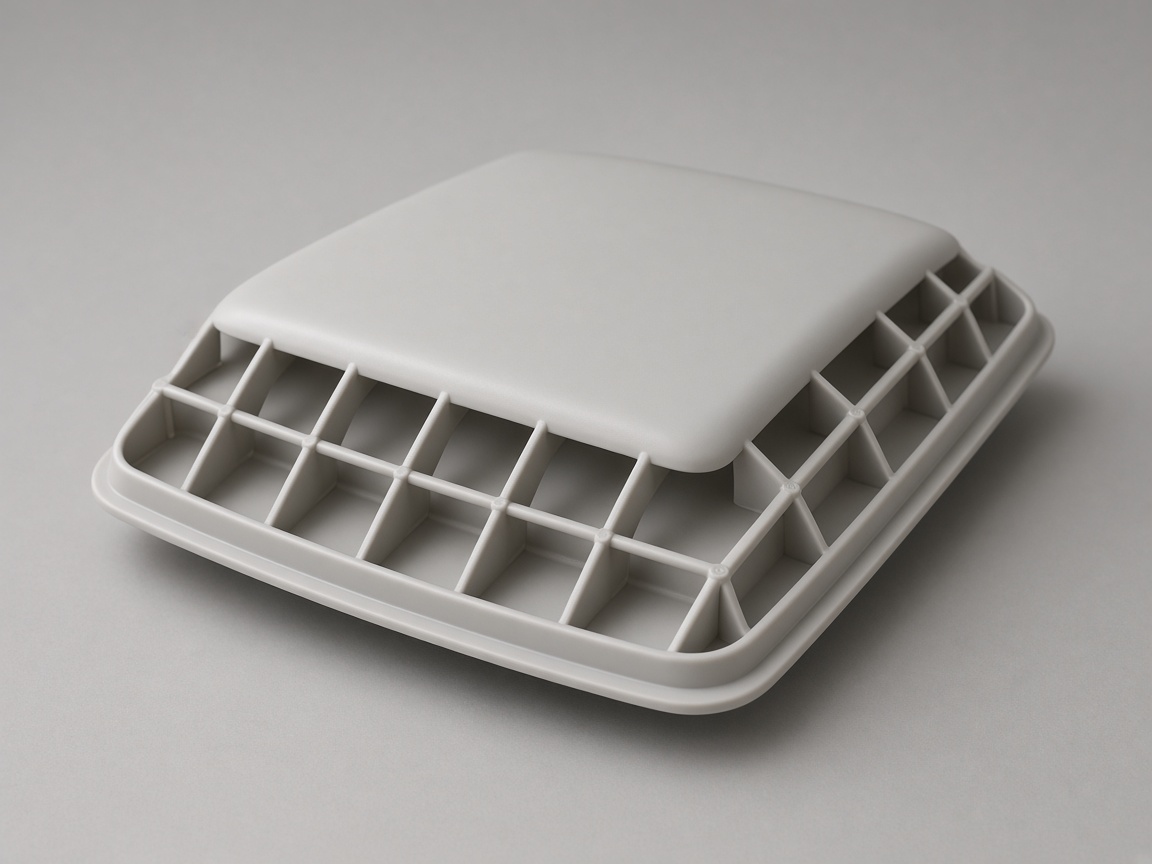
This spoke owns placement. The design guide hub lists every topic.
Roles
Stay here for where pins land. Open a sibling for the system, the mark, or the glossary.
| Page | Use it for |
|---|---|
| Ejector pin placement (this page) | Where pins may land |
| Ejection design | Pins, strippers, sleeves as a system |
| Ejector pin marks | The witness defect |
| Ejector pin glossary | What a pin is |
| Texture draft | Grain that can hide a small mark |
| Rib design | Rib feet as pin landing zones |
| Draft angle | Draft that helps the part leave |
| Wall thickness | Pins on a thin skin dent |
| DFM review | CAD check before steel |
Checks
Qualitative checks. No figure on this page is a NetProto specification.
Hide on ribs and flanges
Class-A faces are keep-off unless you accept the mark.
Support, do not punch
Pins on a thin skin dent or pierce. Sit them on a rib crossing.
Size is tooling
Pin diameter is not a published spec. Placement is the buyer input.
Sleeves are a system choice
Sleeve ejectors belong on the ejection-design page.
Decision
Wrong: a pin grid on a gloss cover. Right: a hidden belt on ribs, then let tooling size the pins.
RFQ
The quote can start from CAD alone. These notes make the DFM pass specific.
Class-A keep-off faces
Hidden ribs or flanges that can take pins
Thin walls that cannot take a pin
Texture that may hide a small mark
Whether a stripper or sleeve is acceptable
Who approves pin locations
Related
Stay on this spoke for its question. Open a sibling for the neighbor topic or the CAD check.
The witness defect.
Ejector pin marksWhat a pin is.
Ejector pin glossaryHow NetProto reads keep-off maps on CAD.
DFM reviewFAQ
On hidden ribs, flanges, and other keep-in zones. Keep them off class-A faces unless you accept the mark.
A late change is steel work. Lock keep-off faces before the layout freezes.
Poor shutoff or worn pins can. The defect page owns the mark. This page owns where they sit.
No. They are a system choice for bosses and rounds. Open ejection design.
Say on the RFQ if cosmetics are critical. DFM review comments on CAD.
This spoke owns where pins land. Ejection design owns the system. DFM review checks CAD.
Show class-A keep-off faces, hidden rib crossings that can take pins, thin walls that cannot, and who approves the layout. Upload CAD so DFM review can comment before quoting.
Next step
Share class-A faces and hidden belts so review can place pins before quoting.