
Substrate first
The first shot must exist as a stable part before the second shot lands.
Two-shot part design
Mark both resins, the bond face, and keep-off shutoffs. DFM review comments on CAD. Bond pairs are not a published spec.
Design guideline
Two materials on one part need a substrate that can take the second shot without flash. This page owns part design for that stack. The process page owns the cycle. Overmolding is the capability path when the program is scoped.
Two-shot part design starts with the first-shot substrate and the bond shutoff. The substrate must hold the second material without flash across the join. Overmolding is the capability path. The two-shot process page owns the cycle. DFM review needs both resins on the RFQ.
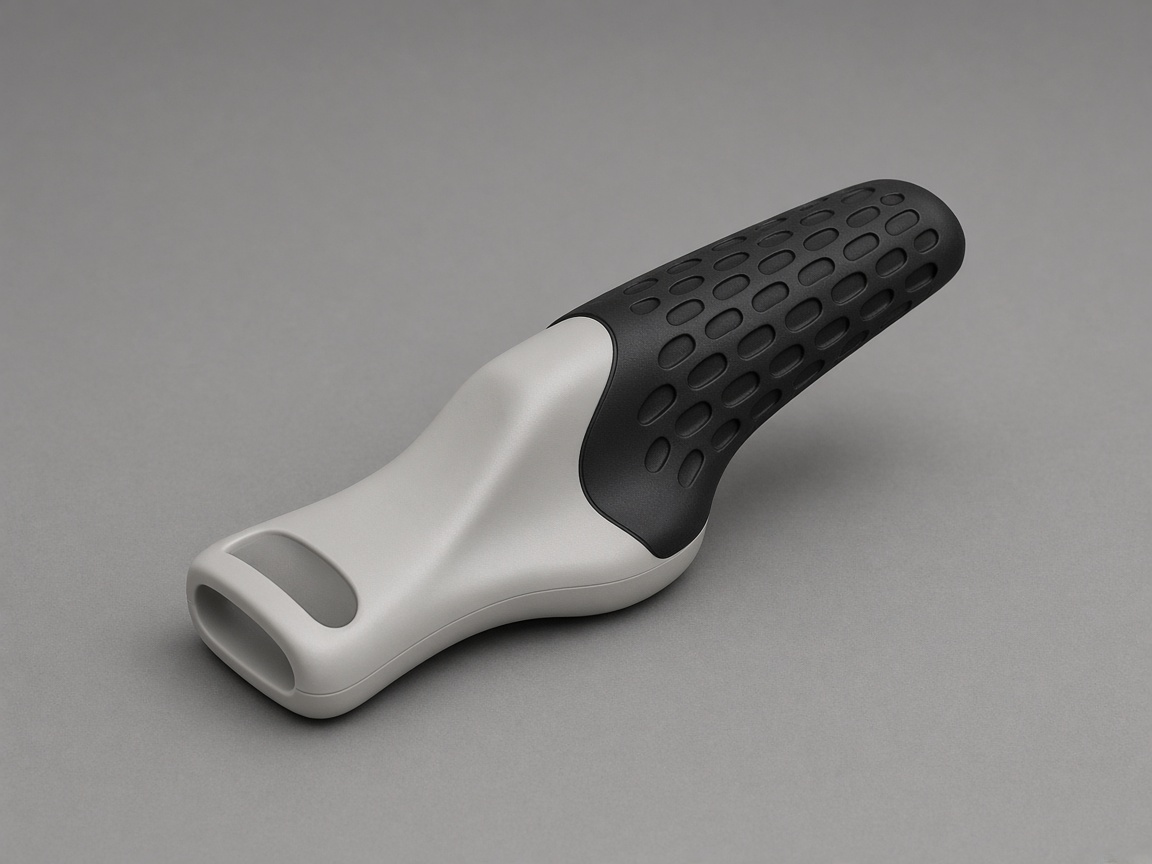
This spoke owns part geometry for two materials on one part. It does not publish bond pairings. Open overmolding bond failures and the TPE adhesion checklist for adhesion lessons. The design guide hub lists every topic.
Roles
Stay here for substrate and shutoff design. Open a sibling for the cycle, the capability, or adhesion.
| Page | Use it for |
|---|---|
| Two-shot part design (this page) | Substrate, bond face, and shutoff |
| Overmolding | The multi-material capability |
| Two-shot molding process | How the cycle runs |
| Overmolding bond failures | Why a bond peels |
| TPE adhesion checklist | What to mark for a soft shot |
| LSR overmold design | Silicone when scoped on the RFQ |
| Draft angle | Draft needed on first-shot walls |
| DFM review | CAD check before steel |
Checks
Qualitative checks. No figure on this page is a NetProto specification.
Substrate first
The first shot must exist as a stable part before the second shot lands.
Shutoff is steel work
A fuzzy bond edge is a flash path. Mark keep-off faces.
No published pair list
Resin pairs are program specific. Name both families on the RFQ.
One part, two materials
If you can assemble two parts, say so. That is a different quote.
Decision
Wrong: a second color with no shutoff or substrate. Right: a first-shot core, a marked bond face, and a clear reason for one part.
RFQ
The quote can start from CAD alone. These notes make the two-material pass specific.
First-shot substrate and second-shot volumes
Bond faces and keep-off shutoffs
Both resin families, including glass fill or LSR
Whether two assembled parts are acceptable
Cosmetic class on the bond edge
Who approves a visible knit or flash risk
Related
Stay on this spoke for its question. Open a sibling for the neighbor topic or the CAD check.
The multi-material capability.
OvermoldingHow the cycle runs.
Two-shot molding processWhy a bond peels.
Overmolding bond failuresWhat to mark for a soft shot.
TPE adhesion checklistSilicone when scoped on the RFQ.
LSR overmold designSoft-touch material context.
Grips and sealsLiquid silicone when the RFQ scopes it.
LSR materialHow NetProto reads two-material CAD.
DFM reviewFAQ
It is geometry for two materials on one molded part: a first-shot substrate, a bond face, and a shutoff. The process page owns the cycle.
Both put two materials on one part. Overmolding is the capability path. Two-shot cycle details live on the process page. DFM review comments on CAD.
None as a specification. Name both families on the RFQ. TPE, TPU, TPV, and LSR can be named. Bond pairs are not a published list.
LSR molding and LSR overmolding are in scope when the program is scoped on the RFQ. Upload CAD so DFM review can comment.
Say so on the RFQ. Two assembled parts are a different quote from one two-material part. This page does not pick the process for you.
The first shot follows the same draft rules as any molded part. The second shot may need a different release if it bonds. Open draft angle for that rule. Mark both drafts on CAD for DFM review.
This spoke owns part design. Overmolding owns the capability. The process page owns the cycle. DFM review checks CAD.
Show the first-shot body, the second-shot volume, bond faces, keep-off shutoffs, and both resin families. Upload CAD so DFM review can comment before quoting.
Next step
Share both resins and the bond shutoff so review can comment before quoting.