
As cut EDM on visible land
- Matte gray appearance from recast layer and pitting
- Flow marks may look worse on high gloss expectations
- Requires stoning, polish, or texture spec to match SPI targets
Glossary
EDM erodes conductive mold steel with controlled sparks. Sinker EDM, wire EDM, and hole drilling EDM each solve different geometry problems in tool making.
Definition
EDM (electrical discharge machining) erodes conductive materials with controlled sparks.
Electrical discharge machining removes material by vaporizing tiny bits of steel with repeated sparks. Mold makers use it where cutters cannot reach or where steel is already hard.
It covers three processes used in injection mold tooling: sinker EDM for blind cavities and deep ribs, wire EDM for through cut profiles, and hole drilling EDM for small deep holes.
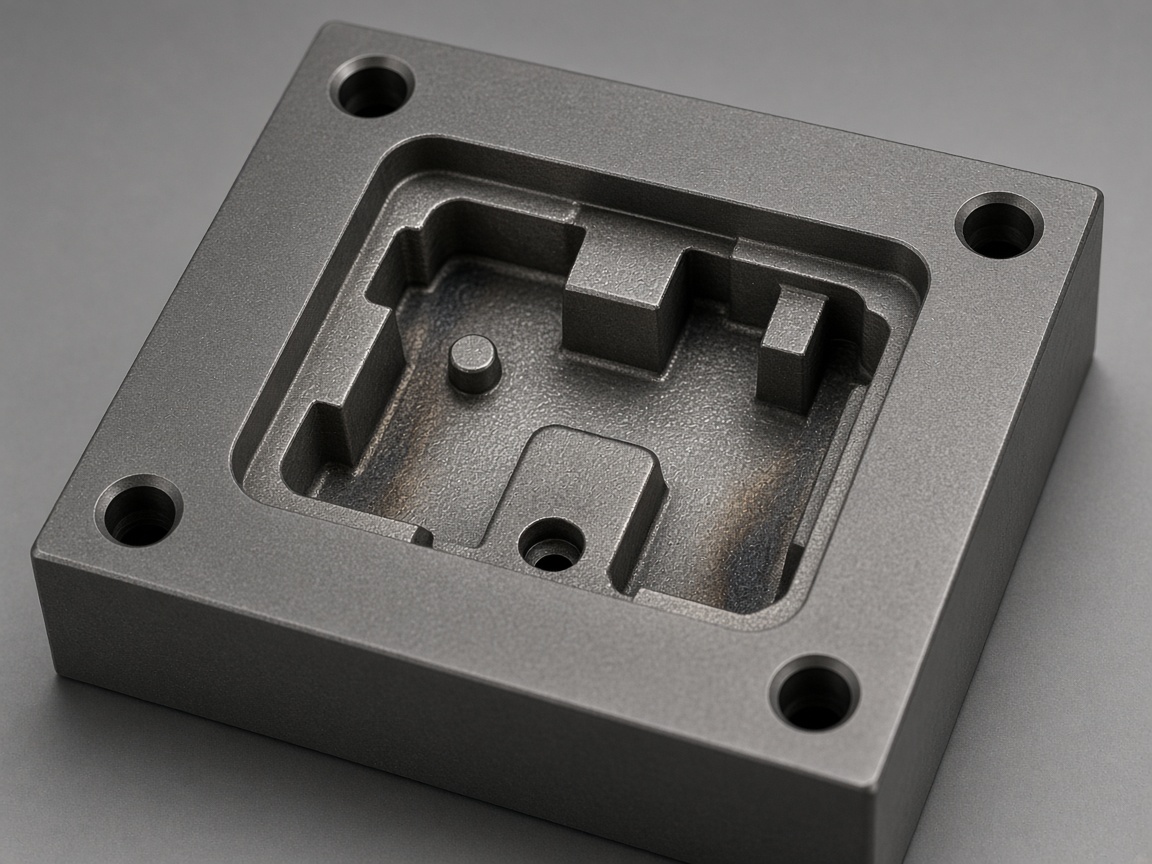
This page is the EDM family overview and how each process fits mold making. Sinker EDM details below apply to ram EDM on cavity and core steel.
Wire EDM is a sibling process that uses a moving wire for through cuts and insert outlines. See the wire EDM page for details. For small deep holes such as wire start holes and vent paths, see hole-drilling EDM . For blind cavities and deep ribs with shaped electrodes, see sinker EDM .
Toolmaking
Sinker EDM cuts blind ribs and pockets; wire EDM cuts through profiles. Recast layer affects finish on both.

Processes
Each process solves a different geometry problem. See the dedicated pages for sinker EDM, wire EDM, and hole-drilling EDM.
Sinker EDM (ram or die sinking): shaped electrode erodes hardened steel for blind cavities, deep ribs, sharp corners, logos, and textures. Most common in cavity and core making. See the sinker EDM glossary entry.
Wire EDM: traveling wire cuts through profiles for inserts, parting plates, ejector pin holes, and sliders. See the wire EDM glossary entry.
Hole drilling EDM (small hole or fast hole): tubular electrode drills deep holes for wire start holes, vent paths, cooling channels, and broken tap removal. See the hole-drilling EDM glossary entry.
Toolmaking
These apply primarily to sinker EDM on cavity and core steel.
Sinker EDM cuts what milling cannot on blind cavities, deep ribs, and sharp internal corners.
Spark erosion details show up on ribs, pockets, and shutoffs when cutters cannot reach hardened steel.
Graphite or copper electrodes define sinker EDM geometry before ram burning.
EDM time and electrode work belong in tooling quotes when CAD shows deep ribs or zero draft shutoffs.
Finish
All EDM processes leave a recast layer. The finish strategy below applies to sinker and wire EDM surfaces that will contact plastic.
Recast
Critical shutoffs and high stress features may need recast removal.
Recast layer (white layer) forms on all EDM surfaces. Thickness depends on amperage and pulse settings.
Roughing passes leave thicker recast; skim cuts reduce it.
Stoning or polishing may be required before high gloss SPI targets or tight shutoffs.
Selection
Process choice follows steel hardness, geometry, and finish plan. Full mold steel routing table lives on the EDM vs CNC milling compare page.
Go deeper
Open the process spoke that matches your geometry question.
Blind ribs, pockets, and electrodes.
Sinker EDMThrough cuts and insert profiles.
Wire EDMStart holes, vents, and deep holes.
Hole-drilling EDMRFQ notes for EDM texture on parts.
EDM finishGloss targets after steel geometry is cut.
SPI A1 finishDeep ribs often cut on the core half.
CoreCavity side shutoffs and cosmetic lands.
CavityMold steel routing compare guide.
EDM vs CNC millingVisual reference
Images are selected from the NetProto Forge media library for this topic.

Graphite sinker EDM electrode for mold cavity detail
Graphite sinker EDM electrode for mold cavity detail

Wire EDM cutting hardened mold insert profile
Wire EDM cutting hardened mold insert profile

EDM recast layer on mold steel surface close up
EDM recast layer on mold steel surface close up
FAQ
Sinker EDM uses a shaped electrode to burn blind features in hardened steel. Wire EDM uses a moving wire to through cut profiles and insert outlines.
No. EDM requires conductive workpieces. Plastic part geometry is formed by the mold steel cut with EDM or milling.
Recast is a heat affected layer left by sparks. Remove or polish it when cosmetics, seal shutoffs, or fatigue sensitive steel require clean parent metal.
Depends on rib depth, electrode count, and finish plan. Deep sinker EDM and skim polish add shop hours beyond simple milling.
Choose EDM for hardened steel, blind ribs, and sharp internal details. Choose milling for open soft steel features with reachable cutters.
Not as a single as cut step. Class A gloss needs planned stoning and polish after EDM geometry is complete.
Wire start holes, vent paths, cooling line access, and broken tap relief without starting from an open edge.
Recast can differ from parent steel hardness. Mold makers manage recast on wear and shutoff faces when the program requires it.
Next step
Upload CAD with geometry notes such as deep ribs, sharp corners, and hardened steel to confirm whether EDM is the right path for your program.