Prototype Insert Molding: What That Search Usually Means
What Is Prototype Insert Molding?
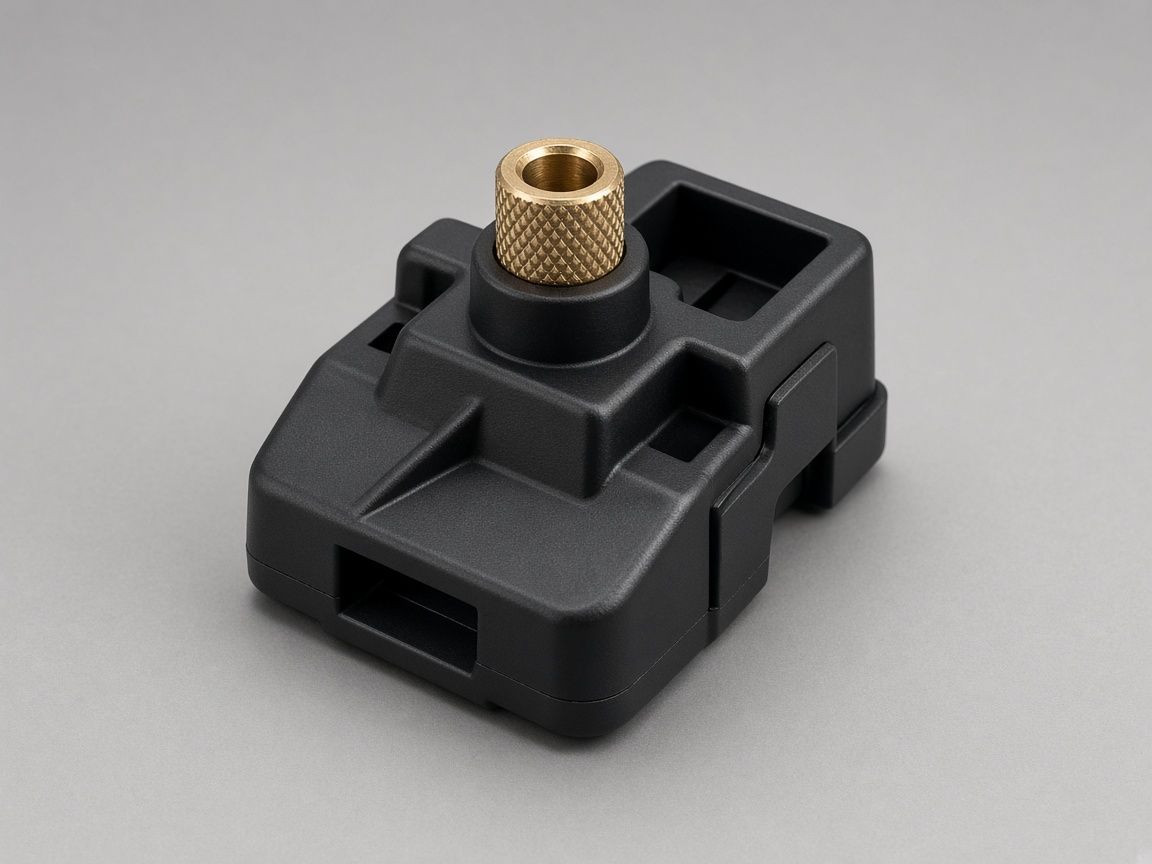
Prototype insert molding usually means a pilot lot with hardware seated in the cavity, used to prove boss, retention, or assembly before a larger release. If that boss is a screw boss, see screw boss knit line failure. It is not a separate mold class. First articles can come from the same hardened steel tool that later runs production.
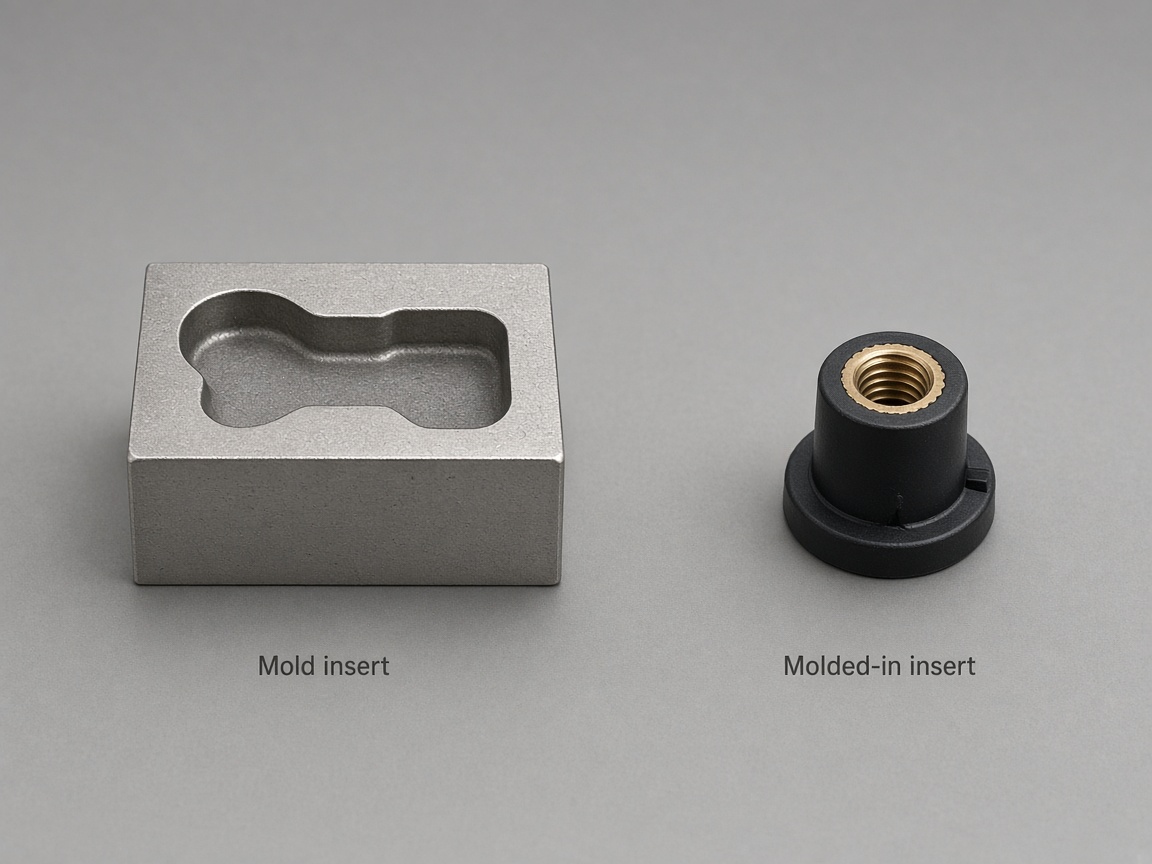
The process itself is insert molding: metal or other hardware is placed in the mold, and plastic is shot around it so the insert is captured in the solid. This page is the pilot checklist. It does not rewrite insert types, and it does not replace the molded-in versus post-install decision.
Teams search "prototype insert molding" when they need a handful of functional parts with threads, bushings, or pins already in place. They want to know whether that first lot requires a second tool. It does not, when the production cavity is designed for those shutoffs from the start. Compared with a prototype tooling program, the path here is a pilot on the steel you will keep.
Key Facts
- First insert-molded articles can come from the same hardened steel tool that later runs production.
- Compared with a soft first tool, a steel cavity still needs insert shutoffs designed before cut.
- Hand-load versus automation is an RFQ field, not a hidden shop default.
- Molded-in versus post-install is a different decision. See molded-in inserts vs post-install.
- Small first orders can still use insert molding when the steel plan is honest. See short-run injection molding.
- Do not publish pull-out, torque, or cycle-adder numbers. Those values belong on the insert vendor drawing and the quality plan, not as generic shop defaults.
A pilot is an order quantity and a proof plan. It is not a second mold product. Compared with aluminum tooling cut only to try a nest, a hardened steel cavity asks you to freeze shutoff, load access, and insert orientation before the steel is cut. That is the trade. You learn on the tool you will keep.
NetProto quotes one hardened steel mold per program. Insert molding is in scope on that tool when the insert drawing rides with the plastic solid. The search term does not create a side process. It creates a first-lot checklist.
If you are still choosing between capturing the hardware in the shot or installing it after molding, stop and read the compare article linked above. This page assumes you want hardware in the cavity on the pilot, or you are ready to say you are undecided.
Hand-Load Versus Later Automation
Hand-load is common on first articles and on lots with a low insert count. An operator places each insert in the nest, the press closes, and the shot captures the hardware. That path is honest when the first lot is small and the nest can be reached. It is not a silent default that the shop will keep forever.
Automation belongs on the RFQ when volume or insert count will grow. A bowl, a picker, or a fixture that presents inserts to the nest changes how the nest is built, where sensors sit, and how the cycle is paced. If you know the later lot will leave hand-load, write that path now. Do not wait until the steel is already cut around a hand-only nest.
Changing load method later can change the nest, the sensors, and the cycle. Say the intended path for the first lot and the later lot on the same form. "Hand-load now, automate later" is a valid sentence. "We will see" is how a nest gets recut.
Compared with a soft first tool that was built only for hand-load, a steel cavity that must later take automation needs that future path named before cut. The first articles can still be hand-loaded. The steel should not pretend automation will fit a nest that was never designed for it.
Write the load method as a field, not as a hope
- First lot: hand-load or automation
- Later lot: hand-load, automation, or same as first lot
- Insert count per shot, if the nest holds more than one piece of hardware
- Access: can an operator reach the nest without fighting slides or loose cores?
Do not invent a cycle-time adder for hand-load. Time depends on insert count, nest access, and how the hardware is packaged. Put those facts on the RFQ. Reviewers can flag a nest that cannot be loaded as drawn.
Packaging is part of the load method
If inserts arrive in bulk bags, tangled, or without orientation, hand-load slows down and automation may not start at all. Packaging is part of the load method. Name how the hardware arrives: trays, tapes, tubes, or loose. If the vendor is not frozen, say the packaging is not frozen too.
What the Pilot Must Prove
The pilot has one job: prove the insert plan on molded resin parts.
Four checks that belong on the RFQ
Insert seats fully before the shot. The hardware must sit on the datum you named, not on flash, not on a cocked nest, and not on a shoulder that the plastic then buries at an angle. If seating needs a fixture or a click feel, write that. T1 photos should show the insert in the nest and the insert in the part.
Flash at the insert shutoff is acceptable or not. Plastic can leak onto a thread, a bore, or a plating band when the shutoff is short or the insert is undersized. Say whether a witness is allowed, whether a thread must stay clean, and whether a secondary clean-up is allowed on the pilot only. Do not leave "some flash is fine" as a hallway comment.
Retention and orientation match the assembly test you name. The pilot is not a catalog pull-out study. Name the test you will run: a mating screw, a shaft, a harness clip, or a go/no-go on rotation. If orientation is clocked, mark the clock on the insert drawing and on the plastic solid. If you have no test yet, say the pilot is for fit only and that retention is still open.
Who supplies inserts and who replaces press scrap. Hardware gets damaged, dropped, and shot when a nest is new. Name who owns the spare count. If the buyer supplies serialized inserts, say whether a scrapped shot consumes a serial and who issues the replacement. If the molder buys bulk hardware, say who reorders when the first box is gone.
What the pilot will not prove
A fifth note helps when the program is still moving: say what the pilot will not prove. A first lot may not prove automation, plating after mold, or a later insert vendor. Writing the out-of-scope items keeps T1 from being argued as a full production release.
Photograph the seated insert, the shutoff, and the assembly check under consistent light. Keep the same setup for the next lot. If a prior shop already ran a trial, attach those photos and say what was accepted or rejected. Compared with starting from a blank RFQ, that history is the most direct way to keep the steel from repeating a known miss.
RFQ Checklist
Put the insert plan on the same upload as the plastic solid. A pilot fails when the housing is quoted and the hardware arrives as a surprise.
- Attach the insert drawing and the plastic solid. If the vendor is not frozen, attach the current envelope and say it is a candidate.
- State molded-in now, post-install later, or undecided. If you are still on that fork, read molded-in inserts vs post-install and pick a sentence for this RFQ.
- Name who supplies inserts and how they are packaged. Buyer, vendor, or molder. Trays, tape, tubes, or loose. Who replaces press scrap.
- Say hand-load or automation for the first lot and the later lot. If those paths differ, write both.
- Upload CAD through the instant quote platform. Ask reviewers to read the nest and shutoff against design for manufacturing notes on the same file.
Add the resin grade, the cosmetic A-side vs hidden face, and the assembly test you will run on the pilot. If the first order is small, say so. Short run is an order quantity, not a tool class. The short-run injection molding page covers that quantity question. This page covers the insert plan on that first quantity.
Do not stamp a torque value, a pull-out load, or a cycle adder on the part drawing as a shop default. If the insert vendor publishes those figures, attach the vendor sheet and say which test the pilot must match. If no vendor sheet exists yet, say the pilot is for seating and orientation only.
Reviewers can flag a nest that cannot seat, a shutoff that will flash a thread, or a load path that blocks a later automation plan. They can flag those items before steel is cut. That is the point of putting the insert drawing on the first upload.