Molded Parts Without a Prototype Tool: Quote the Steel Cavity First
What Are Molded Parts Without a Prototype Tool?
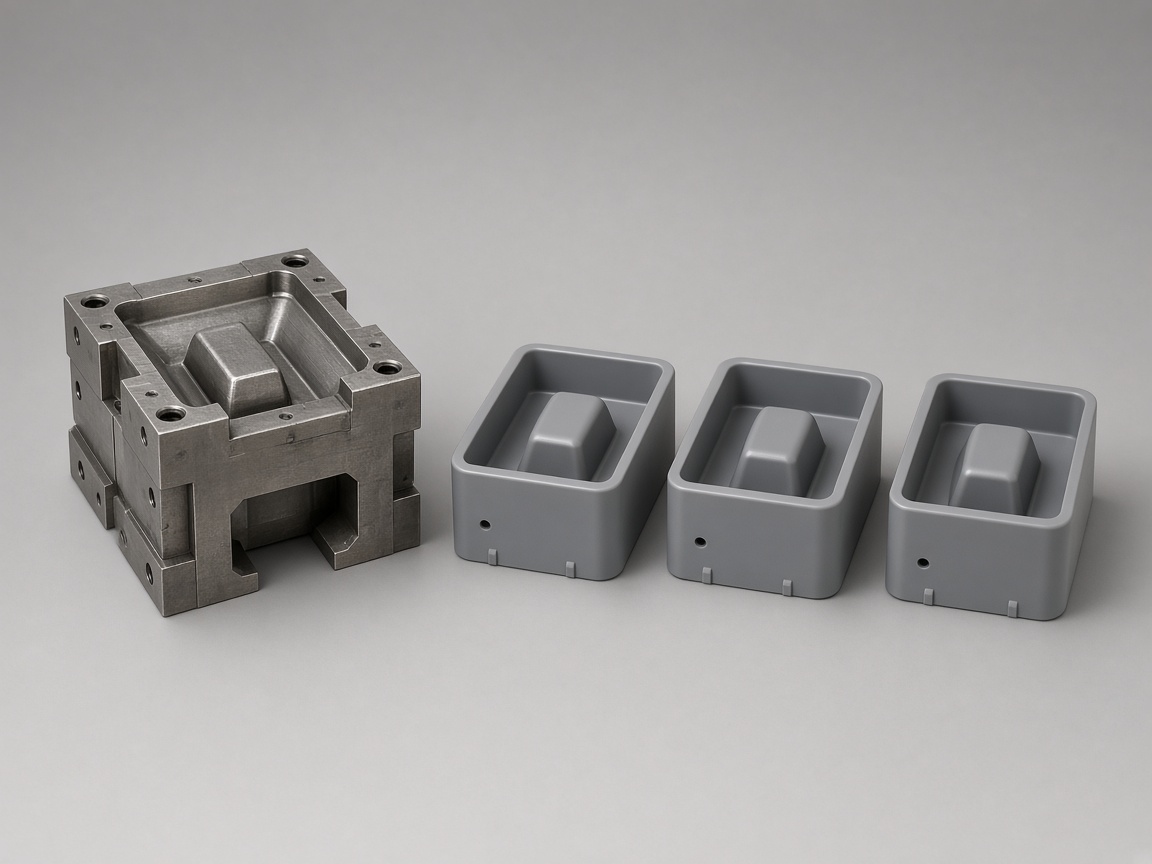
You can get molded parts without a prototype tool by taking first articles from the hardened steel cavity that will also run production. That path skips the purchase of a separate first tool. Functional resin parts come from the same cavity that continues into volume manufacturing.
This page is the skip decision. Compared with a prototype tooling program, the first molded articles and later production parts share one steel cavity. Use that linked page when you need the alternative definition. Stay here when the RFQ should say that T1 comes from the tool you will keep.
The skip is a quoting choice, not a shortcut around DFM review. Cosmetics, inserts, resin grade, and shutoff risk still belong on the RFQ before steel is cut. Reviewers can flag features that would be expensive or impossible to change after the cavity exists. The gain is one qualification path instead of two.
First articles on this path are molded in the production resin, in the production cavity, with the production shutoffs. They are not a printed lookalike. They are not a stand-in meant only to check silhouette. If you need that kind of representation, say so on a separate development note. Do not silently treat the steel RFQ as a sketch review.
Key Facts
- First articles can come from the same steel cavity that ships later production parts.
- Compared with a soft tooling or aluminum first tool, a single steel cavity avoids a second qualification cycle.
- See soft tooling vs hardened steel for material and wear tradeoffs. Those tradeoffs are not covered on this page.
- Short run is an order quantity, not a tool class. See short-run injection molding.
- One hardened steel mold is quoted per program. See one mold lifetime production.
- Do not use shot-life tables to pick this path. Compared with an aluminum first tool, the decision is whether first articles can come from the steel cavity you will keep.
Read fact 1 and fact 4 together. A small first lot can still come from the production steel cavity. Lot size does not create a second mold class. If you only need a few molded pieces to test fit and function, say that on the RFQ and still name the resin, the cosmetic A-side vs hidden face, and any inserts.
Fact 2 is the qualification argument. A second cavity means a second shrink set, a second cosmetic baseline, and a second "which sample is the standard" debate. Compared with a soft tooling first tool, the steel cavity you keep is the baseline you will live with. Write the RFQ as if T1 is that baseline.
When Skipping a First Tool Usually Works
Skipping a first tool usually works when the CAD model is close to the final production solid. Open styling loops, unsigned snap fits, and moving boss locations are poor candidates for a steel-first cut. If the solid is still a weekly revision, finish the design loop before you ask for T1 from production steel.
It also works when cosmetics, inserts, and material grade are already specified on the RFQ. A steel cavity copies what you send. A missing texture specification on RFQ, an unnamed insert, or a resin family with no grade leaves T1 guessing. Name those fields now so reviewers can flag gaps before the cut.
Three conditions that make the skip safe
You need molded resin parts, not a printed lookalike or a prototype representation. Fit, creep, snap feel, and chemical resistance are resin questions. A printed stand-in can check envelope. It cannot stand in for molded shrink or knit behavior. If the next test is a molded assembly test, the steel-first path matches the test.
You also accept T1 learning iterations on the steel cavity you will keep. First shots teach gate blush, ejector witness, and local pack. Some of that learning is process. Some of it is steel. If a shutoff or a thin wall is still a known risk, put that risk on the RFQ rather than hoping T1 will invent a fix.
This path is common on housings, brackets, and covers that already have a frozen envelope and a named resin. It is less comfortable when the part is a first-of-kind shutoff, an untried insert nest, or a cosmetic A-surface with no prior grain history. Those programs can still skip a first tool. They need a clearer risk note, not a quieter RFQ.
One RFQ sentence that defines the skip
Write the skip in one sentence on the RFQ. "First articles should come from the production steel cavity" is enough. Then attach the resin grade, the cosmetic map, and any insert drawings. Reviewers can flag the features that would be painful to move after steel is cut.
When a Separate Learning Tool Still Gets Quoted Elsewhere
Some teams still quote a first learning tool compared with going straight to hardened steel. They do that to test a risky shutoff, a thin-wall section, or an untested material combination before the production cavity is cut. Treat that interim lot as development history, not as the production baseline.
A first tool compared with hardened steel can be useful when the team already knows the shutoff may flash, or when two resins have never been paired on that geometry. The lot answers a development question. It does not automatically become the cosmetic standard for the steel cavity you will keep later.
How to carry forward what the first tool taught you
Attach photos and the accept or reject notes from that trial. Say which faces passed, which faces failed, and which features you already changed in CAD because of that lot. Reviewers can flag the same features on the steel RFQ. A photo with no note is only a picture.
Carry the resin grade, the insert list, and the cosmetic rule onto the steel RFQ even if the interim lot used a stand-in grade. Compared with a prototype tooling first cavity, the production steel still needs its own pack, grain, and shutoff notes. Do not assume the earlier lot transferred those notes by habit.
If the interim lot was rejected for sink marks on injection molded parts, flash, or short pack, write that failure on the steel RFQ. "Prior lot sank over the USB boss" is usable. "We already tried one" is not. The steel review should start from the known failure, not from a clean-sheet CAD that hides the history.
This section is about how to reuse learning you already paid for elsewhere. It is not a menu of tool classes. Quote the steel cavity as the production tool. Attach the history. Ask reviewers to flag what that history still leaves open.
RFQ Checklist
Copy these five items onto every steel-first RFQ:
- State clearly that first articles should come from the production steel cavity.
- Name the resin grade, cosmetic face requirements such as SPI surface finish grades, and any inserts on the same RFQ.
- Attach any interim-lot photos from prior trials, noting what was accepted or rejected.
- Ask reviewers to flag features that would be expensive or impossible to change after steel is cut.
- Upload CAD through the instant quote platform.
The first sentence is the skip. Without it, a reviewer cannot tell whether you want T1 from the steel you will keep, or whether you are still shopping a first-tool path. Put it on the RFQ header or in the CAD annotation, not only in an email.
Name resin, cosmetics, and inserts on the same document. Split files get lost. If the insert vendor is not frozen, attach the current candidate and say it is not frozen. Reviewers can flag nest risk either way. They cannot flag a nest that is missing from the upload.
Interim-lot photos belong next to the CAD, with lighting notes and a one-line disposition. "Accepted for fit, rejected for blush at the gate" is a usable caption. If you have no prior lot, say that too. Silence reads as "no history," which may be true, or it may mean the history was left on a laptop.
Ask reviewers to flag steel-lock features. Undercuts, risky shutoffs, thin walls, and insert-to-plastic interfaces are the usual list. You are not asking for a redesign essay. You are asking which features become expensive after the cavity is cut. Reviewers can flag those features on the uploaded solid.
Upload the production CAD, not a simplified envelope. A missing rib, a missing logo pad, or a missing insert boss is how T1 surprises you. The instant quote platform is the upload path. Use it before you treat the solid as frozen only in a slide deck.
If you only need a few molded pieces, still complete steps 1 through 4. Short run is the order quantity. It is not a reason to leave resin or cosmetics blank. Reviewers can flag a thin cosmetic note on a small lot the same way they can on a larger release.