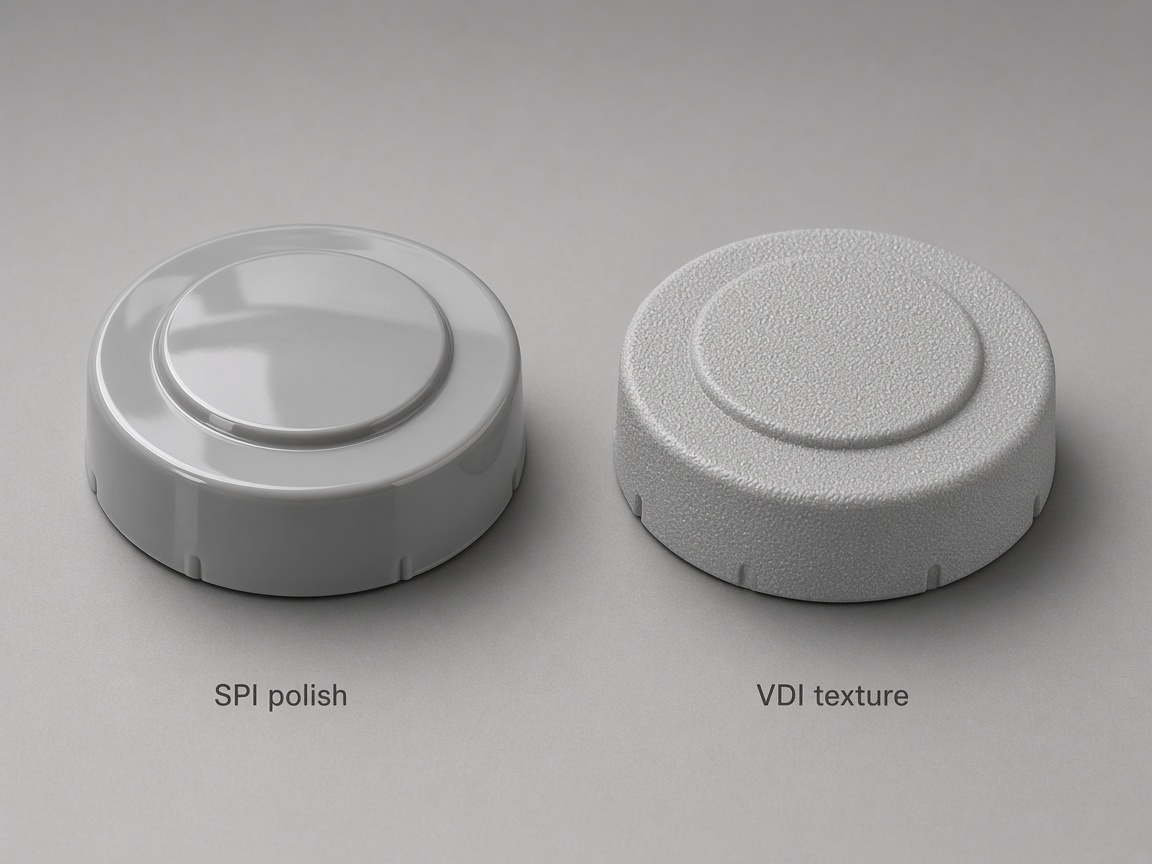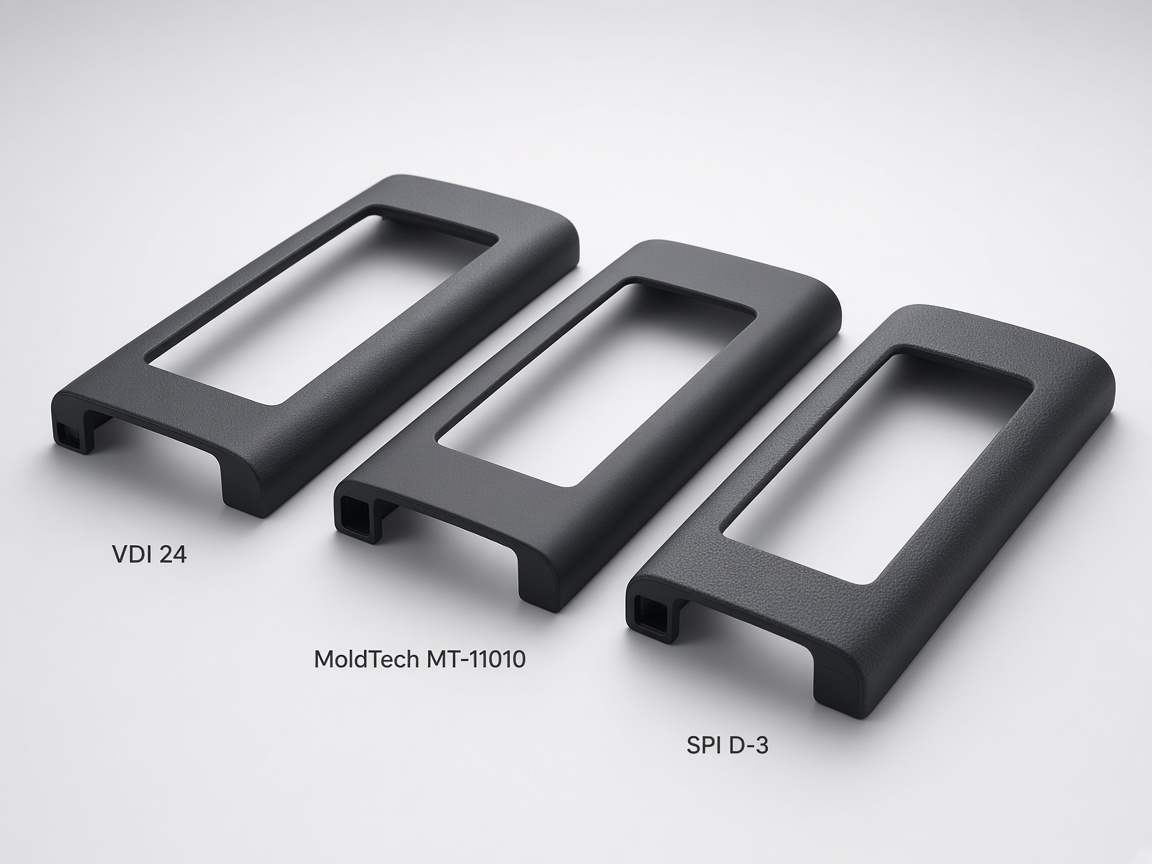
Textured faces usually need more draft than a polished face on the same pull. The injection molding draft angle is the taper that lets a molded wall leave the steel. Texture adds surface engagement, so the grain can drag even when a smooth wall of the same height would release cleanly. This article is only that add-on: how to decide, and how to write the note on the RFQ.
What Does Extra Draft on Texture Mean?
Draft is the taper on a face that pulls when the tool opens. That slope lets plastic leave the cavity instead of scraping the steel. A polished face has little to key into the tool, so release is mostly about wall height, shrink, and how the part is pushed. A textured face is a field of peaks and valleys. Those features lock into the steel as the part cools, so the same wall can scuff, tear, or hang on eject.
Extra draft on texture is not a second product and not a new kind of angle. It is more of the same release slope, applied on the faces that carry grain. You still mark pull direction first. You still follow the general draft angle rule on every pull face. Do not copy a polish-face slope onto a grain wall and treat the drawing as finished.
The grain is the variable. A light spark or a matte hide does not grab like a deep leather or a sharp grip. Until you name the system and the code, you cannot judge whether the current slope is even in the right family. Keep plaque selection on the textures hub. Keep system language on the compare page. Keep this page on the draft note.
Mixed parts are the usual case, not the exception. One housing can carry a polished window, a matte hide on the sidewalls, and a grip on a latch. Each zone has its own engagement with the steel. Extra draft is a face-level call. A global note that says textured faces need more draft, with no faces marked, does not give DFM anything to flag.
Timing matters as much as the note. If CAD freezes on a polish slope and a deep etch arrives after T1, the wall may have no slope left to give. DFM review flags that sequence. Pick the plaque, or at least the system and a target family, before you lock the wall height and the pull.
Resin and fill change how hard the grain holds. A filled or stiff grade can print the texture well and still drag on a steep wall. A softer grade may release more easily and still show tear if the grain is sharp. Do not treat resin as a substitute for slope. Name the grade family on the RFQ so review can read grain and material together.
Shutoffs that cross texture are a separate risk. Grain that walks over a split can scuff or flash even when the wall has slope. Mark where texture must stop. If a shutoff must sit on grain, say so. The draft note does not replace a parting plan.
Cores, ribs, and bosses pick up whatever the cavity or core steel carries. A rib that inherits a deep grain on both sides has two textured pull faces, not one. A boss standing in a textured pocket can scuff on the outside even when the inside is smooth. Mark those inherited faces. Review cannot flag a wall that never appears as grain on the print.
Cosmetic intent also changes the note. A scuff on a hidden interior may be acceptable. A scuff on an A-side grip is a reject. Write which textured faces are cosmetic and which can show eject witness. Extra draft is how you protect the show faces. It is not a promise that a vertical hide wall will look clean.
Key Facts
Use this list when you need a short answer for a review comment or a drawing note.
- Yes, textured faces usually need more draft than polished faces.
- The extra amount is a DFM result for that grain and that steel, not a published default.
- Name the texture system first. See MoldTech vs VDI vs SPI.
- Deep, sharp grains grab more than a light spark or matte.
- Do not publish degree adders or "one degree per thou" rules.
Yes is the default engineering answer, not a guarantee for every plaque. A very light hide on a short wall may release like a satin polish. A deep grip on a tall core almost never does. Start from more slope than polish on this pull, then let DFM confirm the face.
The extra amount is not a site specification. Texture suppliers publish guidance per plaque. Those pages are not a substitute for the steel and the resin on your program. DFM review flags the faces. It does not paste a public adder onto the print.
Naming the system first stops mixed codes. SPI is a polish and finish scale. VDI is a texture scale. MoldTech is a named catalog grain. A drawing that says "texture to match" with no system leaves the shop to guess. Write one system per face, next to the zone. Route the system choice to the compare page. Do not paste a conversion table into the RFQ.
Depth and sharpness drive grab. A spark or a fine matte is a light engagement. A leather, a wood, or a grip pattern is a deep engagement. If industrial design wants the deep look on a wall that already sits steep, ask whether a lighter grain can do the hide job with less slope demand.
Degree adders are how blogs invent a specification. Rules such as "one degree per thou" are not approved numbers on this site. Do not write them on the RFQ. Do not paste them into CAD as a design check. Ask for confirmation on the textured faces instead.
What DFM review flags on this topic is narrow. It looks for textured pull faces, the system and code on each zone, walls with no slope under grain, shutoffs that cross texture, and a polish face whose slope was copied onto grain. It does not invent a degree. It does not pick a plaque unless you ask for options.
How to Write It on the RFQ
The RFQ should make the grain visible to DFM without asking anyone to invent a slope. Write the face, the pull, the system, and a request to confirm draft. Leave a degree off the print unless your own internal standard already owns that number.
-
Mark each textured face and its pull direction. Show the zones on a view or a PDF. Draw the pull arrow. Hidden sidewalls and deep cores are the faces that fail first, so do not mark only the A-side. If a face is polish today and grain later, mark it as a future texture so review does not treat it as a smooth wall.
-
Call the texture system and the code. See injection molding textures. Write MoldTech, VDI, or SPI next to each zone. Attach a plaque photo or a catalog page when the grain must match an existing part. Do not convert one system into another with an unofficial chart. The textures hub owns selection. This article owns the draft sentence that sits next to that callout.
-
Write that textured faces need draft confirmed in DFM, not copied from a polish face. A useful note reads like this: textured faces on this pull need draft confirmed in DFM. Do not copy the polish-face slope onto grain. That sentence is enough. It tells review what to flag. It does not publish a degree.
-
Ask whether a lighter grain can reduce the draft demand if the wall is already steep. This is the industrial-design escape hatch. If styling cannot add slope, a lighter spark or matte may still hide witness with less grab. Put the question on the RFQ. DFM review flags the trade. It does not pick a plaque for you unless you ask for options.
-
Upload CAD through the instant quote platform. CAD plus the face map is the review package. A plaque note without CAD leaves the slope unread. A CAD upload without zones leaves review guessing which walls are grain. Send both.
A few notes do not belong on the drawing. Do not write a copied degree from another program. Do not write a blog adder. Do not write "texture draft per vendor chart" with no plaque attached. Do not treat polish, clamp, or cycle notes as a fix for a steep grain wall. Those lines hide the real request: confirm release on the textured pull faces.
If the part mixes polish and grain, add a short zone map. Name the polish faces with SPI. Name the grain faces with VDI or MoldTech. Show where texture stops at a shutoff or a radius. The map is what keeps a polish window from being etched and a grip wall from being left smooth.
If grain can wait until after T1, say that too. A later etch is still steel and draft work. Review can flag the current slope as polish-only and call out the risk before anyone orders texture. Finding the scuff after the etch is the expensive sequence.
When you already have a physical plaque or a sample part, photograph the show face and attach it. CAD color is not a texture spec. A gray shade in the model does not tell steel which grain to etch. The photo plus the code is what the shop can match. The draft note is what review can flag.
If the same grain must match an existing production part, say which part and which face. Matching a worn tool or a painted sample is harder than matching a plaque. Write the match source. Extra draft still applies on the new steel. A match note does not waive release.