Soft Tooling for Injection Molding vs Hardened Steel
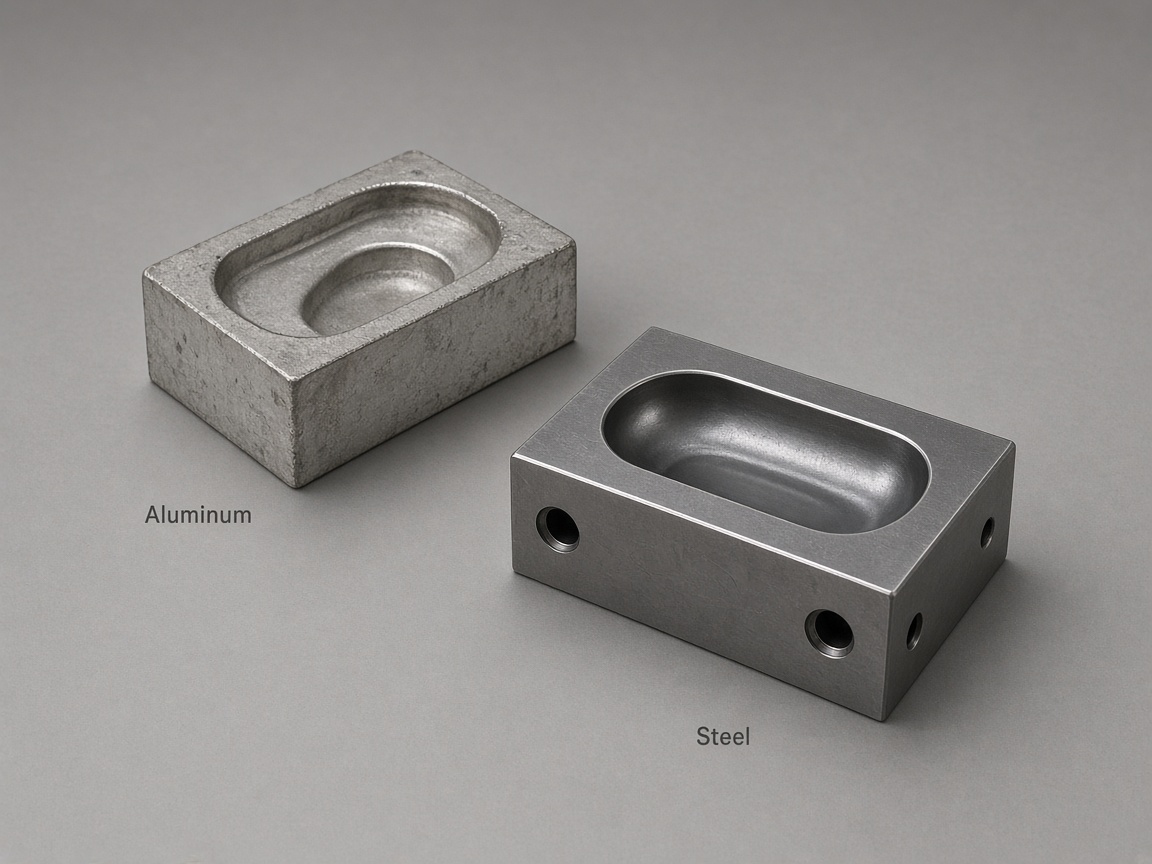
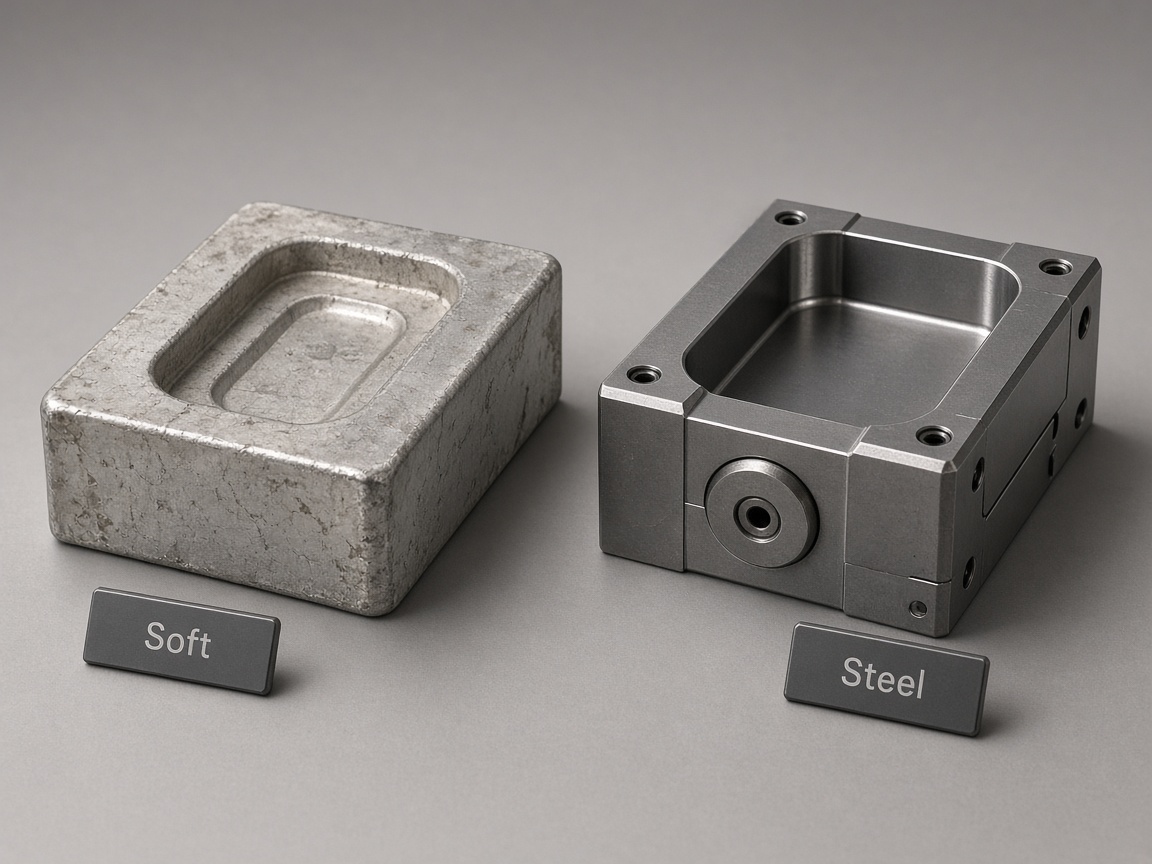
Soft tooling in injection molding means a mold built from unhardened steel, aluminum, or another easily machinable material so a team can get molded parts quickly while the design is still moving. It is the same injection molding process as production: molten plastic fills a cavity, cools, and ejects. What changes is how long the cavity keeps its geometry, texture, and shutoffs under repeated cycles. This article is a procurement and program-management guide for comparing a faster, softer tool path against a hardened steel production tool. It is not a request form for interim tooling. For wear behavior and validation limits on soft cavities, see soft tooling for injection molding. For how prototype tools differ in intent, see prototype tooling.
What Is Soft Tooling in Injection Molding?
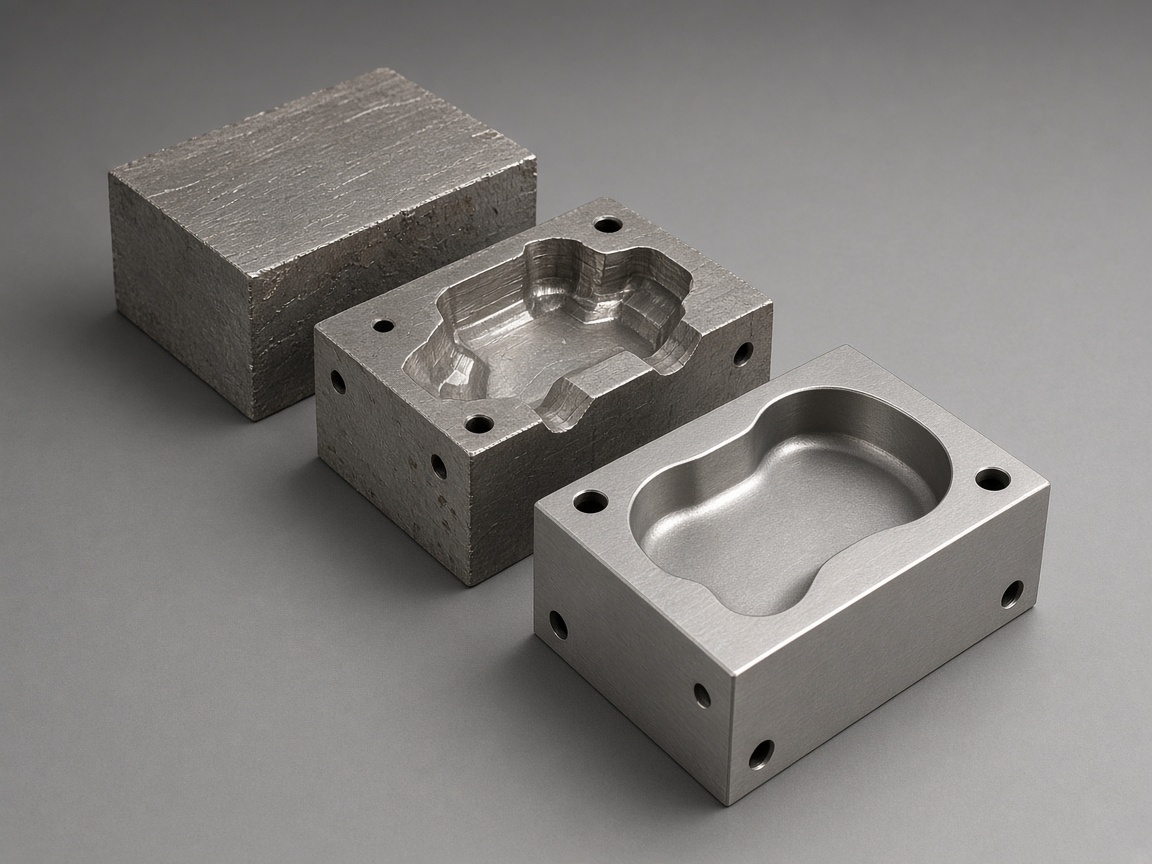
Soft tooling is a mold cut from material that machines quickly and does not receive the full hardening and finishing cycle used for long-life production steel. Shops use it when the priority is molded samples for fit checks, assembly trials, or a short validation lot while CAD revisions are still likely. Aluminum inserts and pre-hard steel blocks are common in the market; both trade faster initial metal removal for earlier wear on parting lines, gates, and textured surfaces.
Because the process is still injection molding, material selection, gate location, and draft rules from your DFM review still apply. The difference shows up over shots: a softer cavity may begin to flash, lose texture definition, or drift on critical shutoffs sooner than a hardened steel tool built for the same geometry. Buyers should treat soft tooling as a tooling-strategy choice, not a different molding technology.
Key Facts
- Soft tooling is a tooling-strategy choice, not a different molding process. The press, resin, and quality plan are the same; only mold durability and rework tolerance change.
- Its main value is speed and design feedback before a longer-life tool is justified on the program budget and timeline.
- Wear, texture loss, shutoff drift, and dimensional movement typically appear sooner on softer cavities than on hardened steel built for production duty.
- A bridge or prototype tool can create a second qualification cycle if production later moves to another tool at a different supplier or cavity layout.
- NetProto quotes one hardened steel tool per program built for the life of the part; first articles and repeat orders run on that same production tool. This article explains the industry tradeoff so you can frame RFQ questions clearly.
- Do not treat supplier steel-grade charts or shot-life tables as your contract. NetProto publishes commercial tolerance bands tied to SPI surface finish grades for production tooling on manufacturing standards; mold life for production steel is discussed qualitatively on one mold, lifetime production.
When a Softer Tool Might Make Sense Elsewhere
Many North American programs already work with a molder that offers aluminum or pre-hard tooling. A softer path can be rational when the buyer accepts what that tool will and will not prove.
Validation before production steel. The program runs at another shop and needs a quick molded lot before committing budget to a production cavity set. The goal is learning, not shipping years of identical cosmetics from that same insert.
Active design change. Geometry is still moving and the team wants molded parts to test fit, assembly, coating adhesion, or packaging before freezing the CAD. Soft tooling absorbs some change cost, but each metal revision still consumes calendar time and engineering attention.
Genuinely short volume with relaxed cosmetics. Annual demand is small, texture is not contract-critical, and dimensional bands are wide. A softer tool may finish first and cost less upfront than a full production steel build, though total program cost can rise if a second tool and requalification follow.
Use this soft-tooling decision checklist before you authorize spend:
| Question | Why it matters |
|---|---|
| Design-freeze date | After freeze, every soft-tool change is rework on the wrong asset |
| Validation questions | Fit-only trials need different steel than texture-matched production |
| Sample audience | Internal bench parts tolerate drift; customer-facing pilots may not |
| Cosmetic class | SPI/VDI texture on a soft cavity may not match production steel |
| Future production match | Will later parts come from the same tool, steel, and gate? |
Process routing: If your debate is aluminum economics versus one production steel tool, or bridge demand before production steel elsewhere, use the tooling hub spokes on those topics for deeper comparisons. NetProto's production model is summarized on one mold, lifetime production.
Why NetProto Usually Quotes Hardened Steel First
NetProto delivers plastic injection molding with one hardened steel tool per program, instant CAD quoting, DFM feedback before tooling release, and online project tracking after approval. For buyers comparing a staged tooling ladder against a single steel path, these program mechanics usually drive the quote.
DFM before steel is cut. Open questions on wall thickness, undercuts, gate style, and tolerance stack-up are resolved on the CAD during DFM review instead of in throwaway metal. That reduces the chance that first shots expose a problem you already could have fixed digitally.
First article parts come from the production tool. The hardened steel mold that runs your initial sampling is the same tool that supports reorders when the design is approved. You are not approving cosmetics on one cavity and then repeating PPAP on a different steel set unless you choose a multi-supplier strategy outside NetProto.
Cosmetics and critical dimensions hold across the program. Hardened steel supports sharp parting lines, stable shutoffs, and textured surfaces that must stay consistent lot to lot. Softer inserts often show texture wash and flash growth earlier, which matters when drawings call out visible surfaces or tight mating features.
Filled or abrasive resins increase wear risk on softer tools. Glass-filled nylon, mineral-filled PP, and other abrasive melts accelerate cavity erosion. Production steel is the default when the resin family and annual volume point to a long run.
One tool, one qualification cycle, clearer long-term cost. Staging prototype steel, bridge aluminum, and production steel can spread invoices across quarters but may add transfer, revalidation, and duplicate tooling charges. NetProto's steel tooling is frequently priced competitively with US-made aluminum tooling, and typically lasts far longer on the same geometry when the program runs beyond a short pilot.
On qualified programs, depending on part size and complexity, the hardened steel tool can be completed in 10 business days from order placed to finished tool. Production scheduling after release varies by program; upload CAD for timing tied to your parts. A hardened steel tool on a continuing program can achieve 100,000+ parts in typical use, though actual life depends on resin, maintenance, and design; it is not a guarantee. Discuss expected part volume and resin type during DFM review for a tool-life estimate tied to your program.
Decision Table: Soft Tooling vs Hardened Steel
Use this table when you request a NetProto quote. It recommends a starting path for NetProto, not every supplier option in the market. Read the Cosmetics column as cosmetic face (A-side) vs core side requirements, not as a generic pretty-part note.
| Design status | Cosmetics | Program horizon | Recommended NetProto starting path |
|---|---|---|---|
| Still moving | Critical | Pilot only | Upload CAD; resolve open DFM items before steel; use another shop's soft tool only if you accept requalification on NetProto steel later |
| Still moving | Not critical | Pilot only | Same as above; soft tools elsewhere may suffice for bench fit, not for production match |
| Frozen | Critical | Multi-year production | Quote hardened steel first; specify texture and tolerances on the RFQ |
| Frozen | Not critical | Multi-year production | Quote hardened steel first; leverage no minimum order quantity on parts for early ramps |
| Frozen | Critical | Pilot then scale | Quote hardened steel first so pilot and production share one qualification |
| Frozen | Not critical | Short pilot | Quote hardened steel if total volume still justifies one tool; compare soft-tool spend elsewhere against duplicate qualification |
NetProto offers no minimum order quantity on molded parts once the tool is released, which can change the math on whether an interim soft tool saves money versus sampling directly from production steel.
What to Ask Before Choosing Any Tool Path
Use this checklist before signing any tooling purchase order:
Work through these steps with your molder, internal quality team, and finance owner before you sign a tooling purchase order anywhere in the supply chain.
- Is the CAD stable enough that a steel change would be expensive? If yes, soft tooling elsewhere buys time; if no, DFM on production steel may be cheaper than cutting metal twice.
- What will the first molded parts prove: fit, function, cosmetics, or production validation? Match the tool material to the evidence you need, not to the fastest calendar icon on a quote PDF.
- Who pays if the design changes after the first tool is cut? Put engineering change ownership in the contract before the first chip falls.
- Are texture, inserts, overmolding, or tight cosmetics already specified on the drawing? If a soft skin is in scope, see LSR vs TPE overmolding tooling considerations. Reference manufacturing standards tolerance bands and surface callouts so every supplier quotes the same scope.
- Do you need a separate validation tool, or can DFM plus first articles from production steel answer the open questions? NetProto's flow is built around the second path: DFM feedback from CAD upload, then one hardened steel tool for sampling and production.
- Upload CAD and state whether you want a steel-first production quote or help framing validation risks. Use the instant quote platform so pricing and manufacturability flags reflect your actual geometry.
Once the tooling charge is paid, the customer owns the mold and can request shipment at any time. Include mold-shipment terms in your purchase order regardless of which tool path you choose. That ownership rule applies to NetProto's hardened steel tools and should be mirrored in any soft-tool contract you sign elsewhere.