Mixing SPI Finishes on One Part: How to Mark A2 and D3
What Does Mixing SPI Finishes on One Part Mean?
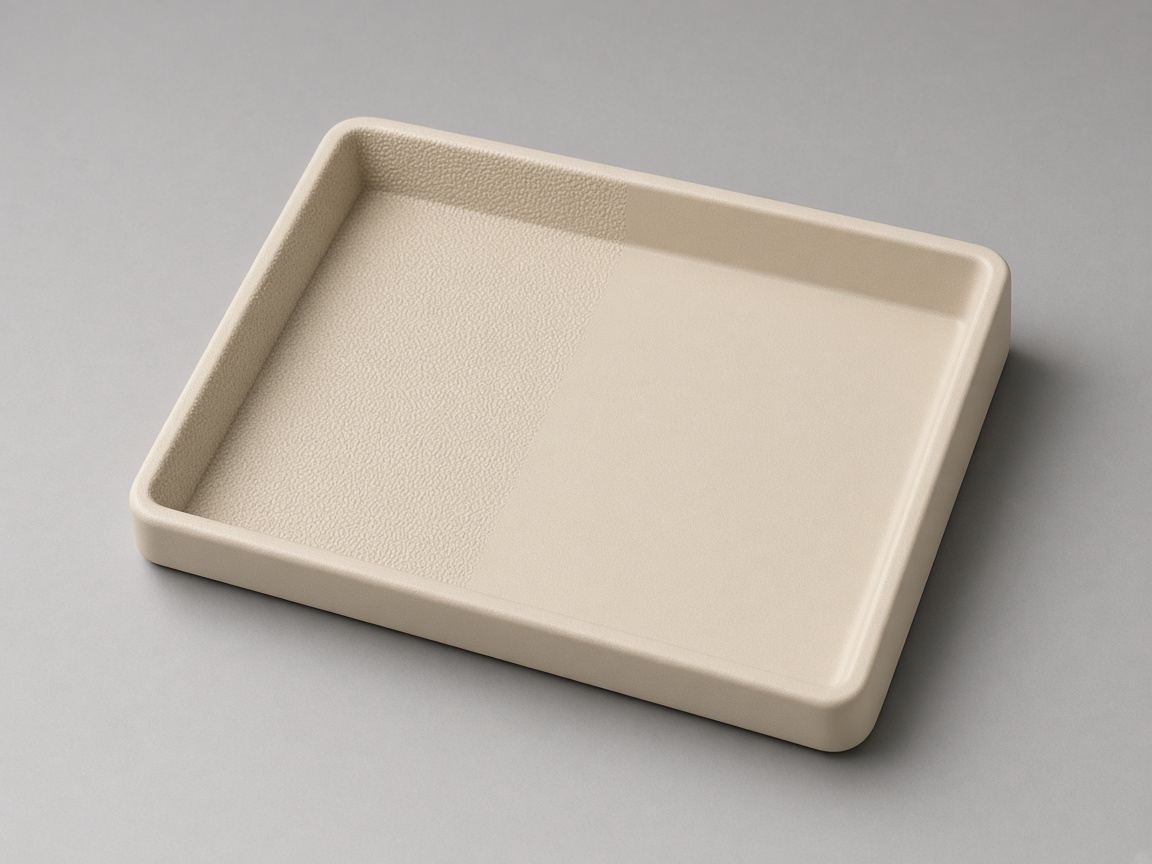
Mixing SPI finishes on one part means two or more SPI polish or stone grades specified on different faces of the same molded part, each tied to a named surface zone. The mold steel can carry both finishes when the drawing clearly defines where each grade applies. This page is a marking and zone-definition guide, not a grade ranking and not a reprint of the SPI surface finish chart.
Engineers usually ask this when one show face must stay glossy and a hidden face can stay coarse. A front bezel can be SPI A2. Interior walls that never sit in a customer highlight can be SPI D3. Those two grades can share one cavity when the split is drawn on the CAD or the 2D view. They cannot share a cavity when a single title-block note hopes the shop will guess which faces matter.
The mixed finish is still one tool and one resin shot. Polish work changes by face. The plastic does not change grade at the zone line. If you also need a texture system or a resin callout on the same form, that is a different RFQ problem. See SPI finish, texture, and material on the same RFQ for that combined form. Stay here when the only open question is how to mark two SPI grades on one solid.
Key Facts
- One part can carry both a high-gloss A2 face and a coarse D3 face when the mold is built for that intentional split.
- A single global SPI note on the drawing is how the wrong face receives the wrong polish. Each zone must be called out individually.
- A glossy surface adjacent to a textured or grit surface needs a clean, drawn zone boundary, not a hope that the transition blends invisibly.
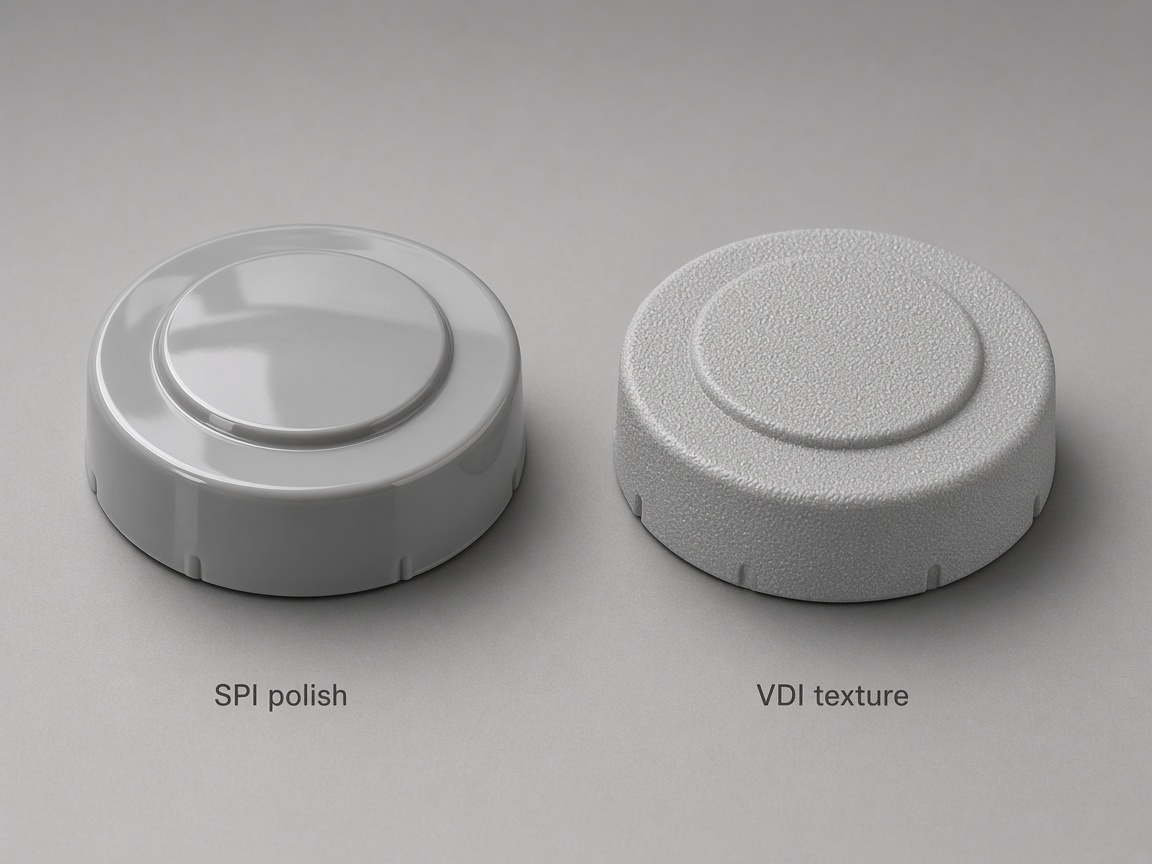
- Texture standards (MoldTech, VDI) and SPI finish grades are different classification systems. Use MoldTech vs VDI vs SPI for cross-reference guidance, not as a substitute for naming each SPI zone.
- Combining finish grade, resin choice, and texture on one RFQ is a separate topic. Keep that work on SPI finish, texture, and material on the same RFQ.
- Do not publish unofficial Ra conversions or polish-hour cost estimates. Those figures are shop-specific and vary by geometry and steel.
A mixed-finish part is a documentation problem first. The steel can hold more than one grade. The drawing has to say where each grade starts and stops. If a third face sits between gloss and grit, name that face too. A semi-visible land can take a stone grade such as SPI B1 finish when that zone is written the same way as the A2 and D3 faces.
Do not treat the SPI chart as a ranking you must climb on every visible wall. Pick the grade the face actually needs. Then mark it. Reviewers can flag a missing zone or a soft blend before steel is cut.
How to Draw the Zones
Mark cosmetic A-side vs hidden face gloss and grit zones directly on the CAD model or the 2D drawing view. Do not hide the split in an email thread or a verbal note to the toolmaker. The zone map has to travel with the file that gets quoted.
Write the SPI grade next to each named zone. Do not write it once in the title block as a blanket note. A global "SPI A2 unless noted" line is how an interior wall gets over-polished and how a show face gets left coarse. Name the face, then name the grade.
Name the split feature, not the hope
Define the split feature. Use a rib edge, a shutoff line, a paint mask boundary, or a physical step. Do not call a soft blend or a gradual fade. Polish and grit meet at a line the steel can hold. If you cannot point to that line on the solid, the shop cannot hold it either.
Example annotation language for the RFQ
- Front bezel: SPI A2
- Interior surfaces: SPI D3
- Semi-visible latch land: SPI B1 (only if that third zone is real and named)
A zone map is more than those three strings. Attach a view that shows the bezel, the interior, and the split in one glance. If the part is a housing, show the A-side and the B-side. If a logo pad, a lens window, or a wear land needs a different grade, give that pad its own name. Orphan faces without a grade will inherit the nearest note, and that inheritance is how mixed-finish jobs go wrong.
Keep texture out of the SPI string unless you are replacing a polish zone with grain. MoldTech, VDI, and SPI are different languages. If a grip wall will be etched after polish, see texture draft requirements and say which SPI zone the grain replaces. Do not write "A2 plus light grain" on the same face and expect both to survive. One face, one governing finish, unless you explicitly say the grain replaces the polish.
Paint and pad-print masks are useful split features when the cosmetic break already exists for another reason. A paint break, a shutoff, or a step the customer already accepts is a better zone line than a hoped-for fade across a flat show wall. If the only split you can offer is a soft radius with no feature, say that on the RFQ so reviewers can flag the witness risk.
Viewing distance belongs on the gloss zone only. Write how the bezel will be seen: handheld, arm length, or across a room. Do not copy that sentence onto the D3 interior. Grit faces are judged for coverage and consistency, not for the same highlight the A2 face must survive.
What T1 Must Prove
Same-lighting photo pair requirement
T1 is where the zone map becomes a physical part. Ask for a same-lighting photo pair that shows the gloss zone and the grit zone side by side. One photo of the bezel in a dark booth and one photo of the interior under a shop light is not a pair. Use the same setup so the split can be judged, not just each face in isolation.
State the visual witness at the zone split. Say whether a visible transition line is acceptable or must be absent. Most mixed-finish parts have a readable line where gloss meets grit. That line is not a defect if you called it. It is a defect if the print pretended the faces would blend. Write the acceptance in plain language: "visible split at the named rib is allowed" or "no witness on the show face outboard of the shutoff."
If a texture (grain, etch, or EDM) is applied after polishing, specify which SPI zone it replaces and whether the underlying polish grade still governs the steel preparation. If grain is also being asked to hide a dip, see texture and sink marks on molded parts. Grain on a D3 interior is a different note from grain that overwrites an A2 bezel. The T1 photos should show the replaced zone, not only the remaining polish.
Bring a witness coupon or a retained sample of each grade if your quality plan already uses them. Photograph the part next to that coupon under the same light. Do not invent a shop Ra number to stand in for the coupon. The SPI grade on the zone map is the callout. The photo pair is the proof.
What to reject at T1
Reject a T1 package that shows only the gloss face. Mixed finish means both zones were intentional. If the interior was left "as machined" because nobody looked at it, that is not D3. It is an unmarked face. Ask for the grit zone in the same set.
If first articles miss the split, do not "blend it in polish" as a late salvage unless the drawing is revised. Changing the zone after T1 is a steel and documentation change. Put the revised map on the RFQ and say what the next lot must prove. Reviewers can flag whether the split feature still matches the solid.
RFQ Checklist
Use this list on the same upload that starts the quote. Mixed finish fails in procurement when the CAD is clean and the cosmetic map is missing.
- Attach a cosmetic zone map with the SPI grade listed per face. Name the bezel, the interior, and every other zone that is not allowed to inherit a neighbor's grade.
- Name the split feature that physically separates the gloss zone from the grit zone. A rib, a shutoff, a paint mask, or a step. Not a soft blend.
- State the viewing distance and lighting condition for the gloss zone only. Leave the grit zone on coverage and consistency, not on the same highlight sentence.
- Ask reviewers whether mixed polish grades affect gate location or ejector pin keep-out zones. Reviewers can flag keep-out on a gloss face before steel is cut. Read that question against design for manufacturing notes on the same upload.
- Upload CAD through the instant quote platform for review before tooling begins.
Add the resin grade and any texture system on the same RFQ only when those fields are already decided. If they are still open, say they are open. Do not bury a MoldTech code inside an SPI string. Do not convert either SPI grade to an unofficial Ra value "for clarity." Clarity is the named zone and the named grade.
If a prior shop already polished the wrong face, attach that photo. Say what was accepted and what was rejected. History is useful. A silent hope that the next tool will "just know" is not.
NetProto quotes one hardened steel mold per program. Mixed SPI grades live on that one cavity when the map is honest. Upload the solid, the zone map, and the split feature. Reviewers can flag a missing boundary or a gloss-face keep-out before the polish work is locked.