Can Texture Hide Sink Marks on a Molded Part?
What Does It Mean When Texture Hides Sink Marks?
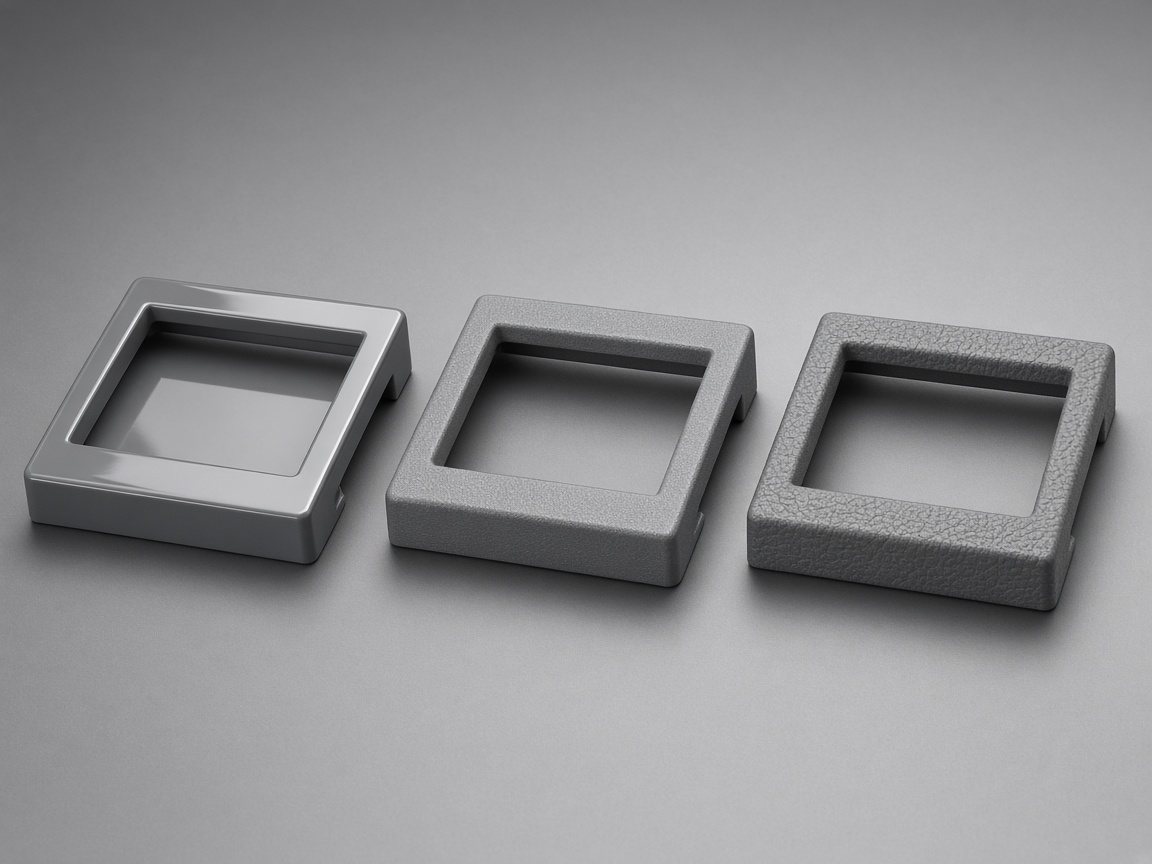
Buyers ask can texture hide sink marks when a housing shows a faint dip opposite a rib or boss. A molded grain can break up the highlight that makes a shallow sink easy to see, so the face looks more even. The grain does not remove the packed-out mass or the volumetric shrinkage that caused the sink.
This page answers hiding versus fixing. For root causes and corrective actions, read sink marks in injection molding. Stay here when the question is only whether grain, polish, or a later paint step will hide what is already in the solid.
Texture is a surface-finish choice. It scatters light across a face that would otherwise act like a mirror. A shallow depression still exists in the plastic. Pack-out, local mass, and cooling still govern whether that depression is faint or deep. A reviewer looking at T1 under raking light can still find a sink that a casual glance missed.
Cosmetic hide is a viewing-condition claim. It is not a dimensional claim. If the face is a seal, a bearing, or a mating datum, visual hide does not make the geometry acceptable. Write the finish and the acceptance rule on the RFQ so reviewers can flag the faces that cannot rely on grain.
Key Facts
- Light texture can soften the visual appearance of a shallow sink on a non-optical, matte-finish face.
- A deep pack sink still reads through texture, paint, and subsequent polishing. Texture is not a cure for poor geometry.
- Texture is a surface-finish choice, not a substitute for coring a thick section or redesigning a heavy rib or boss.
- Polished faces hide less than a matte grain on the same sink depth. Gloss amplifies the optical distortion.
- Always specify the grain system or SPI finish on the show face. See injection molding textures for available options.
- Grain applied to a tall vertical wall typically requires more draft than a polished surface. See does texture need more draft for design guidance.
- Wall thickness, rib height, and draft angle values are project-specific. They depend on material and geometry, and they are not published here as shop specifications.
Use the list as a filter, not as a finish catalog. If the face is gloss, optical, or functional, stop at fact 2 and change the solid. If the face is matte and the sink is only a highlight, fact 1 can apply after the RFQ states that grain is an allowed visual hide.
Fact 5 and fact 6 belong on the same drawing note. A grain callout without a draft plan is how a textured wall scuffs on ejection. A draft note without a grain system is how the show face lands on the wrong polish. Write both before steel is cut.
What Texture Can Hide, and What It Cannot
Texture can soften a faint sink opposite a light rib on a matte housing. It can also soften a shallow witness on a textured grip surface, or a minor cosmetic dip on a non-sealing face. In those cases the depression is already small. The grain breaks the specular highlight so a casual viewer does not lock onto a shiny valley.
Texture cannot hide a crater over a solid boss. It cannot hide a sink on a high-gloss A-surface. It cannot hide a sink that interferes with fit, seal, or a mating assembly. Those defects remain after grain, after paint, and after a later polish pass. The steel still copied a thick section. The plastic still shrank toward that mass.
The difference is optical, not chemical. Grain does not fill a valley. It only changes the way the valley reflects light. A matte etch turns a gentle dip into a patch of similar roughness. A deep crater still casts a shadow, still catches a fingernail, and still reads as a dent under raking light.
Treat "can hide" as a viewing-condition claim. State the viewing distance and the lighting you will use at incoming inspection. A sink that disappears under office overheads can still flash under a raking shop light. If your customer inspects under a point source, do not count on grain.
Use this split to decide whether grain is worth trying:
Can soften:
- A faint sink opposite a light rib on a matte housing.
- A shallow witness on a textured grip or interior handle.
- A minor cosmetic imperfection on a non-sealing, non-bearing face.
Cannot hide:
- A crater over a solid boss, logo pad, or other unsunk mass.
- A sink on a high-gloss A-surface, lens, or optical window.
- A sink that sits on a sealing land, snap, or mating datum.
T1 photo verification should capture the suspect face under consistent lighting. Place a polished witness coupon in the same frame when you can. The coupon shows what the same sink would do without grain. If the textured face still looks dented next to the coupon, grain is not doing the job. If only the polished coupon flashes, the hide is optical and you should still record that the solid was not changed.
Take the pair at the same distance and the same angle. Do not crop away the rib or boss that sits behind the sink. Reviewers need to see the local mass that caused the pull. A photo of a pretty grain field with no context is not a disposition record.
When to Change the Solid Instead
Change the solid when the show face is specified as gloss, optical, or transparent. Grain will not rescue a piano-black bezel or a clear window. Gloss amplifies the same depression that a matte etch can soften. If the drawing already calls a high polish, texture is the wrong conversation.
Change the solid when the sink sits on a sealing land, a bearing surface, or a mating datum. Visual hide does not restore contact. A gasket that bridges a valley, or a lid that rocks on a dent, is a fit failure. Finish language will not pass that inspection.
Change the solid when the sink is deep enough to detect with a fingernail or to feel under gloved inspection. If a technician can find it by touch, a customer can find it on a painted housing. That is a pack or section problem. It is not a grain selection problem.
Run through these four checks before writing "texture to hide sink" on the RFQ:
- Name the face and the required finish. If the finish is gloss or optical, stop and core the mass.
- Name the function of the face. If it seals, bears, or mates, stop and restore the section.
- Check touch. If a fingernail or glove finds a crater, stop and change the rib, boss, or logo pad.
- Write the geometry correction on the RFQ. Do not write "texture to hide sink" as the only action.
A geometry correction can be a core-out under a boss, a thinner rib, a gusset that spreads mass, or a logo that is a separate applique instead of a thick molded pad. This article does not publish wall, rib, or draft numbers. Those values depend on resin and geometry. The RFQ should point at the local mass and ask reviewers to flag whether that mass can stay.
If T1 already exists, attach the photo pair and the current grain note. Then say whether the next cut must eliminate the sink, or whether a matte hide is still acceptable on that one face. Ambiguous notes produce another textured crater.
Do not wait for a second cosmetic lot to discover that the A-surface was never allowed to show a dip. Mark the show faces on the CAD now. If several faces share one grain, say which of those faces still cannot display visible sink. Grain on a grip panel does not grant grain-as-hide on a logo badge next to it.
RFQ Checklist
Include these five items so reviewers can tell whether grain is a hide or a bandage:
- Mark the show faces that cannot display visible sink on the drawing or CAD annotation.
- Name the SPI surface finish grades or texture system required on those faces.
- Point out locally thick ribs, bosses, logos, or heavy sections on the uploaded CAD model.
- State whether grain is permitted as a visual hide, or whether the sink must be eliminated entirely regardless of surface finish.
- Upload CAD through the instant quote platform for DFM review before tooling begins.
Write the show-face marks as face names, not as a title-block slogan. "No visible sink on front housing A-side" is usable. "Good cosmetics" is not. See cosmetic A-side vs hidden face for the split. If only one pocket is a show face, mark that pocket. If the whole exterior is a show face, say so.
Name the finish with the system you actually buy. A grain code, a VDI class, or an SPI polish class are all usable when the shop can reproduce them. A note that says "light texture" leaves the etcher guessing. If you do not yet have a code, name the family (matte grain versus high polish) and attach a finish sample or a photo of an accepted part.
Pointing at local mass is the step most RFQs skip. A reviewer who cannot see the rib behind the show face cannot flag the sink risk. Use a section view, a color face, or a simple leader. List bosses that sit under the A-side. List logos that are raised solids. List handle ribs that run across a painted wall.
The hide-versus-eliminate sentence is the disposition rule. If grain is permitted as a visual hide, say which faces and under what lighting. If the sink must be gone regardless of finish, say that too. Reviewers can flag the heavy sections either way. They cannot guess which faces are allowed to keep a faint dip.
Upload the CAD before steel is cut. Instant DFM feedback is the cheap place to move a rib or core a boss. After the cavity is cut, the same change is a steel revision. The instant quote platform is the upload path for that review.
If the part will be painted or coated, add that note on the same RFQ. Paint does not replace the hide-versus-eliminate rule. A painted crater is still a crater. Reviewers can flag local mass that will print through both grain and paint.