
Hot stamping
- Dry process with no curing step
- Sharp edges on raised marks and trim
- Best on small, defined areas
Secondary operation
Hot stamping presses a heated die through a foil onto the part, leaving a dry, crisp metallic or solid color mark with no wet ink or curing step.
How it works
Hot stamping is common for bright metallic accents, brand marks, and trim lines.
Hot stamping presses foil marks with a heated die. Pad printing puts ink on curves. Painting and chrome plating are different surface routes. Hot stamping is a secondary operation scoped with the molding RFQ.
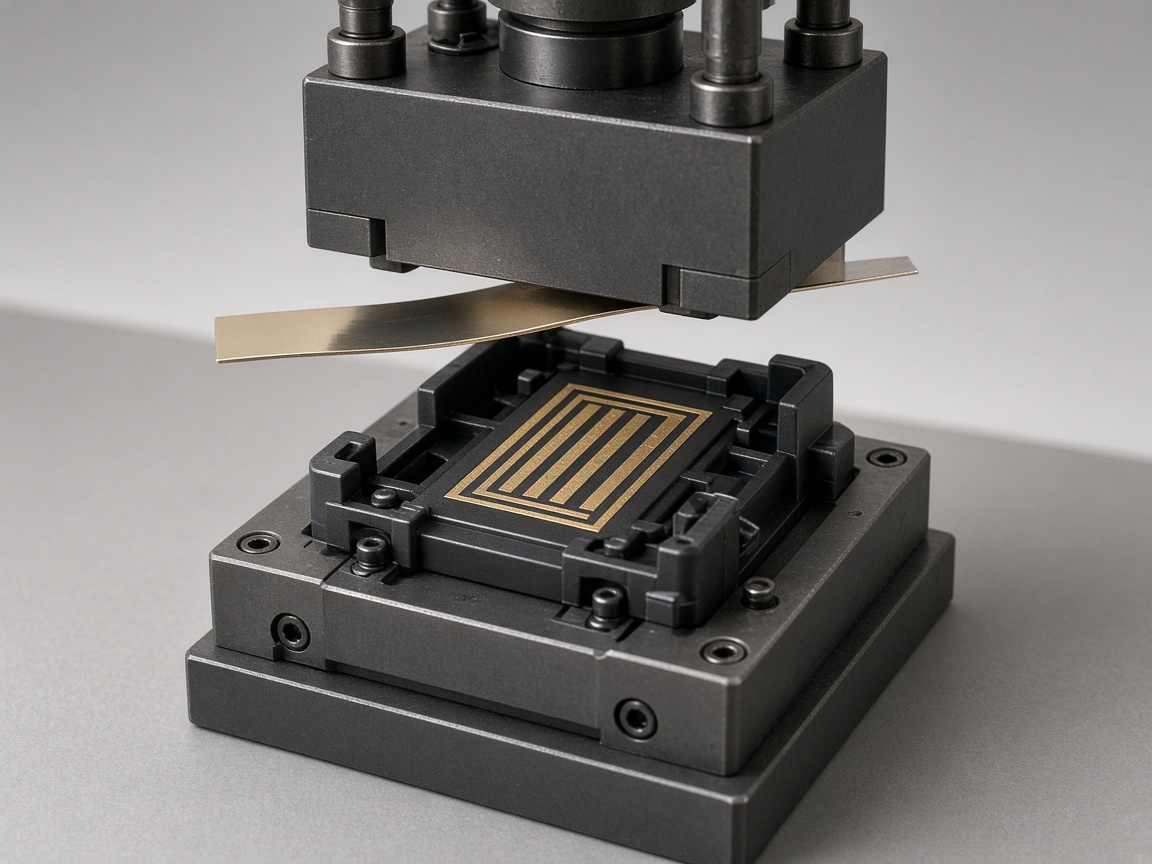
A heated die, or a silicone roll for larger areas, presses a carrier foil against the part. Heat releases the foil layer, which bonds to the plastic where the die makes contact. The result is dry immediately.
Roles
Hot stamping is foil. Pad printing is ink on curves. Painting is a wet coat. Chrome plating is a metal skin, not foil.
| Page | Use it for |
|---|---|
| Hot stamping (this page) | Foil, the heated die, and the surface it needs |
| Pad printing | Ink on curves and recesses |
| Painting molded parts | Wet paint and masking |
| Chrome plating | A metal look from plating, not foil |
| Secondary operations | Marks scoped with the molding RFQ |
Fit check
Qualitative guidance. Resin and geometry decide the final method.
| Situation | Hot stamping tends to fit | Consider instead |
|---|---|---|
| Bright metallic accent | Foil gives a mirror or brushed metal look | Chrome plating for a full bright finish |
| Raised logo or trim line | Die contacts only the raised face | Pad printing on recessed faces |
| Full part color | Not practical | Painting or molded-in color |
| Multi color artwork | Usually one foil per pass | Pad printing for detailed color art |
Design notes
Hot stamping works best when the mark sits proud of the surrounding surface.
Raise the stamping area slightly so the die touches only the mark
Keep the stamping face flat or gently curved
Confirm the resin accepts foil; some grades need a compatible foil or testing
Keep the area clear of gate vestiges, ejector marks, and knit lines
Side by side
Both add a metallic look. Area and durability usually decide.
Continue exploring
Sibling processes and supporting references.
All specialty processes and secondary operations.
All processesInk transferred by a silicone pad onto curved and recessed surfaces.
Pad printingVibration welded joints between molded plastic parts.
Ultrasonic weldingCommon operations done after molding.
Secondary operationsA full bright metal finish on molded parts.
Chrome plating on plasticsFull coverage color and metallic coatings.
Painting molded partsFAQ
No. Hot stamping bonds a thin foil only where the die touches. Chrome plating deposits metal over the whole plated surface and needs a plating grade resin.
The CAD with the stamping face marked, the artwork, and the foil color or finish. Note the resin grade too, since some grades need a matched foil.
Hot stamping leaves foil where a heated die touches. Pad printing leaves ink from a silicone pad, including on curves and recesses the die cannot reach.
Only if the die can meet that face. Deep pockets and sharp returns are a poor fit. Those marks are usually pad printed.
Yes. The foil bonds where the die touches, and there is no wet ink left to cure.
Foil color is a process input. The same die can run another foil when the artwork shape stays the same. A new shape is a die change.
Next step
This step can be scoped with the molding RFQ. Upload CAD for an instant quote.