Who Pays for Startup Scrap on an Injection Molding Quote?
What Is Startup Scrap?
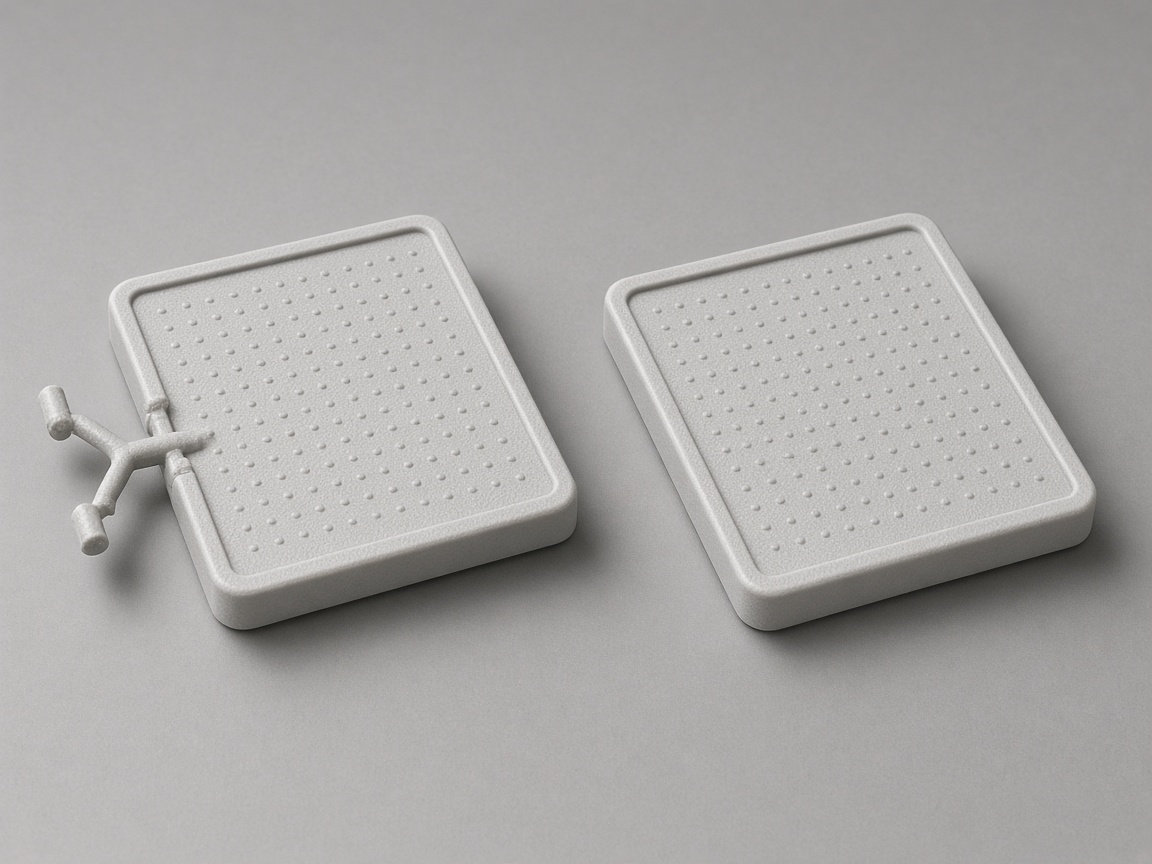
Startup scrap is the resin consumed while the press stabilizes after a setup, color change, or downtime. That material was purchased, but it never ships as a finished part. It includes purged material, warm-up shots, and the parts or runners produced before the process settles within specification.
This page answers who pays for that resin on the quote. It does not teach you how to cost a pellet. For the rest of the material line, see material cost per part.
Procurement owners and program managers should lock this term before they accept a piece price. After the unit price is frozen, startup resin often sits inside a blended number that is hard to unwind on a later change order.
Key Facts
- Startup scrap is process resin consumed during stabilization. It is not a shipped part.
- Who bears that cost is a quote term, not a shop default. Always clarify before accepting a piece price.
- Many molding quotes absorb startup resin into the unit piece price rather than listing it as a separate line item.
- Color changes, resin grade switches, and prolonged machine downtime generate more startup scrap than a steady, uninterrupted production run.
- Regrind is a separate decision with its own specification path. See what is regrind and regrind blends buyers should specify.
- Do not treat a shop allowance, a pellet price, or an hourly scrap rate as a published standard. Those figures vary by material, machine, and process complexity.
What to Ask Before You Lock Piece Price
A molding quote can look complete and still leave startup resin unassigned. Ask the following questions in writing and keep the answers with the RFQ.
Is startup resin in the piece price or a separate line?
Some molders fold purge, warm-up shots, and first-off reject parts into the unit price. Others bill a setup or color-change line when the event happens. Either method can be fair. The risk is assuming one method while the shop uses the other. If the resin is inside the piece price, ask what lot size and changeover pattern that price assumed. If it is a separate line, ask what event opens that line.
What event triggers a new startup charge?
Name the events you expect: a color change, a resin grade change, a weekend shutdown, a tool transfer, or a long idle after a holiday. A steady repeat run on one color and one grade creates less startup resin than a tool that swaps colors every lot. If you already know the release plan will change colors or grades, say so now. A quote built on an uninterrupted run will not match a program that changes over often.
A first-article startup and a production restart are not the same event. First articles from a new steel cavity include process learning. A Monday restart after a weekend idle is a shorter stabilization, but it still consumes resin. A tool that moves from one press to another starts over again. Write which of those events you expect on the program.
Who owns purged resin that cannot be reintroduced?
Purge that leaves the barrel is not automatically available as a later credit. Some streams can be sold or ground. Cosmetic and regulated parts often require that purge be scrapped entirely. Write the rule. Do not leave ownership of the purge pot as a hallway agreement.
If the quality plan already forbids mixed lots, treat purge as scrap, not as a future blend. Regrind has its own drawing rule. Do not let a startup conversation quietly convert purge into an unapproved hopper stream.
Does customer-supplied resin change the billing?
When you ship bags or gaylords to the molder, you still need a written rule for the resin that never becomes a shipped part. Ask whether unused sealed packages return to you, whether opened bags stay at the press, and whether purge from your resin is billed as a processing charge, a material charge, or both. Customer-supplied resin does not by itself assign startup scrap. The RFQ still has to say it.
Write the answers next to the piece price, not in a side email. If the program later adds a color or a second grade, revisit the same questions before you release the new lot.
When Startup Scrap Gets Expensive
Startup resin is usually a quiet line on a long, steady run. It becomes a real cost when the process has to start over often, when the part cannot reuse purge, or when the shipped lot is small next to the resin burned to get the press stable.
Frequent color changes or material grade switches
Each color or grade change restarts the stabilization clock. The barrel, hot runner, and first shots have to come back into spec before good parts count. If your release plan already includes multiple colors or a family of related grades on one tool, state the expected changeover pattern. A quote that assumed one color for the life of the tool will understate startup resin.
A housing that ships in several standard colors is the usual example. The steel is the same. The startup event is not. Ask whether sequential color lots on one press are planned, or whether each color will run after an idle. Sequential lots still purge. Lots with idle time purge again.
Tight cosmetic or regulated parts
A hidden structural part may allow a closed-loop stream after the process is stable. A show face, a clear part, or a regulated program often cannot put purge back into the hopper. That makes every startup a one-way scrap event. Say so on the RFQ. If the quality plan forbids regrind or mixed lots, startup resin is a scrap cost, not a blend opportunity.
Regulated programs belong on the RFQ with the reuse rule written in the same note as the resin grade. Do not rely on a shop habit to keep purge out of a lot that must stay virgin.
Very small lot sizes
On a short release, the weight of purge and warm-up shots can approach or exceed the weight of the parts you actually ship. See short run injection molding lot sizes. That is not a reason to skip molding. It is a reason to say the lot size on the RFQ so the molder can allocate startup resin honestly. Do not ask for a zero-scrap startup as a substitute for stating the lot plan.
If you will reorder the same color later, say whether those lots should be treated as separate startups or as a continuing run. The steel does not change. The billing might.
What to write instead of hoping the shop absorbs it
State the expected lot size and the changeover plan on the RFQ. Name colors, grades, and whether lots will run back to back or with idle time between them. Ask the molder to show whether startup resin sits inside the piece price or on its own line. That is the allocation step. It is not a request for a published allowance, a pellet price, or an hourly scrap rate.
If you are comparing two quotes, compare the startup rule, not only the unit price. A lower piece price that silently excludes startup resin can cost more on the first color change.
RFQ Checklist
Use this list on the RFQ before you lock piece price.
- Ask whether startup resin is included in the piece price or quoted separately.
- Name the expected frequency of color changes and material grade switches.
- State whether the resin is customer-supplied or molder-sourced.
- Specify whether purge material can be blended, sold as regrind, or must be scrapped entirely.
- Upload CAD through the instant quote platform for DFM review.
Attach the resin grade, the color list, and any quality rule that forbids reuse of purge. If a prior shop already ran the tool, attach notes on how they billed startup resin. NetProto can review the CAD and the RFQ notes together before tooling begins.