
VDI 3400
- EDM texture graded by roughness
- Common on European drawings
- Uniform matte look across large faces
- Hides minor cosmetic marks at coarser grades
Surface finish
VDI 3400 grades describe EDM texture roughness on the mold steel. Here is what the numbers mean, where each range is used, and how to write VDI on an RFQ.
Surface finish
European prints often lead with VDI while US teams use SPI or MoldTech.
VDI 3400 is a German texture standard for spark-eroded (EDM) mold surfaces. The grade number is a roughness scale: a higher number means a deeper, coarser texture. Drawings from European OEMs often call it out directly, while US drawings more often use an SPI finish or a Mold-Tech pattern number.
Because VDI texture is burned into the steel, it is a tooling decision, not a finishing step. Deeper grades need more draft on the textured faces so parts release without drag marks, and they hide sink, flow lines, and fingerprints better than a fine finish does.
When texture appears on only some faces, show which faces on the CAD or drawing, and note where the texture must stop at a parting line or shutoff. That boundary is where most texture rework starts.
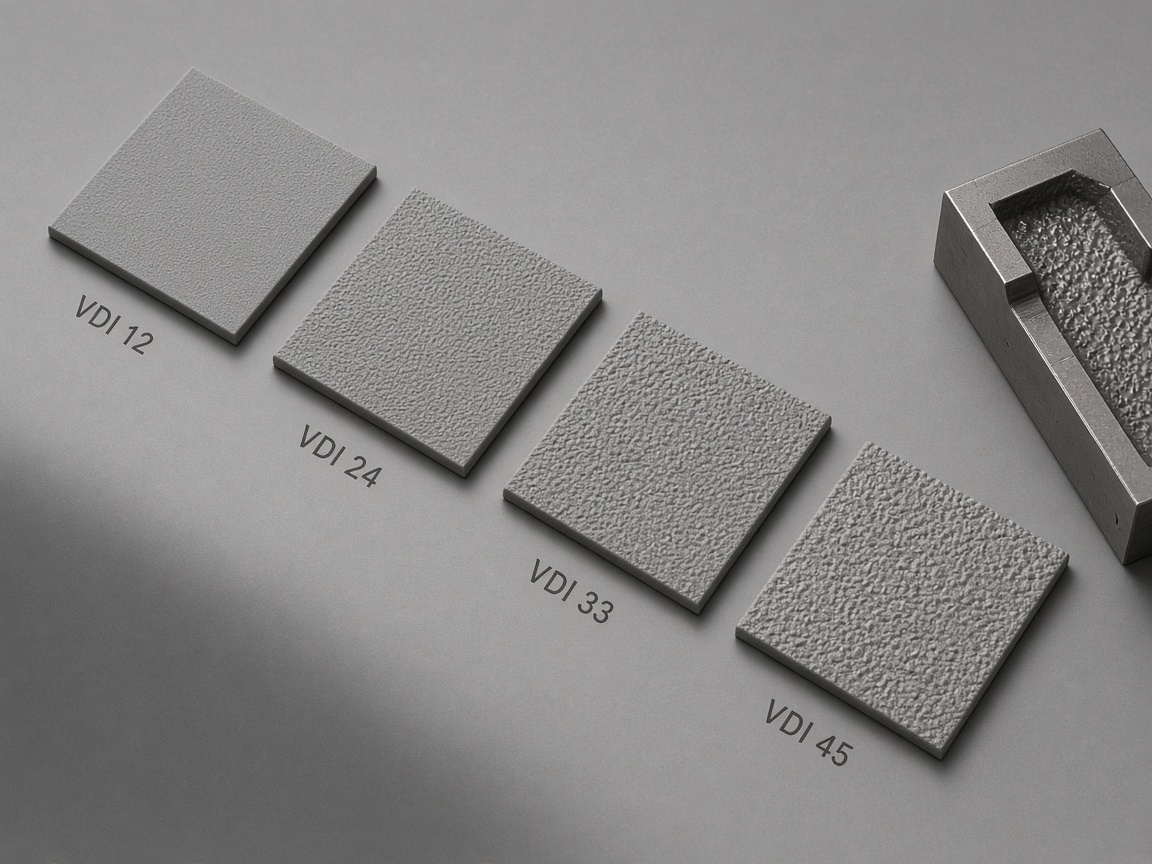
Grade ranges
Grade numbers come from the VDI 3400 scale. Ranges are typical uses, not NetProto specifications.
| Range | Typical look and use | Watch for |
|---|---|---|
| Fine (VDI 12 to 18) | Smooth matte, light glare reduction | Shows sink and flow lines more than coarse grades |
| Medium (VDI 21 to 27) | General matte housings and covers | A common default for consumer and industrial housings |
| Coarse (VDI 30 to 36) | Grip areas, hiding minor cosmetic marks | Needs more draft; check deep side walls |
| Very coarse (VDI 38 to 45) | Heavy texture on industrial parts | Most draft sensitive; approve on a sample plaque |
Choosing a standard
Pick one primary standard per face so the mold maker and inspector read the same callout.
Quote checklist
Finish specs stall quotes when they live only in email threads.
VDI grade for each textured face
Faces that stay polished or untextured
Reference plaque or sample part, if you have one
Resin and color, since texture reads differently on gloss and matte resins
Deep side walls inside the textured area
Keep exploring
Open siblings on the same hub path before you lock mold texture on the quote.
Category overview and RFQ checklist.
Surface finish hubAppearance and resin color control.
Color optionsA1 through D3 on one page.
SPI finish chartMoldTech and VDI selection.
Molding texturesPick a spec before steel is cut.
Texture selectionFAQ
Both describe mold surface finish, but VDI 3400 grades EDM texture by roughness while SPI grades polish and blast finishes. Pick one primary standard per face on the RFQ instead of mixing scales.
Yes. Deeper grades need more draft on the textured faces so the part releases cleanly. DFM review checks the draft on textured faces against the grade you choose.
Yes. Mark the textured faces on the CAD or drawing and note where the texture must stop at a parting line or shutoff.
Not exactly. Gloss, color, and filler change how a texture reads, and glass-filled resins can show fiber at the surface. Approve the look on first-article parts in the production resin.
Next step
NetProto quotes one hardened steel tool with piece price. Finish level still drives DFM and mold texture scope.